
Szemere: Castle Park, Grotto and Old Trees
Accommodation in Szemere
Szemere has two distinct sides: in Kastélypark, an artificial grotto, a small pond and old trees meet the history of a former castle park; at the same time, the red-marked Cserehát turistája hiking trail passes through the village. Park and natural features therefore sit alongside a hiking route—two different focal points for planning your holiday.
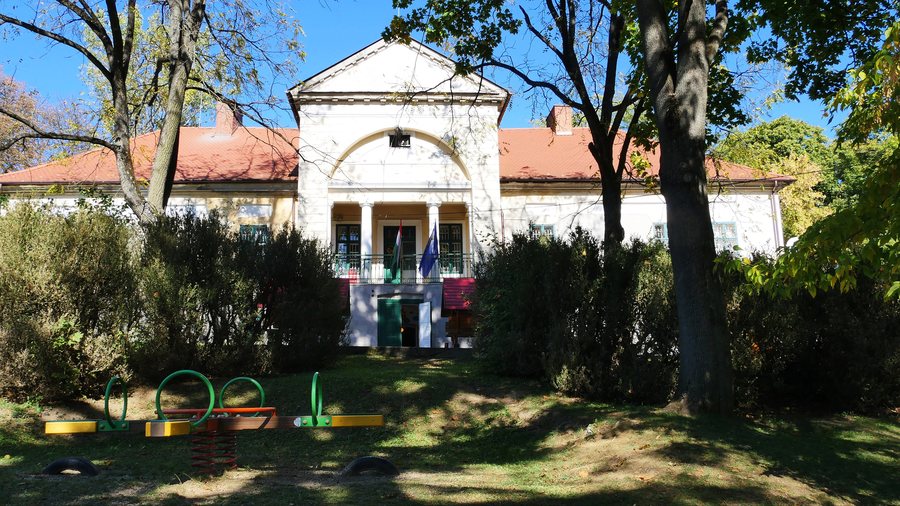
Kastélypark between castle history and nature
The Szemere family’s castle once had a four-hectare park. Kastélypark in Szemere is protected as a locally significant natural area. The four hectares link the park to its former relationship with the castle, while its protected status describes another, nature-related side of the place.
Kastélypark has a grotto designed as an artificial cave. A small pond lies directly in front of it. On the eastern shore stands a large old Oriental plane tree (Platanus orientalis), whose crown is already damaged. Large, old trees also surround the central lawn by the pond. Designed features such as the grotto and water feature thus sit alongside mature trees, shaping different impressions of the grounds.
North of the castle are the remains of a Neo-Gothic family crypt. Together with the park that once belonged to the castle, the crypt ruins give the village’s history a tangible architectural connection. The natural area, distinctive tree, artificial cave and historical traces thus offer different ways to experience Kastélypark, without reducing its character to a single feature.
A report dated 2013 described Kastélypark as freely accessible and noted that at the time it served more as a public park. This statement refers to the situation then. Check current access before planning your visit.
Distinguishing the park landscape from the hiking route
The red-marked Cserehát turistája hiking trail passes through Szemere. For planning, this is a different point of reference from the park’s features: if you would like to include a hiking route in your holiday plans, you can consider the trail that passes through the village. If you are more interested in park design and historical traces, Kastélypark offers specific features—from the artificial grotto and pond to the old trees and the remains of the family crypt.
The two focal points are therefore easy to distinguish: the route offers a connection to hiking, while the park foregrounds its history and its individual natural and arboreal features. When choosing a holiday apartment, it may help to first consider whether you would like to explore Szemere mainly for its hiking route or for Kastélypark.
Another perspective on Borsod-Abaúj-Zemplén
In the wider destination of Borsod-Abaúj-Zemplén, the Baradla-Domica Cave System offers a different connection to nature and culture: it is part of the UNESCO World Heritage-listed Caves of the Aggtelek Karst and Slovak Karst. The short Aggtelek Cave Tour is one kilometre long, takes 60 minutes and is rated easy. The tour’s length, duration and difficulty are therefore clearly specified.
The difference from Kastélypark in Szemere lies in the nature of the experience: here, the park design, tree cover and historical traces shape the visit; the Aggtelek Cave Tour, by contrast, takes you into an underground cave world. Your holiday plans therefore offer two clearly distinct nature themes: a historic park and an underground cave world.
Discover more destinations
Discover more destinations: Pusztaradvány, Abaújkér, Forró, Gagyapáti, Encs, Hernádvécse.
To the broader travel overview: Encsi.

