
Korlát: Gothic Church and Local History
Accommodation in Korlát
In the centre of Korlát, on the Szerencs stream, stands the Korláti Református Templom. The Gothic church is surrounded by a stone wall and faces east. Its construction history and surviving details make it a tangible starting point for exploring the architecture and past of the village.
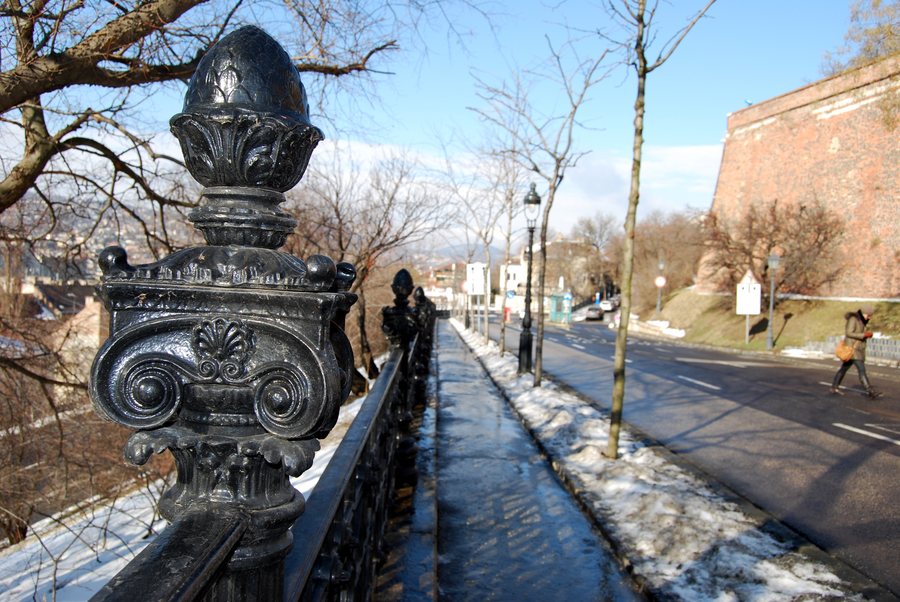
Gothic architectural features and distinctive details
The church was built in the 14th century and has largely retained its medieval character. Its architectural features include buttresses, a west tower and a polygonal apse. Large, richly carved tracery windows define the south and chancel façades. The polygonal apse refers to the many-sided shape of the church’s eastern end; tracery is the stonework that divides a window into sections. This makes it possible to distinguish the building’s form from its ornate window decoration.
Individual details inside the church are also noteworthy: the tower contains a bell from the 15th or 16th century, which is listed as a protected work of art. On the northeast wall of the chancel is a sacrament house framed by Renaissance paintings. The architecture, bell and sacrament house offer different historical perspectives on the church, whose history is not confined to a single century.
Another dated episode takes us to October 1703. At that time, Sándor Károlyi and three companions spent the night in Korlát. They were travelling from Košice to join the prince. This account of their journey adds a specific episode from the village’s past to the medieval history of the church’s construction.
More perspectives in Borsod-Abaúj-Zemplén
Beyond local history, the wider destination of Borsod-Abaúj-Zemplén offers further nature and culture themes. The Baradla–Domica cave system is part of the UNESCO World Heritage-listed Caves of the Aggtelek and Slovak Karst. A short Aggtelek cave tour is one kilometre long, takes 60 minutes and is rated easy. Its distance, duration and difficulty rating provide practical guidance if you would like to include this activity in your plans.
Another nature-related attraction is the Hucul herd on the pastures of Gergés-lápa, around 1.5 kilometres north of Jósvafő. It can be visited there year-round. The herd’s keeping conditions may change; check in advance if this aspect is important to your visit.
Borsod-Abaúj-Zemplén also encompasses a variety of cultural stories. Diósgyőr Castle flourished during the reign of King Louis the Great in the 14th century. Later, it served as a residence and a wedding gift for six queens. In the Tokaj wine region, the climate, soil quality and slope exposure are suitable for growing grapes; at the same time, the region is legally protected as a wine-growing area. The region’s natural and cultural themes thus complement Korlát’s specific church and local history.
When choosing a holiday rental, it helps to first decide what you want to focus on during your trip: would you like to centre it on Korlát’s Gothic church and local history, or are you planning your stay mainly around another destination in the wider Borsod-Abaúj-Zemplén region?
Discover more destinations: Arka, Boldogkőváralja, Telkibánya, Abaújvár, Gönc, Regéc, Göncruszka, Abaújszántó.
Back to the wider travel overview: Abaúj–hegyközi.

