
Pécsvárad: Trail, Zengő and festival culture
Accommodation in Pécsvárad
Pécsvárad combines local history with hikes to the 682-metre-high Zengő and a lively festival tradition. A trail leads to places of remembrance, while art and former everyday life come together in the castle. You can shape your stay around culture or focus on routes around the summit.
A trail through local history
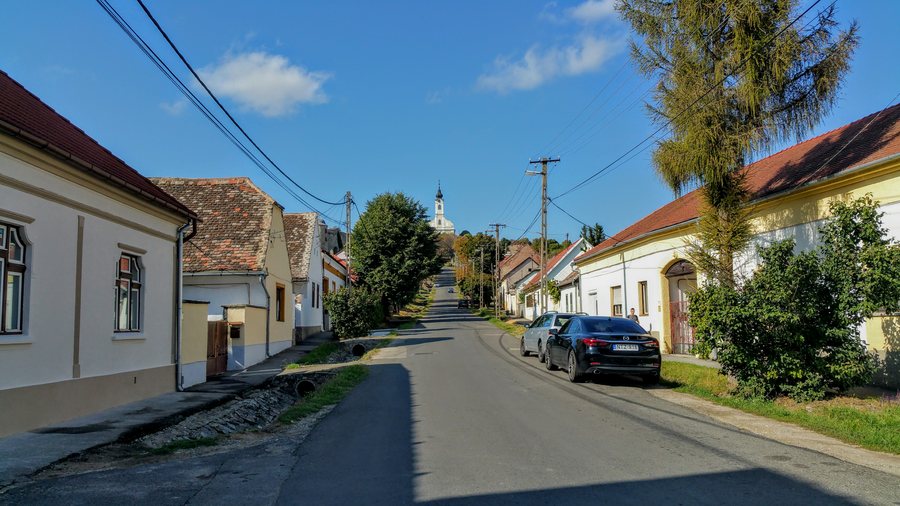
The trail created by the Pécsvárad German Nationality Self-Government presents the distinctive features of the German community in Pécsvárad at seven stations and with several interactive features. It leads from Szentháromság tér via the former Német utca to Mott tér, taking in places of remembrance for the German community in Pécsvárad. If you would like to extend the circuit, you can optionally complete it via the church and castle.
The stations give the walk a clear cultural and historical focus: the route links named places with the history of the German community in Pécsvárad. This sets it apart from a hike to the Zengő, where the summit and route take centre stage.
Pécsvárad Castle: mural and historical everyday life
The chapel at Pécsvárad Castle contains a Byzantine-style mural which, according to tradition, depicts the Archangel Michael. This traditional attribution remains part of the painting's history. In the castle courtyard, the show kitchen offers a different glimpse into the past: visitors can view historical baking and cooking utensils on display and see how food was prepared in earlier times.
The exhibition on the history of education also brings the past to life. It transports visitors to a classroom from the 1930s. Children can sit at the old school desks and experience a lesson in keeping with the school customs of the time. You must contact the venue before visiting.
Hiking routes to the Zengő
The Zengő-kiskör starts at Pécsvárad Castle, crosses the 682-metre-high Zengő and returns to Pécsvárad via Hosszúhetény. The circuit is about 14 kilometres long and has around 500 metres of elevation gain. Most of the route lies outside Pécsvárad; the town is its starting and return point. Several other hiking routes from Pécsvárad also lead to the summit. This lets you choose between a circuit with specified route details and other paths to the same destination.
A festival tradition of dance and crafts
The Pécsváradi Leányvásár was first held under this name in 1966, featuring performances by 15 folk dance groups. Since 1996, the festival has taken place every year in October. The gathering of traditional folk dance groups remains one of its defining features. The programme also includes a parade of traditional folk groups, a dance procession, a major evening show and a handicrafts market in the town centre.
The festival tradition offers a different cultural focus from the trail or the castle: performances, processions and crafts shape the experience. If you are planning to visit the Leányvásár, it may be helpful to check the specific date before your trip.
More cultural attractions in Baranya
Within the wider travel destination of Baranya, Pécs offers its own cultural highlights. The Early Christian Necropolis of Sopianae includes decorated tombs from the 4th century: underground burial chambers with above-ground memorial chapels and richly decorated Christian wall paintings. In the Zsolnay Cultural Quarter, you will find the exhibitions “Golden Age of Zsolnay” and “Pink Exhibition”, as well as an exhibition on the family and factory history. For children, the attractions there include outdoor playgrounds, an interactive lab, a planetarium, the Bóbita Puppet Theatre, a ceramic-painting workshop and courses at the Hercules Workshop.
When looking for holiday accommodation in Pécsvárad, the focus of your stay can help guide your choice: local history and festival culture lead to different day plans than a hike with the Zengő as your destination. This way, you can start by choosing the experiences in Pécsvárad that interest you most.
Discover more destinations: Óbánya, Apátvarasd, Ófalu, Zengővárkony, Erdősmecske, Mecseknádasd, Szellő, Erzsébet.
Back to the overview of the wider destination: Pécsvárad.

