
Apátvarasd: Spring, Church and Valley Viaduct
Accommodation in Apátvarasd
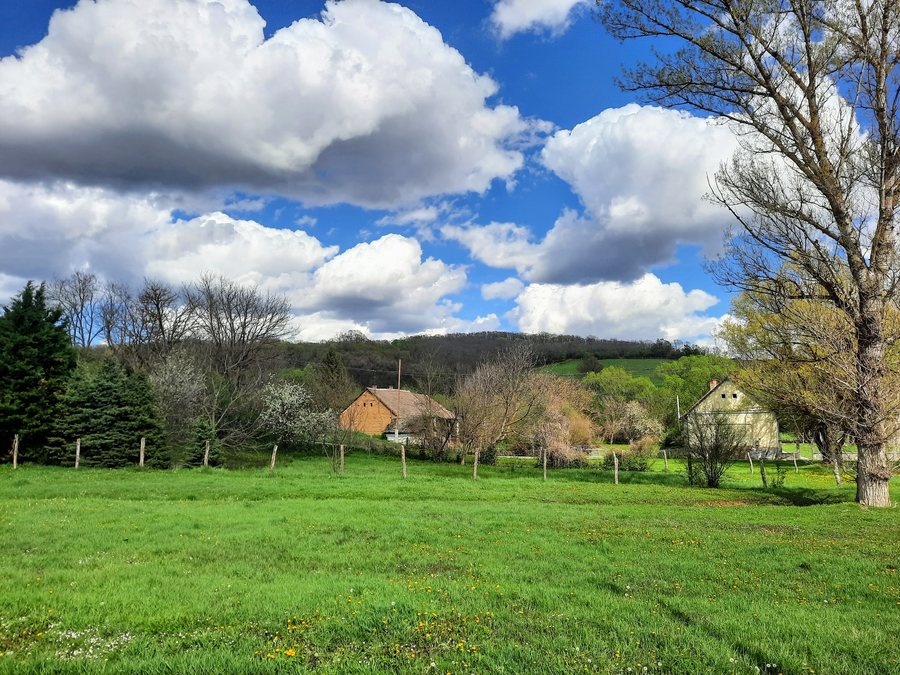
A spring, a protected church and the Varasdi Valley Viaduct give Apátvarasd a distinctive character. The Rockenbauer Pál South Transdanubian Blue Trail also runs through the outskirts of Apátvarasdtelep. When choosing an apartment, it helps to distinguish between the features of the village and the wider regional attractions: should Apátvarasd itself be the focus, or would you also like to consider culture and nature across the wider destination of Branau in your plans?
Spring and water outlet
The Apátvarasd Spring lies beside the houses in Apátvarasd, about 120 metres northwest of the church. It was tapped for the water supply, and some of its outflow remains accessible. The Apátvarasdi-csorgó, a water outlet, is located right beside the spring. A small wooden platform provides access to the water there.
Apátvarasdtelep and the valley viaduct
Apátvarasdtelep consists of a few houses and lies two kilometres north of Apátvarasd. The Rockenbauer Pál South Transdanubian Blue Trail runs through the outskirts, where there is also a trail stamp point. If you plan to follow this trail, check local route information before setting out.
The Varasdi Valley Viaduct lies on the administrative boundary between Apátvarasd and Mecseknádasd. It is 170 metres long and has a span of 98 metres. Its dimensions and location on the boundary give the viaduct a character distinct from the water-related features of the village.
Church and protected landscape
The church of Apátvarasd is a protected monument. The landscape context is also part of the village’s character: Apátvarasd is one of the settlements listed in connection with the Kelet-Mecsek Landscape Protection Area (Kelet-Mecsek Tájvédelmi Körzet).
More to explore across the wider destination of Branau
In Pécs, the Early Christian Necropolis of Sopianae comprises decorated tombs dating from the 4th century. They were built as underground burial chambers with above-ground memorial chapels and adorned with richly detailed Christian wall paintings. The Zsolnay Cultural Quarter offers another cultural highlight, with the “Golden Age of Zsolnay” and “Pink Exhibition” displays, as well as an exhibition on the family and factory history.
For children, the Zsolnay Cultural Quarter offers outdoor playgrounds, an interactive lab, a planetarium, the Bóbita Puppet Theatre, a ceramic painting workshop and classes at the Hercules Workshop. Branau therefore offers a choice of both archaeological and art-historical attractions, as well as hands-on activities.
A different focus awaits you at the Ős-Dráva Visitor Centre near Szaporca, which features an interactive exhibition, a working farm demonstration area and three themed educational trails. These introduce visitors to traditional agriculture, the Ős-Dráva programme and the wildlife along the Drava. The farm area is home to native Hungarian domestic animals, including Hungarian Grey cattle, Mangalica pigs and Hutsul horses, as well as old breeds of sheep and poultry. The wilderness trail along the Old Drava also features a birdwatching and bird-ringing station.
Let your search reflect the focus that matters most for your trip.
Discover more destinations: Erdősmecske, Erzsébet, Óbánya, Szellő, Pécsvárad, Zengővárkony, Ófalu, Mecseknádasd.
See the wider travel overview: Pécsvárad.

