
Holiday apartment in Wirral: discover coast, nature and culture
Accommodation in Wirral
The Wirral Way is a 12-mile combined walking and cycling route with a separate horse-riding route. This network of paths is complemented by Wirral Country Park, with extensive coastal landscapes, scenic walking trails and diverse habitats for wildlife. From there, impressive views can be enjoyed of migratory birds over the River Dee.
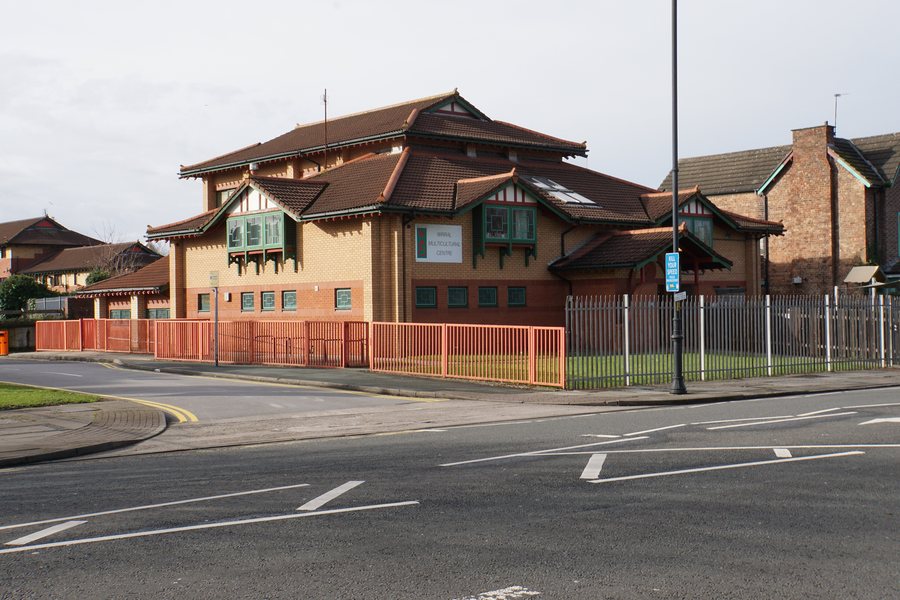 File:Wirral Multicultural Centre - geograph.org.uk - 6398558.jpg
Photo: Bill Boaden via Wikimedia Commons, CC BY-SA 2.0
File:Wirral Multicultural Centre - geograph.org.uk - 6398558.jpg
Photo: Bill Boaden via Wikimedia Commons, CC BY-SA 2.0
Nature
The landscapes of Wirral range from coastal and estuarine areas to gardens, woodland and wetlands. Hilbre Islands Local Nature Reserve in the River Dee estuary is home to grey seals and a diverse birdlife. The Hilbre Islands offer birdwatching at a site of international importance for wading birds. Access depends on the tides; the only recommended safe crossing from the mainland is from Dee Lane in West Kirby.
At Hoylake Beach, there are tidal sand flats, a vegetated upper beach area and mudflats that provide feeding and resting grounds for wading birds and waterfowl. Hoylake Beach is designated as a Site of Special Scientific Interest; Hoylake is also designated as a Special Area of Conservation, Special Protection Area and Ramsar site. Heswall Dales is a local nature reserve with scenic walking trails and panoramic views across the Dee estuary. The area is designated both as a Site of Special Scientific Interest and as a Local Nature Reserve, and is suitable for enjoying nature, walking, walking dogs and horse riding.
The 54-hectare Brotherton Park and Dibbinsdale comprises ancient SSSI woodland as well as wildflower meadows, reed marshes and historic parkland. As a Local Nature Reserve, it also includes ancient woodland, picturesque river valleys and diverse wildlife. Burton Mere Wetlands combine freshwater wetlands, mixed farmland and woodland, providing a habitat for numerous wetland bird species. The Burton Mere Trail takes about 20 minutes and follows a level, surfaced gravel path.
Ness Botanic Gardens cover 64 acres and offer views of the River Dee and North Wales. They contain rhododendron species associated with plant hunters George Forrest and Frank Kingdon Ward. The gardens can be reached by car, train, bus or bicycle. The Botanic Kitchen Café serves breakfast, lunch, homemade cakes, and hot and cold drinks.
Culture
Birkenhead Park opened in 1847 as the first publicly funded public park in the United Kingdom and influenced the design of public parks in the United Kingdom and internationally. In the Lower Park, there are tree-lined banks and earth mounds, an island, a boathouse and the covered Swiss Bridge. Birkenhead Park railway station is approximately 250 metres from the nearest park entrance and 400 metres from the visitor centre.
Port Sunlight comprises more than 900 listed houses and public buildings of the Arts and Crafts movement across 130 acres of parkland and gardens. Port Sunlight Museum presents the development of the village through the working and living conditions, architecture and the people who built and lived there. The Wirral Conservation Areas and Heritage Trail also combines culture and landscape: it includes 40 heritage sites and can be explored on foot, by bicycle or by car. The section includes Caldy, Frankby, Hoylake, West Kirby, Saughall Massie and Thurstaston.
The Williamson Art Gallery & Museum presents exhibitions and events and houses a diverse, nationally significant collection of artworks and artefacts. Since 1928, it has been at the heart of Wirral’s culture. Birkenhead Priory connects Wirral’s history with royalty, the development of a town and religious life over almost 1,000 years. The 25-metre-high tower of Birkenhead Priory offers views of Liverpool’s famous waterfront.
Hoylake, Heswall, Wallasey.
For the higher-level travel overview: North West England.
More destinations
More places within the same destination:

