
Peuschen: Origins and Local History
Accommodation in Peuschen
Peuschen has an unusually tangible origin: the later village grew from a residential and farm building that Schulze Johann Müller from Laskau built in the middle of his fields in 1795. A specific building and its builder give the local history a clear personal and chronological reference point. If, when travelling, you like to first understand how a place developed, you’ll find a special starting point here—and can then turn your attention to the villages in the municipality.
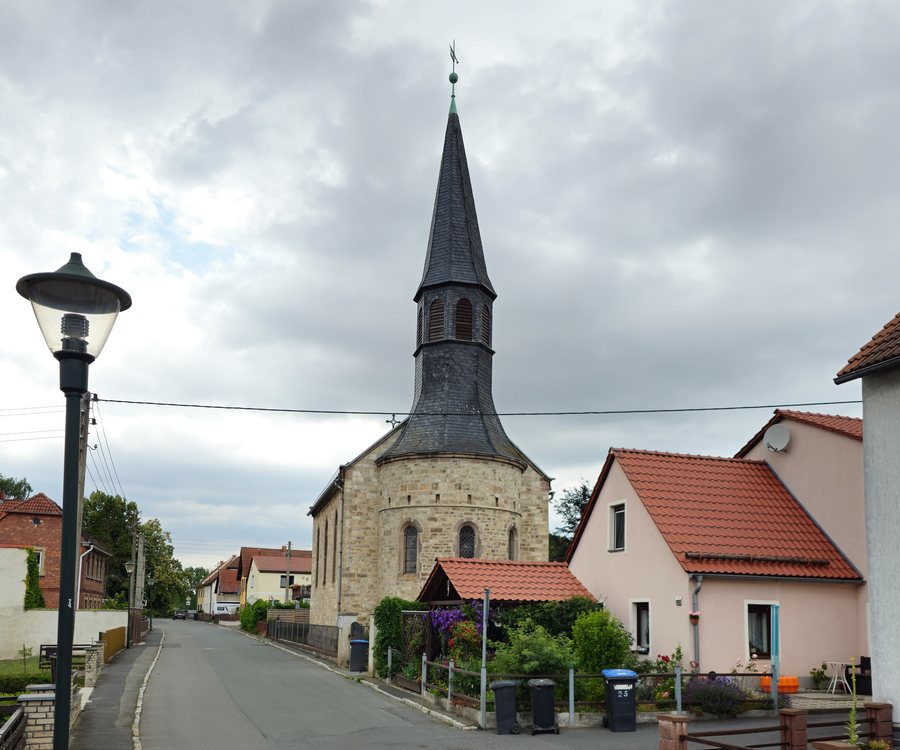
Peuschen’s Origins and the Villages of the Municipality
The municipality includes Bahren and Laskau. Both are green villages, with their farmsteads arranged in a circle around the village green. The term describes a settlement form that can be seen directly in the arrangement of the farmsteads. The contrast is interesting from a local-history perspective: Peuschen’s origins are linked to a single building from 1795, while Bahren and Laskau are defined by their respective village greens and the ring-shaped arrangement of their farmsteads. This offers two different ways to explore the municipality’s history: the dated beginnings of one place and the layout of two villages.
The churches are also located in the villages that belong to the municipality. Laskau’s village church was built in the 18th century. Its architectural features include a long nave and a massive tower with a tall lantern; a bell dating from 1687 hangs in the tower. Bahren had its own church built around 1560. The focus thus shifts from the early date of the church in Bahren to the architectural features and dated bell in Laskau. If you’re interested in regional architectural and church history, keep both village names in mind.
Saale-Orla: Water, Trails and Culture
As a broader travel destination, Saale-Orla offers a wider range of themes. The Saale, with the Saalekaskade—a series of five dams stretching around 80 kilometres—forms the Thüringer Meer, Europe’s largest contiguous reservoir area. The Bleiloch Reservoir is Germany’s largest reservoir. At the Hohenwarte Reservoir, the seasonal Mühlenfähre ferry connects the Linkenmühle and Altenroth landing stages. Check the timetable and crossing conditions before setting out. The waterscape and ferry offer a different focus from local history.
Hiking is another highlight: In Wurzbach, more than 120 kilometres of signposted trails invite you to explore the low-mountain landscape. Culture enthusiasts will find historic living quarters and exhibition rooms with valuable interiors at Museum Schloß Burgk, as well as collections and exhibitions. The ex libris collection comprises more than 200,000 prints and is the museum’s largest specialist collection. Concerts and festivals are also held there. Wurzbach is also home to the Heinrichshütte foundry, which has Europe’s largest and most powerful steam engine. The hands-on museum warmly welcomes families with children, as well as children from nurseries and schools. Saale-Orla thus offers landscape exploration, collections and industrial heritage for a range of interests.
Choose Your Main Priority When Looking for Accommodation
When looking for a holiday apartment in Peuschen, it helps to set a clear priority: Would you like to focus on local history—the 1795 origins, the green villages of Bahren and Laskau, or their churches? Or would you rather base your plans around a regional theme such as reservoirs, hiking or museums? The examples from Saale-Orla represent a range of travel interests. If the history of the municipality matters more, Peuschen offers a clearly defined focus.
Discover more destinations: Keila, Dittersdorf, Gahma, Crispendorf, Knau, Ziegenrück, Krölpa, Plothen.
For the broader travel overview: Saale-Orla.

.jpg)