
Bucha – Green Village and Romanesque Church
Accommodation in Bucha
Bucha is laid out as a green village, with the church standing in the centre of the village square. The village dates back to the early Middle Ages, and the church’s building history spans the Romanesque period through to its later remodelling in the Baroque style around 1735. In Bucha, the village’s historic layout and the development of a single building can thus be seen side by side. If you are looking for a holiday apartment, you can consider whether this perspective on local history suits your travel interests.
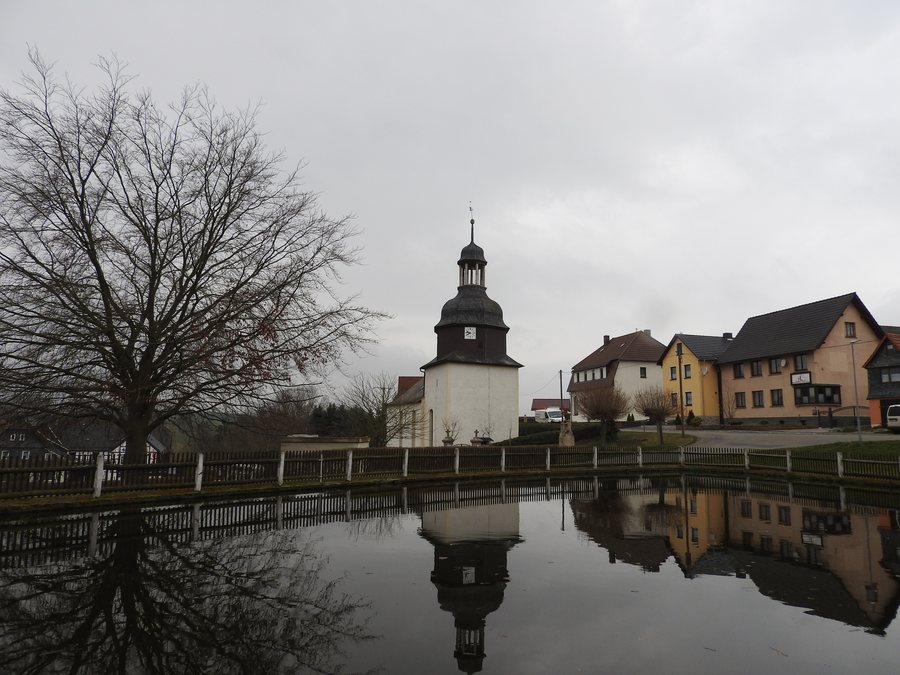
Village Layout and Building History in Bucha
The term “green village” refers to the settlement’s layout, while the church is a specific building within the village. Its central location on the village square connects both themes in the village’s appearance. The church was built in the Romanesque period and later remodelled in the Baroque style around 1735. Its building history thus runs from an early phase to a considerably later transformation; Bucha’s medieval origins provide an even earlier historical context.
Historic Impressions in the Wider Destination of Neustadt an der Orla
In the wider destination of Neustadt an der Orla, the Late Gothic town hall represents a long history of construction and use. It developed from the “stone house” that Landgrave Balthasar gave to the town in 1364 and which was initially used as a storage building. Following extensions and alterations, the building was completed in 1509/10; it remains the seat of the administration to this day. The Luther House on the market square, a burgher’s house, was built before 1450 and underwent several construction phases. The two buildings illustrate different historical building histories in Neustadt an der Orla.
The Luther House in Neustadt an der Orla is largely accessible to visitors with limited mobility; a lift provides access to various levels. Check the current conditions before your visit. The Museum of Local History presents Neustadt’s history in 13 themed exhibition rooms. Another point of reference in time is the altar from Lucas Cranach’s workshop: the town councillors commissioned it in autumn 1511, and it arrived in Neustadt an der Orla in 1513.
The market fountain in Neustadt an der Orla also tells a story of the town’s history. It was built in 1987 to mark the town’s 700th anniversary. The octagonal basin bears the guild emblems of craftspeople who had been established there since the Middle Ages. The “Bornquas” fountain festival includes the tradition of appointing a fountain master. The festival is regularly celebrated on the third weekend in June—a seasonal point of reference for planning your trip.
Other themes in Neustadt an der Orla connect natural and active history: today’s town park has its origins in the former monastery garden of the Augustinian Hermit Order. The Orla Cycle Path passes through Neustadt an der Orla further along its route. From May to October, the town’s Tourist Information office offers a public guided tour on the first Saturday of every month. If you plan to take this tour, check the current dates directly with the Tourist Information office.
Discover more destinations: Crispendorf, Ziegenrück, Stanau, Altengesees, Blankenstein, Ranis, Neustadt an der Orla, Bad Lobenstein.
View the wider travel overview: Saale-Orla.

