
Ruttersdorf-Lotschen: Church, Zipfelteiche Ponds and Nature
Accommodation in Ruttersdorf-Lotschen
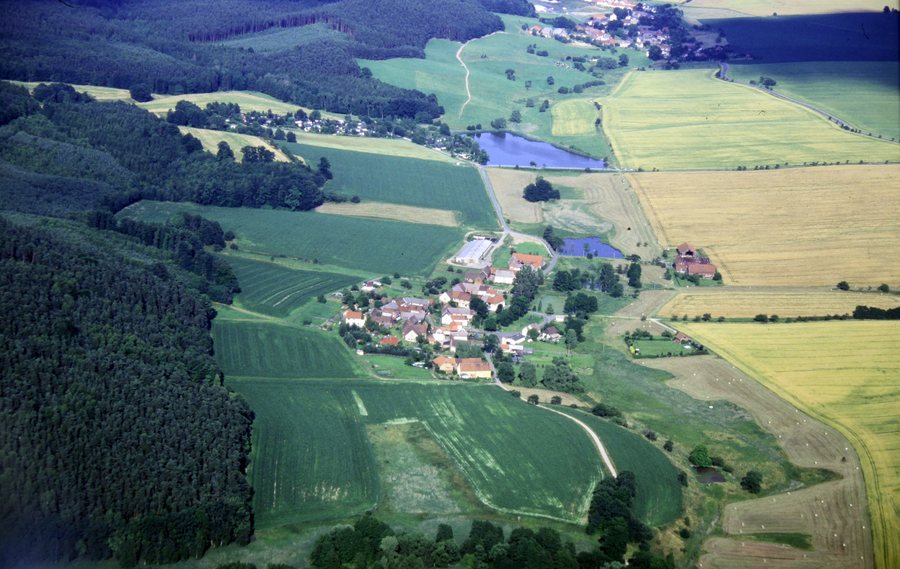
Ruttersdorf-Lotschen combines an impressive church history with a precisely measured hike: a 5 km route runs along the Zipfelteiche ponds near Ruttersdorf. The FFH site “Zeitzgrund – Teufelstal – Hermsdorfer Moore” also has a portion of its area within the locality. This combination gives the area a clear local focus; the wider Saale-Holzland destination complements it with other cultural and landscape themes. When choosing a holiday apartment, you can first consider whether the local church, outdoor activities or the broader range of regional attractions should shape your stay.
Ruttersdorf Church: Architecture and Furnishings
Ruttersdorf Church was built in 1636, during the Thirty Years’ War, on the site of an earlier church. That same year, the freestanding pulpit altar was installed in the chancel. Christ and the four Evangelists are depicted on the five sides of the pulpit. The words “Faith, Love, Hope” appear on the sounding board.
Further details reveal the layout of the church interior: the nave has a three-sided gallery, which has two levels along the long sides. The organ, built in 1873 by the Poppe Brothers of Roda, stands on the west gallery. A sacristy was added on the east side in 1768; the date of this alteration is recorded on the weather vane. The building and furnishings therefore tell a story spanning its construction in the 17th century, the later alteration and the 19th-century organ.
Hiking and Landscape
The hike along the Zipfelteiche ponds covers 5 km. This provides a clearly defined outdoor activity for holiday planning alongside the church history. The FFH site “Zeitzgrund – Teufelstal – Hermsdorfer Moore” covers 28.392 ha within Ruttersdorf-Lotschen.
In the wider region, the FFH site in northeastern Thuringia is a valley system cut deeply into the Saale sandstone plateau. Its landscape includes near-natural streams and riverside trees, ponds, and small remnants of deciduous woodland within pine and spruce forests. The hike at the Zipfelteiche ponds and the description of the larger protected area thus offer different perspectives on nature and outdoor activity.
Culture and Trails in the Wider Saale-Holzland Destination
The wider Saale-Holzland destination offers other distinctive cultural attractions. The Dornburg Castles form an ensemble of three castles in different architectural styles. The Dornburg castle grounds are also home to the Bauhaus Workshop Museum, located in the former Bauhaus ceramics workshop in the Marstall building. The Bürgel Ceramics Museum traces the history of Bürgel pottery from its beginnings in the mid-17th century to the present day. These examples offer distinct themes: castle architecture, Bauhaus workshop history and pottery.
The regional routes also vary according to the activity. The SaaleHorizontale is a certified quality hiking trail that runs north to south along the Saale through the Saale-Holzland district. The Saale Cycle Route also follows the Saale there in a north-south direction. Well-developed hiking routes also run through the Zeitzgrund valley in the district.
Choosing a Holiday Apartment to Match Your Travel Priorities
If you want the church, the hike at the Zipfelteiche ponds and the local portion of the FFH site to shape your stay, you can focus your search on Ruttersdorf-Lotschen. If you would also like to include cultural attractions or routes elsewhere in the wider Saale-Holzland region, compare the location of a specific holiday apartment with the themes that interest you. This lets you weigh the local focus and your regional holiday plans separately when choosing where to stay.
For the wider travel overview: Stadtroda.

