
Groß Quenstedt: Holtemme and Romanesque Traces
Accommodation in Groß Quenstedt
Groß Quenstedt offers two sides to a stay: the Holtemme shapes the village as both a river and a habitat, while Romanesque buildings and a memorial offer insights into different cultural themes. The Harz is another overarching travel destination, with its own trails, visitor centres and guided tours. When planning a holiday apartment, it is therefore worth distinguishing between exploring Groß Quenstedt and taking a broader focus on the Harz.
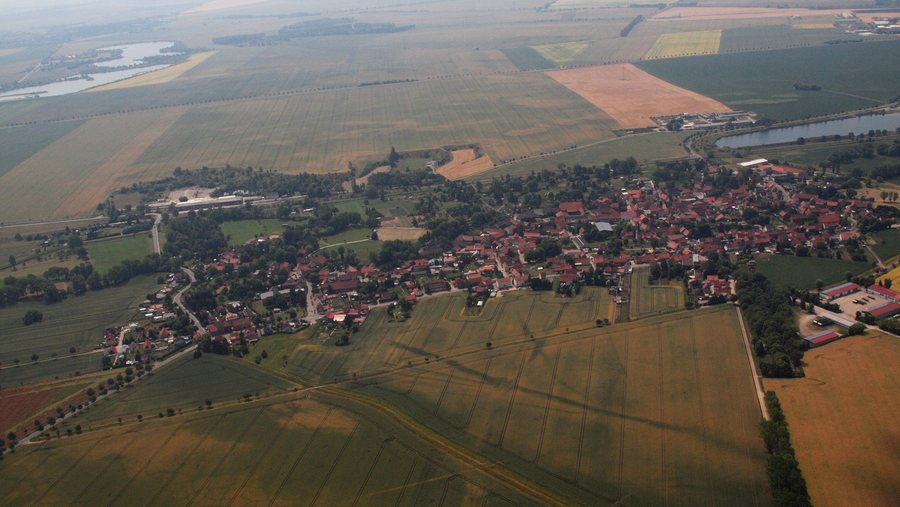
The Holtemme and the Landscape
The Holtemme flows through Groß Quenstedt and provides a habitat for many animals. It is therefore both a landscape feature and an important habitat. The area around Groß Quenstedt and the Holtemme invite you to enjoy longer walks and cycling tours. If you enjoy spending time outdoors, you can plan your stay around these outings rather than focusing solely on individual sights. Beyond the village, the Holtemme is 47 kilometres long; it rises in the Harz and flows into the Bode. This also places the local river landscape in a wider geographical context.
Romanesque Buildings and Remembrance
Among Groß Quenstedt’s attractions is the Romanesque church tower of St. Petri. A memorial to those killed in the First and Second World Wars stands on the village green. Somewhat hidden to the northeast of Groß Quenstedt lies St. Laurentius Church. It was built in 1250 as a simple Romanesque hall church. “Hall church” describes the building type, while “Romanesque” identifies the style. Together with the date, these details provide a concise picture of the building’s form, period and location. The local cultural themes offer different points of interest: St. Petri is distinguished by its Romanesque tower, while St. Laurentius is also described by its building type, date and location. The memorial on the village green commemorates those killed in the two world wars and complements the architectural history with a distinct place of remembrance.
The Harz as a Broader Travel Destination
The Harz itself offers another focus. Harz National Park has eight visitor centres and national park houses with information about the park, hiking tips, exhibitions and film screenings. The national park also offers guided hikes and excursions with rangers, experts, National Park Guides, and national park forest guides. In addition, 560 kilometres of signposted trails lead to particularly scenic viewpoints. This offers different ways to find your bearings: you can learn about the park through exhibitions or films, or explore trails and guided tours for outdoor experiences. At 1,141 metres, the Brocken is the highest peak in the Harz and can be reached by the Brocken Railway. These activities are part of the broader Harz travel destination; the local highlights in Groß Quenstedt remain the Holtemme, walks, cycling tours and the buildings mentioned above.
Choose the Right Focus for Your Stay
When searching for a holiday apartment, the mix you want can make all the difference. If you are mainly interested in the landscape, walks and cycling tours in Groß Quenstedt, and the local sights, you will have a different focus from someone whose travel plans also include visitor centres, guided hikes or the Brocken in the Harz. This way, you compare not just place names but the kind of holiday days you want to plan. Groß Quenstedt offers local themes centred on the river, nature and history; the broader Harz destination adds a distinct setting for trails, park information and guided explorations.
Discover More Destinations
Discover more destinations: Tanne, Ditfurt, Wernigerode, Ilsenburg, Ballenstedt, Thale, Güntersberge, Nordharz.
Back to the broader travel overview: Harz.

