
Discover Rhineland-Palatinate: Romans, cycle paths and nature
Accommodation in Rhineland-Palatinate
Roman structures, long riverside cycle paths and the forest landscapes of the Hunsrück-Hochwald give a trip through Rhineland-Palatinate a variety of different focuses. You can make culture just as much a part of your trip as outdoor activities. When planning, consider which experiences should take priority for your travel group – this will also help you find a suitable holiday apartment as a base for your trip.
Roman history and architecture
Trier was initially a Roman colony, later an important trading centre and, at the end of the 3rd century, one of the capitals of the Tetrarchy. At the time, the city was known as “Second Rome”. To this day, Trier preserves an exceptional concentration of important Roman structures and traces of Roman settlement north of the Alps. The Porta Nigra is considered a unique achievement of 2nd-century Roman architecture. These sites reveal different aspects of the city’s history: from Trier’s development to a building that stands as an example of Roman architecture.
Speyer also offers a striking historical landmark: the Salian emperors founded Speyer Cathedral, which was built in the 11th century as the largest church then known in the Western world. The cathedral’s history and the Roman remains in Trier provide different focal points for a culturally oriented stay. If you are looking for a holiday apartment, you can first consider whether Roman urban history, one significant building or other experiences in the region should shape your itinerary.
Cycle paths along the Moselle and Rhine
The Moselle Cycle Route follows the Moselle for 248 kilometres, from the border triangle near Perl to its confluence with the Rhine in Koblenz, and is part of Rhineland-Palatinate’s cycle route network. Most of the route runs along paved paths that are largely separated from motor traffic and mostly flat.
The Rhine Cycle Route in Rhineland-Palatinate crosses the regions of the Palatinate, Rheinhessen and the Middle Rhine, and passes through Speyer, Worms, Mainz and Koblenz, among other places. It mostly follows its own paved path and partly uses the Leinpfad towpath. This makes it possible to compare two different route descriptions: the Moselle Cycle Route is noted above all for being mostly flat and largely separated from motor traffic, while the Rhine Cycle Route is characterised by its dedicated path and partial use of the Leinpfad. If cycling is to be a major part of your holiday, this comparison can help you decide what you are looking for.
Open-air museum and nature experiences
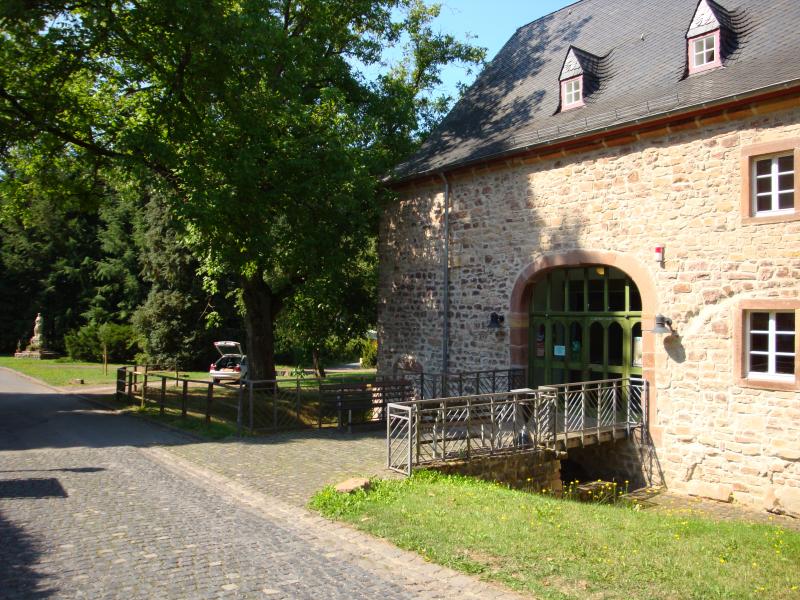
The Rhineland-Palatinate Open-Air Museum shows how people lived, made their homes and worked over the past five centuries. More than 40 faithfully reconstructed historic houses stand on a 35-hectare site. There are also hands-on programmes and themed activity days, including a museum festival and a garden and planting day. Dates vary, so check which activity days fall within your travel period when planning your trip. The museum offers a different focus from the Roman structures: here, the emphasis is on how everyday life changed over several centuries.
Rhineland-Palatinate and Saarland jointly established Hunsrück-Hochwald National Park in 2015. It covers around 10,000 hectares and is characterised by extensive beech forests, rare moors, rocky Rosselhalden scree slopes, and arnica and matgrass meadows. Guided ranger and experience tours start at the Erbeskopf National Park Gate or another ranger meeting point in the park. Check the tour dates before planning your visit. The park therefore offers a nature and outdoor-activity focus that clearly differs from urban history and museum programmes.
A cross-border perspective on the Palatinate
The wider region also includes the Palatinate Forest and Northern Vosges UNESCO Biosphere Reserve, which stretches across the German-French border. Almost three quarters of the “Vosges-Palatinate” massif is forested, making it the largest contiguous forest area in Western Europe. German-French biosphere farmers’ markets are held regularly in the reserve. Visitors can buy environmentally friendly products from the region there. As the markets take place on specific dates, it is worth checking the events calendar for your planned travel period.
When looking for a holiday apartment, the mix of experiences you want may be the deciding factor: would you like to focus your trip mainly on cycle paths, Roman history, everyday life at the open-air museum or nature experiences? The topics mentioned provide concrete pointers to help you decide what kind of holiday you want before choosing where to stay.
Discover more destinations
Discover more destinations: Ahrweiler, Altenkirchen, Alzey-Worms, Bad Dürkheim, Bad Kreuznach, Bernkastel-Wittlich, Birkenfeld, Cochem-Zell, Donnersbergkreis, Eifelkreis Bitburg-Prüm, Germersheim, Kaiserslautern, Kusel, Mainz-Bingen, Mayen-Koblenz, Neuwied, Rhine-Hunsrück, Rhine-Lahn, Rhine-Palatinate District, Southern Wine Route, Southwest Palatinate, Trier-Saarburg, Volcanic Eifel, Westerwald, Zweibrücken, Worms, Speyer, Mainz, Neustadt an der Weinstraße, Frankenthal.
For the overarching travel overview: Germany.
