
Discover Semlow: Castle, Church and Garden History
Accommodation in Semlow
Semlow’s history is reflected in its architecture and churches: the manor house at Semlow Castle, the fieldstone church and the cemetery chapel represent different periods. There is also a historical description of the gardens from the 19th century. This focus on the area can shape your search for a holiday apartment: architecture, religious art and former garden planning provide the setting for a culturally oriented stay.
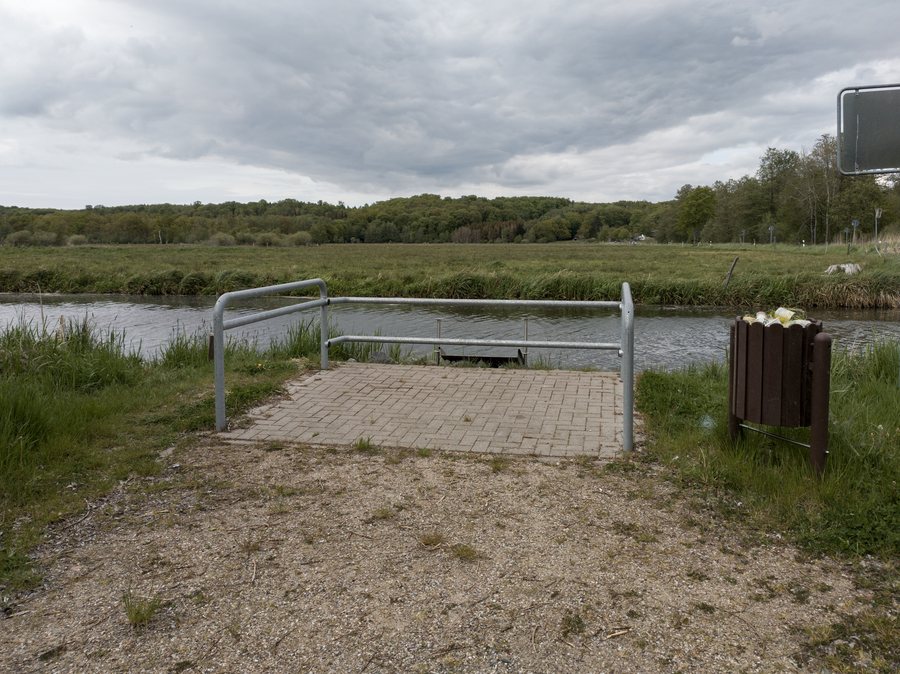 File:Fishing spot, Semlow (LRM 20200517 171759).jpg
Photo: Matti Blume via Wikimedia Commons, CC BY-SA 4.0
Manor House and Historical Garden Planning
The manor house at Semlow Castle was commissioned around 1825 by Carl August von Behr-Negendank and built by Friedrich Wilhelm Buttel, court architect to the Dukes of Strelitz. The construction period, commissioner and architect together offer a specific way into the area’s history. A report from 1850 describes the gardens being created in Semlow at the time. It names the park, game park, ponds, forecourt, rose garden, orchard, kitchen garden and tree nursery. While the story of the manor house is told through its commission and architect, the report turns attention to the garden areas listed at the time. The comparison is specific: the focus for the manor house is on its commissioner and master builder, while the garden report highlights the variety of areas it records.
Church, Bells and Chapel
The fieldstone church in Semlow dates from the early 13th century. Its tower houses three bells, dating from 1447 and 1611, and from the late 14th century. The interior’s complete decorative painting dates from 1860 and is the principal work of Lübeck painter C. J. Milde. The cemetery chapel adds a different architectural accent with its Neo-Gothic brick construction; it was built in 1880/81. Chronologically, the sequence runs from the early 13th century through the decorative painting of 1860 to the chapel of 1880/81. This allows you to place the periods of construction, artistic features and later architecture as distinct stages in Semlow’s building history.
Visits and Park Tours
Mario Müller is listed as the contact for visits to the local history room in Semlow and for park tours. He can be reached at 0172 3803931. If you plan to include either option in your itinerary, check with him directly whether it will be available during your travel dates.
Semlow and the Wider Vorpommern-Rügen Region
The broader travel destination of Vorpommern-Rügen offers a wider thematic perspective: the district has an estimated 60 museums. The old town of the Hanseatic city of Stralsund is part of the UNESCO World Heritage Site “Historic Centres of Stralsund and Wismar.” The district includes the island of Rügen and the offshore islands of Hiddensee and Ummanz. On Rügen, the beech forests in Jasmund National Park are part of the UNESCO World Heritage Site “Ancient and Primeval Beech Forests of the Carpathians and Other Regions of Europe.” These regional examples range from urban cultural heritage to forests and islands, giving a stay in Vorpommern-Rügen a broader context than Semlow’s local architectural history.
Choose the Right Scope for Your Accommodation Search
When searching for a holiday apartment, it helps to distinguish between a focus on the locality and a broader regional scope: would you like Semlow’s architectural and church history to be at the centre of your stay, or are you planning more broadly across the wider travel destination of Vorpommern-Rügen? First decide which scale should shape your trip, then tailor your accommodation search accordingly.
Discover more destinations: Schlemmin, Ribnitz-Damgarten, Langendamm, Ahrenshagen-Daskow
Go to the overview of the wider travel destination: Amt Ribnitz-Damgarten.

