
Penkun between seven lakes and history
Accommodation in Penkun
Penkun is picturesquely situated between seven lakes and combines this landscape setting with a long architectural history. Penkun Castle was built as a fortress from 1198 and was expanded over the following centuries and converted into a castle complex. The town church of Penkun adds a distinctly later architectural feature: it was built between 1858 and 1862, is a solid Neo-Gothic brick building and has simple original fittings. The Oder–Neiße Cycle Route also passes directly through the town. The landscape, architectural history and cycling offer you different ways to assess Penkun as a holiday destination.
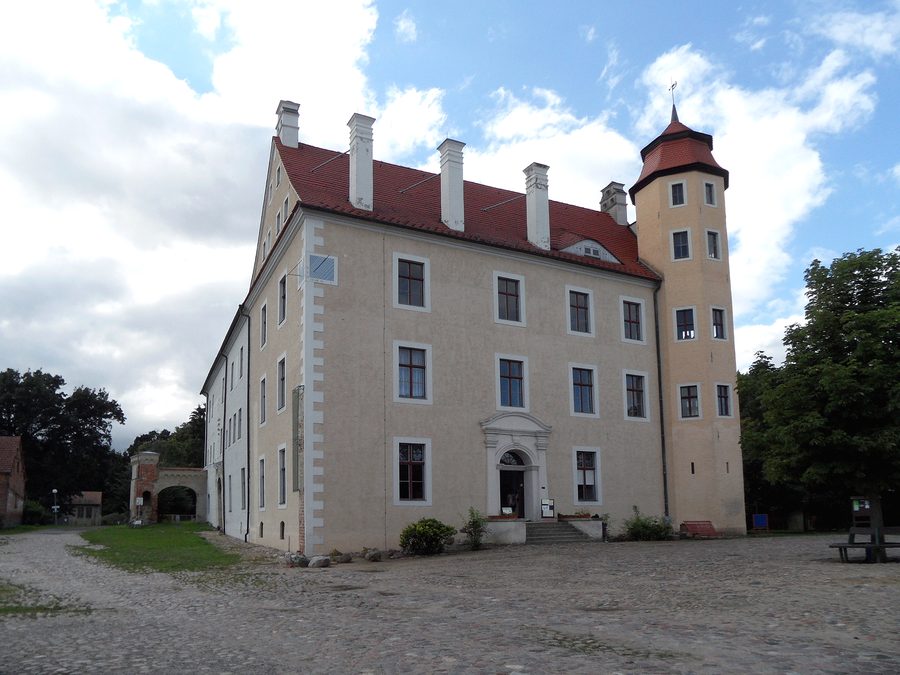 Schloss Penkun, der historische Mittelpunkt der Stadt.
Photo: onnola via Wikimedia Commons, CC BY-SA 2.0
Schloss Penkun, der historische Mittelpunkt der Stadt.
Photo: onnola via Wikimedia Commons, CC BY-SA 2.0
Lakeside landscape and cycling trips
Its location between seven lakes is a distinctive point of reference for anyone considering a lakeside landscape when choosing a travel destination. The Oder–Neiße Cycle Route passes directly through Penkun and offers another way to include the town in your travel plans. If you are travelling by bike, you can consider Penkun as a town along the cycle route; if you are mainly interested in architectural history, the castle and town church offer other themes. When looking for a holiday apartment or holiday home, this distinction can help: should Penkun itself be the focus of your stay, or would you like to include the town as part of a cycling trip?
Castle and town church
The history of Penkun Castle is described as a development spanning several centuries. Its beginnings as a fortress in 1198 and its later extensions into a castle complex represent different phases in its architectural history. This evolution is a point of interest in its own right for visitors interested in culture: rather than considering just one year of construction, you can trace its development from fortress to castle complex.
The town church complements this historical theme with a different architectural form. Its construction between 1858 and 1862, its Neo-Gothic style and its brickwork provide specific architectural features. Its simple original fittings are also part of its character. When visiting the church, you can therefore appreciate its style, materials and fittings together. The castle and town church offer different perspectives on Penkun’s architectural history, while their construction periods should not be confused.
Museums in Penkun and at Schlosssee
The Castle Museum and the Customs and Border Museum are located at Schlosshof 1. The museum association operates both museums, which are looked after by the Glowik family. The “Early German Settlement” open-air museum is also nearby, right by Schlosssee. It is a pleasant place to pause about 500 metres before the entrance to Penkun. When planning your trip, you can therefore distinguish between the museums at Schlosshof and this open-air museum by Schlosssee. Together with the castle and town church, they offer a range of cultural and historical interests to take into account depending on the focus of your stay.
Other towns: Ramin, Plöwen, Blankensee, Grambow, Rothenklempenow, Boock, Nadrensee, Löcknitz.
For the overarching travel overview: Amt Löcknitz-Penkun.

