
Behrenhoff: Village Church and Historic Houses
Accommodation in Behrenhoff
Behrenhoff combines a striking village church with a local history that has left different traces in the farmworkers’ houses and the former manor house. The village lies 12 km south of the university town of Greifswald. If you are looking for a holiday apartment, Behrenhoff is an interesting choice of location, especially if you are interested in historic architecture and the history of a village.
Village Church with Brick Gothic Architecture and Medieval Paintings
Behrenhoff Village Church is an example of North German Brick Gothic architecture. It was built between the late 13th century and 1415. The nave has an eight-part rib vault with ornamental paintings dating from the first half of the 14th century. The choir contains medieval wall paintings that were uncovered in 1897. This brings together various historic details in a single church building: the brick architecture, the vault and the paintings in different parts of the interior.
The original design of the building is also part of the church’s history. It was a three-aisled, three-bay brick basilica with buttresses. Anyone interested in church architecture can explore both its design and the decoration of its vaults and walls. These details provide concrete topics for researching the village, without reducing the church’s history to a single construction date.
Houses from Two Building Periods
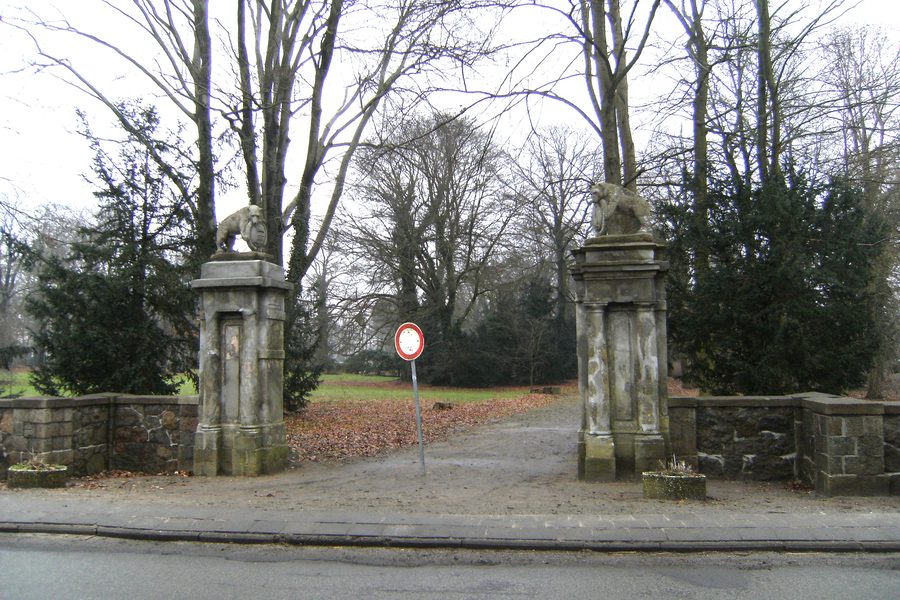
Impressive farmworkers’ houses are part of the village’s appearance today. They were built in the 1860s by Count Carl Felix Woldemar von Behr and in the 1920s by Count Carl Friedrich Felix von Behr. The two building periods are several decades apart and are associated with different members of the von Behr family. The houses continue to shape the village’s appearance today.
For visitors, these houses add another facet of local history to the view of the village church. The buildings represent more than a single historic period: their construction in the 1860s and 1920s brings two stages in Behrenhoff’s development to life. If you are travelling with family, you can use these differences as a starting point for discussing the visible architecture and the village’s history together.
Memories of the Manor House
Behrenhoff Manor House no longer exists. After a fire on the night of 8–9 May 1945, it was demolished. Its history includes events from the Nazi era: under Countess Mechthild Behr, lectures were held there by Dietrich Bonhoeffer, a Protestant theologian and resistance fighter against Nazi terror. From 1942, the manor house was also used to store works of art and cultural artefacts from St. Mary’s Church in Greifswald.
These episodes show that local history is also told through buildings that no longer exist. The manor house should not be confused with the farmworkers’ houses that continue to shape the village’s appearance today: it was demolished in 1945 after the fire, while the houses from the two periods mentioned above still contribute to the village’s appearance. Thus, surviving architectural traces and the memory of a vanished place belong to different parts of Behrenhoff’s history.
Choosing Behrenhoff as a Holiday Destination
When looking for a holiday apartment, you can search for Behrenhoff as a destination in its own right, south of Greifswald: the village lies 12 km from the university town.
You can include other local pages in your search: Diedrichshagen, Dargelin, Dersekow, Wackerow, Weitenhagen, Levenhagen, Hinrichshagen and Mesekenhagen.
For the broader travel overview: Amt Landhagen.

