
Liepgarten: Local History and Views from Apothekerberg
Accommodation in Liepgarten
Liepgarten can be explored through a range of themes: local history at the local history room, historical details in the church and views from Apothekerberg. When planning your trip, you can consider whether you are particularly interested in the town’s development, its church history or the landscape in the region around the Szczecin Lagoon. These different points of interest make Liepgarten a destination that cannot be reduced to a single experience.
Views from Apothekerberg
At 24 m, Apothekerberg is the highest elevation in the area around Liepgarten. The observation tower stands on it and is regarded as a landmark and flagship of the municipality. From the tower, you can enjoy views of the landscape in the region around the Szczecin Lagoon. Alongside the town’s historical themes, the landscape is therefore also a focus of a visit to Liepgarten. If you like to include both culture and a sense of the landscape in your trip, you can make the tower a separate point of interest.
Local history room in the old school
The Liepgarten local history room is housed in the old school in the centre of the village. Covering around 100 m², it offers insights into the town’s development and two historical trades: brickmaking and barge transport. These themes link local history with activities that are readily apparent from their names: brickmaking refers to the brickmaking trade, while barge transport refers to the movement of goods by barge. Together with the town’s development, they offer several ways to explore Liepgarten’s past, rather than focusing on just one historical aspect. The local history room may be of particular interest if you would like to learn more about the town’s history and former trades during your stay. Its approximate area of 100 m² also gives a concrete idea of the size of the facility.
Church and historical details
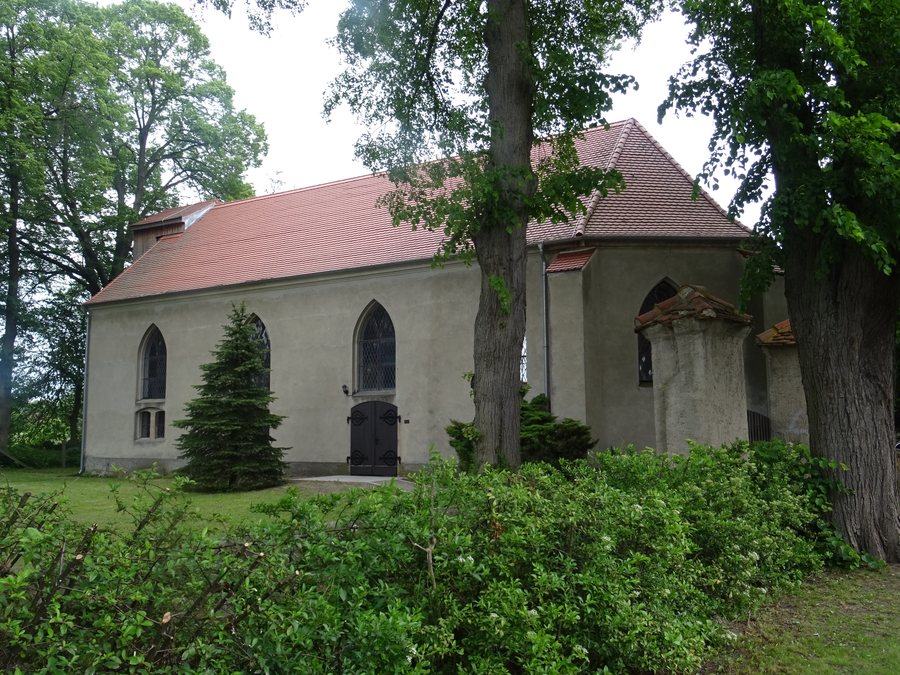
Liepgarten’s church was first mentioned in a document in 1270 and once belonged to the Ueckermünde Augustinian monastery. Its history can also be explored through individual items of its furnishings. Three carved figures have been preserved: two bishops and a depiction of Peter with the key to Heaven. Most of them date from the period of reconstruction after 1488. The figures thus illustrate a specific period in the church’s history; the year 1488 marks the period of reconstruction from which most of them date.
Another part of the church’s furnishings is the Grüneberg organ. It was installed in 1862 and extensively restored in 1995. These dates mark two distinct stages in its history: its installation and a later extensive restoration. Together with the first documentary mention and the carved figures, they provide several specific historical points of reference. If you are interested in church history or woodcarving, you can keep these details in mind as topics to explore during your stay in Liepgarten.
Choose Liepgarten for your holiday
When looking for a holiday apartment in Liepgarten, you can start by asking which aspects of the town you want your trip to focus on: the history at the local history room, the church and its historical furnishings, or the views from the observation tower. These themes cater to different interests, and you do not have to choose just one. If you would like to include several of them, keep them all in mind when choosing where to stay. That way, your search for accommodation is linked to what you want to discover in Liepgarten, rather than just to a general idea of a holiday.
More pages about local destinations: Leopoldshagen, Hintersee, Vogelsang-Warsin, Grambin, Eggesin, Torgelow-Holländerei, Meiersberg and Lübs.
For the broader travel overview: Amt Am Stettiner Haff.

