
Mühl Rosin: Lake Inselsee, village history and cycle paths
Accommodation in Mühl Rosin
Mühl Rosin combines experiences on Lake Inselsee with a remarkable school and village history. The swimming area, opportunities on the water and cycle paths offer a different focus from the historic traces in the village. When choosing your holiday destination, consider what matters most to you: time by the water, exploring by bike or learning about Mühl Rosin’s history.
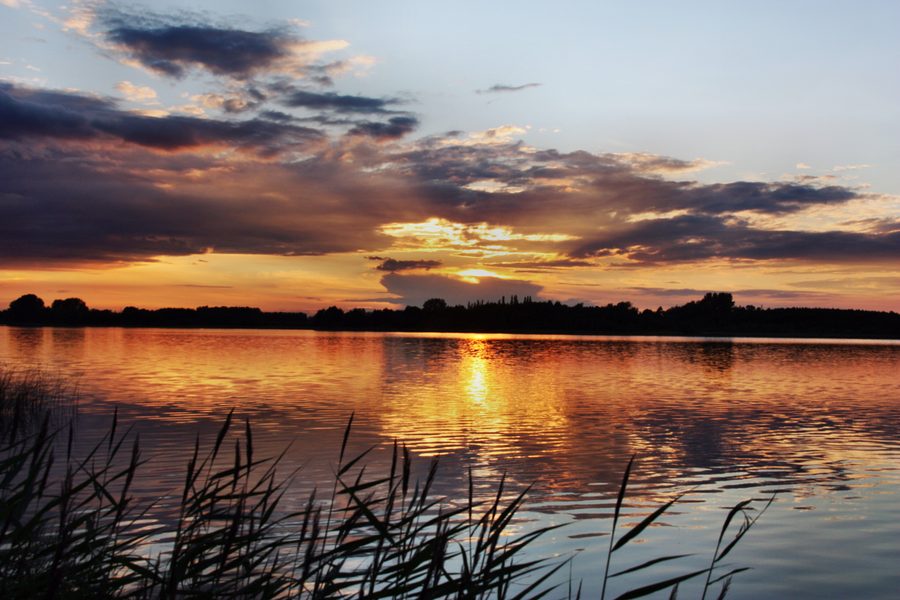
Swimming area and a range of activities on Lake Inselsee
The Mühl Rosin swimming area is in the Güstrow section of the lake, on the southeastern shore of Lake Inselsee. It is in a natural setting and has a small sunbathing lawn and a jetty. Time by the shore and views of the lake are therefore concrete reasons to choose a water-focused stay. The modest facilities at the swimming area are clearly described: a small sunbathing lawn and a jetty.
There are also various ways to spend time on the water at Lake Inselsee. A circular trip on an electrically powered boat is possible for up to 20 people; alternatively, you can sail or row. If you are travelling with a group, the stated capacity of the boat is a useful guide. Sailing and rowing offer other ways to experience the lake. You can decide which option suits your group based on your interests.
Cycle paths connecting to Güstrow
A 5 km cycle path runs from Mühl Rosin to Güstrow along Lake Inselsee. Its length and lakeside route give you a specific point of reference if you would like to include a bike ride in your holiday plans. The first section of the cycle path between Bölkow and Mühl Rosin was completed in 2022. The completed sections provide a continuous cycle connection between three municipalities, with a link to the regional centre of Güstrow; one section runs between Bölkow and Mühl Rosin. This gives you two points of reference: the 5 km cycle path from Mühl Rosin to Güstrow and the cycle connection that includes the section between Bölkow and Mühl Rosin.
School history and traces of village life
Children were already being taught in Mühl Rosin from 1770. The Mühl Rosin Historical School documents this early school history. The village’s first school building was constructed in 1859; children from the village were taught in its rooms until 1950. These dates tell the story of the school system’s long development, but the two school buildings should not be confused: the first building and the later central school are separate milestones.
Mühl Rosin Central School opened in 1950 as the first newly built school in the then-district of Schwerin. On 1 September 1950, 159 pupils began lessons there in three classrooms to start with. Today, the central school is a regional school. Some rooms in its modern extension are now used, among other things, for the municipal library and municipal archive. The school’s significance thus extends beyond its teaching history to include other community facilities.
Another trace of local history leads to the hereditary lease farm No. 3, known as “Honigberg.” Nothing remains visible today of the former residential and farm buildings. An information board tells visitors about the former residents and their lives. The farm can therefore be discovered through its traditional name and the information on the board, rather than through surviving buildings.
Another point of reference is the centre of Mühl Rosin, by the Mühlbach stream. You can choose Mühl Rosin based on which of these interests you would like to shape your trip.
Discover more places
Reimershagen, Gülzow-Prüzen, Kuhs, Glasewitz, Zehna, Plaaz, Lüssow, Klein Upahl.
For the overview of the wider area: Amt Güstrow-Land.

