
Broderstorf: Linear Village and Manor Estate History
Accommodation in Broderstorf
Broderstorf combines the layout of a linear village with a layered history: the place was first mentioned in a document on 16 October 1327 and lay on the historic trade route from Lübeck via Rostock to Stettin. The municipality also includes Teschendorf, Steinfeld and Öftenhäven, each with its own manor estate history. When choosing a holiday apartment for a trip, you can therefore first consider whether you are most interested in local history, the landscape or cycling routes in the nearby area.
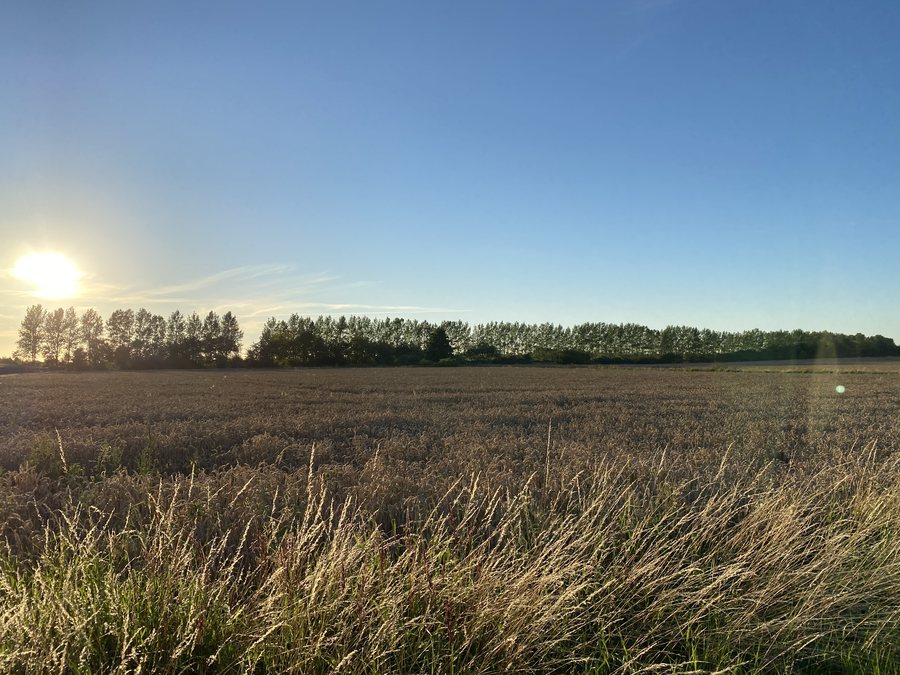 File:Broderstorf (50177405061).jpg
Photo: Thomas Woodtli from Zürich, Switzerland via Wikimedia Commons, CC BY-SA 2.0
File:Broderstorf (50177405061).jpg
Photo: Thomas Woodtli from Zürich, Switzerland via Wikimedia Commons, CC BY-SA 2.0
Village Layout and Landscape
Broderstorf is laid out as a linear village. The term describes the basic layout of the place: the settlement is arranged along a road. To get your bearings, it helps to understand Broderstorf not only through individual sights, but also through this linear village structure. Another geographical feature concerns the municipality as a whole: it lies on a plateau between the valleys of the Warnow and Recknitz rivers. The Carbäk stream also flows through the municipality from east to west.
This brings together two distinct landscape features: the municipality’s location between the two river valleys and the course of the Carbäk through its area. If you are interested in the landscape and regional geography, you can use these details to get your bearings and place Broderstorf in context. They describe the municipality, not necessarily every individual district or a specific holiday apartment address.
Historical Traces in the Village and Municipality
Broderstorf was first mentioned in a document on 16 October 1327. The village’s history also includes the historic trade route on which Broderstorf lay, connecting Lübeck with Stettin via Rostock. These two details offer different perspectives: the date provides an early written reference to the place, while the road situates Broderstorf within a regional connection.
The Rostock district’s list of protected monuments includes the railway station building at Rostocker Chaussee 2 and a residential building at Rostocker Chaussee 1. The entries provide specific addresses and state that the buildings are listed monuments. They are therefore of particular interest on a cultural history tour as architectural evidence and landmarks; their listing does not imply that the interiors are open to visitors.
The railway station also plays a role in planning your journey. Train departures, operating days and possible timetable changes are listed for Broderstorf station. If you are considering travelling by train, check the connection for your specific travel date. This keeps travel planning separate from the question of which historic places or landscape features you want to focus on during your stay.
Teschendorf Manor Estate and Other Places
Teschendorf is a district of the municipality of Broderstorf. The former manor estate there is designated as a protected monument area by ordinance; this includes historic street and path layouts. The manor estate is regarded as a characteristic example of a Mecklenburg manor estate, preserved with an uncommon degree of completeness. Its form is rooted in medieval predecessors and took shape in the modern era. This makes Teschendorf a distinct point of interest for anyone who wants to learn about the development of historic manor estates in the municipality as well as the history of Broderstorf.
Teschendorf Manor House was built in 1830 and acquired its present appearance around 1900. It is a single-storey, Neo-Baroque plastered building with 11 bays. The three-bay, two-storey central avant-corps is particularly elaborate and is framed by colossal Corinthian columns. This description combines the building’s development over time with specific features of its façade, offering a closer look at its architecture.
Other historical points of interest are in Steinfeld and Öftenhäven. Steinfeld was first mentioned in a document on 13 May 1334; the Steinfeld estate had been a state domain since 1781. At Öftenhäven Manor House, the tower’s weathervane indicates that alterations were made up to 1918. After 1990, the manor house stood empty for many years and was later renovated by a new owner. These details tell different stories: early references to the places, the history of an estate as a state domain and the later transformation of a manor house.
Cycling Route Nearby
Nearby, a cycling route 1,690 metres long and 2.5 metres wide connects Thulendorf with the existing cycle path along the B110 from Sanitz to Rostock. It ends directly at Carbäk Primary School. The new cycle route makes it easier to travel from Thulendorf to the railway station, the municipal administration in Broderstorf and Rostock. If cycling is one of your travel interests, you can use this connection as a specific point of reference when finding your way around the area. Its length, width and endpoint describe the route; they do not in themselves indicate your specific travel time.
When choosing a holiday apartment, you can consider Broderstorf from a range of perspectives: its linear village layout and early history, the municipality’s landscape, historic manor estates or the nearby cycling route. Other places at the same level in the hierarchy are Poppendorf Poppendorf, Klein Kussewitz Klein Kussewitz, Thulendorf Thulendorf and Roggentin Roggentin.
For the overarching travel overview: Amt Carbäk.

.jpg)