
Raben Steinfeld: Lakes, Nature and Castle History
Accommodation in Raben Steinfeld
Raben Steinfeld lies between Lake Schwerin and Lake Pinnow. Its character is shaped by its waterside landscape, protected natural areas and remarkable traces of history. Here you can explore a variety of holiday interests: trails through the countryside, geological features, and the history of the castle and park. What interests you most can help you decide whether Raben Steinfeld is the right holiday destination for you.
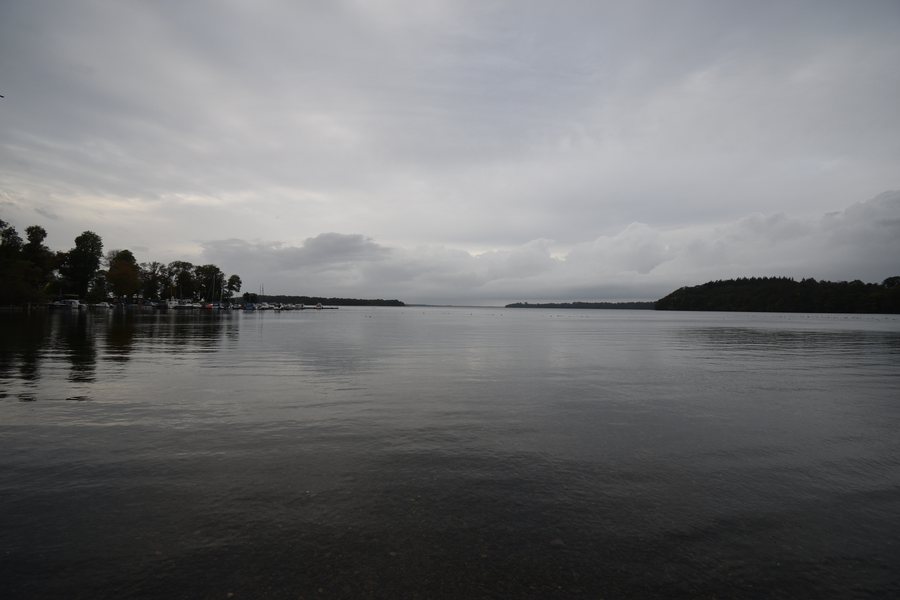 File:Schweriner Innersee an Raben Steinfeld af Erik Værbak 2019.jpg
Photo: Dansk kulturarv via Wikimedia Commons, CC BY-SA 4.0
File:Schweriner Innersee an Raben Steinfeld af Erik Værbak 2019.jpg
Photo: Dansk kulturarv via Wikimedia Commons, CC BY-SA 4.0
Lakeside Landscapes and Nature Trails
Raben Steinfeld’s nature and landscape conservation areas can be explored via a well-developed network of hiking, cycling and horse-riding trails. The village therefore offers a range of ways to explore the countryside actively. If you enjoy walking, you’ll find a trail along the Görslow shore that runs right beside the water. The nature reserve is an approximately 10-kilometre stretch of shoreline on the eastern shore of Lake Schwerin’s inner lake.
A striking feature of the Görslow shore is its steep cliff slope. It is about 10 to 15 metres high and was formed by deposits of ground sediment along the main ice-margin positions of the Weichselian glaciation. The shoreline thus brings together a distinctive landscape feature and a geological history.
Glacial Erratic Boulders and Regional Rocks
The Raben Steinfeld glacial erratic garden displays 138 selected erratic boulders from the region. They are regarded as witnesses to the Weichselian glaciation and represent the diverse geology of Scandinavia and the Baltic Sea bed. The garden offers a different perspective on the landscape from the trails by the water: the focus here is on individual rocks and their geological classification.
Another destination for anyone interested in geological history is the Raben Steinfeld Geological Museum. It gives special prominence to the 30-million-year-old Sternberg rock, popularly known as “Sternberg Cake”. The museum describes it as the fossil-richest rock in northern Germany, highlighting more than 520 species. The glacial erratic garden and the museum each have a different focus: selected erratic boulders from the region in one, and a particular fossil-rich rock in the other.
Castle, Park and Ancient Oaks
Raben Steinfeld Castle was converted into a grand-ducal summer residence at the end of the 19th century and later served as the widow’s residence of Marie of Schwarzburg-Rudolstadt. In its setting and through its sightlines, the castle is directly connected to the UNESCO World Heritage Site “Schwerin Residence Ensemble – Art of Historicism”. This connection also makes the place interesting to visitors with an interest in architectural history and historic cultural landscapes.
The landscaped park around the castle was created in 1851 by Theodor Klett, the grand-ducal court gardener of Mecklenburg-Schwerin. Adjacent to the castle is a park with 34 so-called “Raben Steinfeld oaks”. These oaks form a group of the oldest trees in the village; they are between 300 and 650 years old and are designated as natural monuments. The largest oak has a circumference of 7.40 metres. The park therefore tells not only of its creation in the 19th century, but also of trees whose history stretches much further back.
Discover History in Other Places
Raben Steinfeld’s history also includes the stud farm keepers’ houses, built between 1863 and 1869. Constructed for twelve families in the English style, they have remained relatively well preserved to this day, apart from a few atypical alterations. At the Stör Canal, the memorial “The Mother”, inaugurated in 1975, commemorates the end of the death march and the suffering of 18,000 Sachsenhausen concentration camp prisoners on 2 May 1945. This site adds a solemn historical note and complements the history of the castle and its architecture with a remembrance of the end of the war.
When choosing a holiday apartment, you can consider which of Raben Steinfeld’s features you’d like to shape your stay: trails and lakeside scenery, geological discoveries, or the history of the castle and village. The village brings these themes together, but each offers a different experience. This lets you choose your destination according to your interests—whether you prefer spending time outdoors, taking a closer look at rocks, or exploring historic places.
If you’d like to compare other village pages: Dobin Am See, Gneven, Pinnow, Langen Brütz, Leezen, Cambs.
For the broader travel overview: Amt Ostufer Schweriner See.

