
Zurow between lake landscapes and village history
Accommodation in Zurow
Zurow combines a rural landscape with a layered village history. In terms of its natural geography, the municipality lies partly in the Northwest Mecklenburg Hills around Wismar Bay and partly in the Warin Basin within the West Mecklenburg Lake District. This means that two landscape settings meet here: the hills and the lake district. At the same time, the church, traces of manor estates and thatched buildings tell different sides of the area’s history. If you are looking for a holiday apartment in Zurow, you can plan your trip around whether you would especially like to discover the landscape or the historic buildings.
Lakes and the origins of Zurow
Zurow began as a Slavic village settlement on a sandy peninsula between two lakes. The Selliner See and the Hofsee remain as remnants of the lake between which the village settlement arose. Zurow’s districts of Nakenstorf and Klein Warin are also part of the Neukloster See–Wariner See Nature Conservation Area. The municipality therefore brings together a distinctive settlement history and a nature conservation area that includes these named districts.
Village church and historic buildings
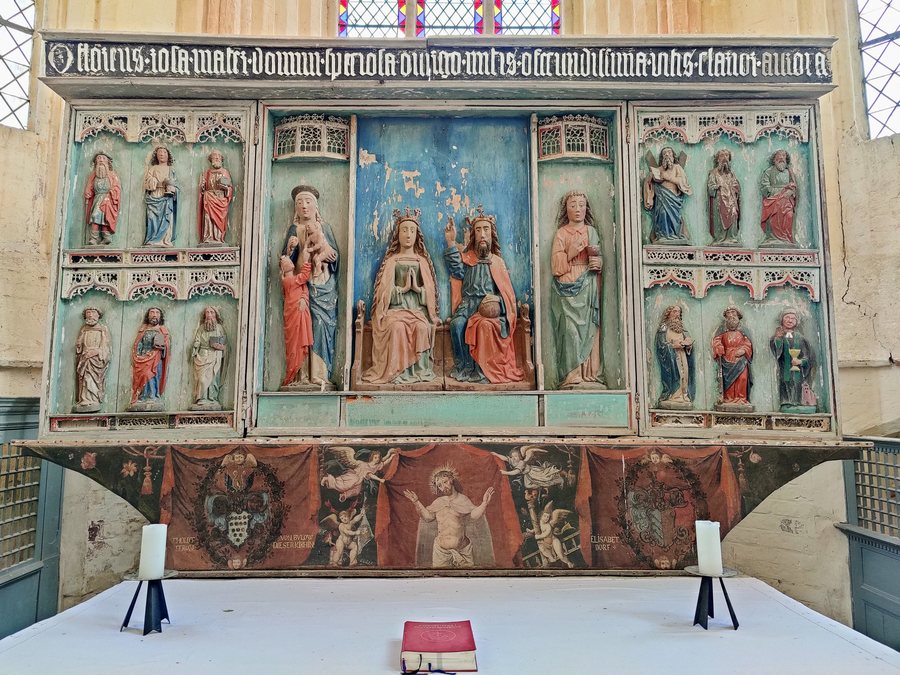
A key historic landmark is Zurow Village Church. The brick building dates from around 1380 and reflects the influence of Wismar’s parish churches. The building’s history is also linked to a religious tradition: until 1541/42, the church was a place of pilgrimage associated with a famous image of the Virgin Mary. For a shared discovery question with children, the two dates offer a good starting point: the construction period around 1380 and the pilgrimage, which continued until 1541/42. If you would like to visit the village church, please register in advance or ask the neighbours.
On Zurow’s main street, the church, a cemetery, a fieldstone wall and a mortuary are among the listed sites. Other buildings are spread across various districts. In Reinstorf, a thatched Lower Saxon three-sided farmstead is one of the municipality’s sights. In Kahlenberg, former manor houses are among the notable buildings. In Fahren, parts of a former manor estate remain, including the Old Horse Stable. There is also an old thatched house in Zurow, towards Fahren. Together, these places illustrate different facets of architectural history—from the brick church and parts of manor estates to thatched buildings.
By bike or on bridleways
For cyclists, the Wismar–Zurow route is one specific way to reach the village. It passes Selliner See, goes through an underpass beneath the A20 and then continues to Zurow along a well-maintained cycle path. In Klein Warin, bridleways were designated and signposted in cooperation with the forestry office; an equestrian centre was also established there. The information therefore highlights two different things: a described route for cyclists and a local connection to horse riding. When making your choice, consider whether you would like to focus on the journey itself or on activities at your destination.
Discover more places
Other places in this section: Lübberstorf, Passee, Glasin, Warin, Züsow, Jesendorf, Bibow.
For the broader travel overview: Amt Neukloster-Warin.

.jpg)