
Discover Lüdersdorf: Heathland and History
Accommodation in Lüdersdorf
Lüdersdorf (Meckl) station has bicycle parking and car parking. Check these facilities before your trip, as station amenities may change. At the municipal level, there are also nature and history themes to explore: Palinger Heath, Herrnburg Village Church and historic places such as Palingen and Duvennest give your trip a range of possible focuses.
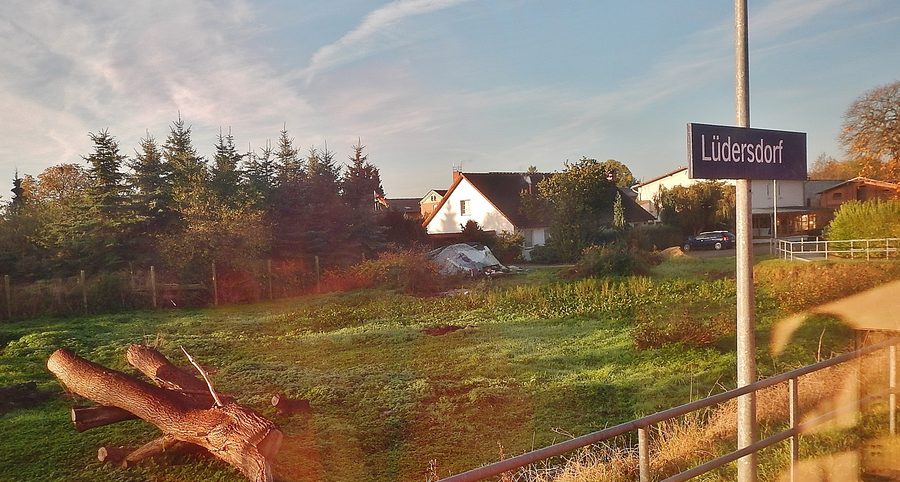
There is also a useful point of reference for getting around by road: the municipality of Lüdersdorf has an entrance to the A 20 motorway. When choosing a holiday apartment, it may therefore help to first consider whether you would like to focus your stay more on nature experiences or on local and architectural history. The municipality offers different themes for both interests.
Palinger Heath: Dunes, Moorland and Trails
Palinger Heath is shaped by sandy soils and inland dunes and is largely wooded. Its landscape includes moors and lakes, among them Möwenmoor in the southwest, Hoppenmoor in the northwest and Kiebitzmoor. The heath is part of the “Palinger Heath and Teschow Peninsula” landscape conservation area and the protected Green Belt landscape. It was designated a nature reserve in 1992. Its present-day landscape character also has historical roots: decades of isolation during the restricted-access period fostered flora and fauna untouched by humans.
There are many kilometres of cycling and hiking trails for outdoor activities. Small, hidden forest lakes invite visitors to swim in summer; swimming opportunities are seasonal and may vary. Palinger Heath therefore offers cycling and hiking as holiday activities, as well as a summer’s day of swimming. South of Herrnburg, Duvennester Moor lies in a wooded area. It is an isolated part of the “Herrnburger Binnendüne and Duvennester Moor” Special Area of Conservation (SAC). The Standard Data Form, as of May 2017, records nine habitat types listed in Annex I, as well as the otter, a protected species listed in Annex II of the Habitats Directive.
Herrnburg: Village Church and Architectural History
Herrnburg Village Church is a single-nave brick Gothic church, first documented in 1319. Its oldest part, a square box-shaped choir with three eastern windows, is dated to the mid-13th century. A visit can be arranged by appointment. The interior reveals a history of construction and furnishings spanning several centuries: the Gothic winged altar, with oakwood carved figures, dates from the first half of the 15th century. The Marian altar came from Lübeck Castle Church and is the work of a Lübeck master. A bronze baptismal font with Late Gothic ornamentation on three lion feet also dates from the 15th century.
Other furnishings continue the journey through time: the organ by organ builder Friedrich Albert Mehmel was brought into the church in 1884, together with the gallery and pews. The pulpit in the so-called “auricular” style, dating from 1675, is the work of Lübeck master G. Fick. A whale rib also hangs in the nave, commemorating the men who went to sea to hunt whales. The different dates and objects give the church more than one historical point of interest.
The Old Customs House stands directly beside the village church. The present two-storey half-timbered building was erected in 1783 on the foundations of an earlier chapel and was initially used again as a chapel. It is considered the oldest surviving residential building in the Mecklenburg border village of Herrnburg, beside the Hanseatic City of Lübeck. The church and customs house thus complement the area’s nature themes with tangible architectural history in the district of Herrnburg.
Local History in the Municipal Districts
The history of other places in the municipality can also be traced through tangible remains. Palingen was in the restricted-access zone until 1989 and was the site of a border company. Originally, it was a lance-shaped village green settlement. In Duvennest, the former Lübeck–Gadebusch freight route recalls a historic connection. Since 1466, the atonement stone in the Duvennester Tannen has commemorated a merchant who was murdered while travelling.
Boitin-Resdorf was mentioned in 1257 as “Rastorpe” and is an enclosed circular village on the Lübeck–Rehna road. A tumulus on Jittbarg points to traces of earlier settlement. Together with Herrnburg Church and the Old Customs House, this presents a broad picture: medieval local traditions, historic village layouts and buildings from different centuries sit alongside the municipality’s natural attractions.
If you are more interested in architecture and local history, Herrnburg and the other historic places offer different points of interest.
Discover More Destinations
Discover more destinations: Niendorf, Grieben, Papenhusen, Dassow, Menzendorf, Lockwisch, Roduchelstorf, Groß Siemz.
For the regional travel overview: Schönberger Land District.

