
Jürgenstorf: Church, Manor Estate and Museums
Accommodation in Jürgenstorf
Jürgenstorf’s history can be seen in its church, the buildings of the former manor estate and its museums. The branch church was rebuilt in 1700; parts of an earlier Gothic building dating from around 1400 have also been preserved in the west tower. Two distinct periods in time thus meet in the same church building. The building is a rectangular half-timbered structure with a west tower and a pent roof. Those interested in architectural styles can view the church’s design and the older components in the tower as different aspects of its history.
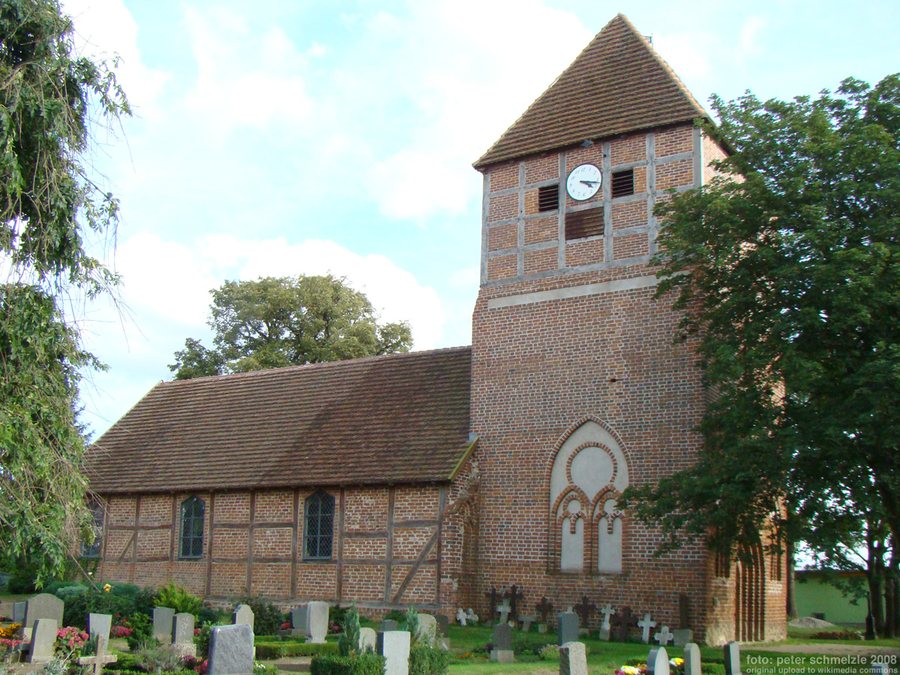
Church and furnishings
The furnishings also have their own distinctive features. The altarpiece depicts the crucifixion of Jesus; the two wings show the apostles. A pulpit from the early 18th century depicts the four evangelists. The former patron’s box inside is now used as a winter church. The bell tower contains two medieval bells, which can be reached by a separate staircase. The imagery, pulpit and bells are all part of the church’s history.
Tours of the church are available by prior telephone arrangement. If you are particularly interested in church architecture and furnishings, you can plan your visit around this focus.
Manor estate and technology museums
Two gatehouses, the former manor house and a stable building remain from the former manor estate in the estate village of Jürgenstorf. The two gatehouses date from the mid-18th century and have been preserved in their original condition. The technology museum of the Jürgenstorfer Oldtimer-Verein invites visitors to explore just next to the manor estate. Here, the surviving buildings of the former manor estate and a technology museum offer distinct points of interest.
Another highlight is the M-V Two-Wheeler Museum in Jürgenstorf. It displays 110 two-wheelers of various types, produced from the post-war period until the end of the GDR. The collection’s time span therefore runs from the post-war period to the end of a political and social era that provides context for the history of the vehicles on display. When planning a trip together, you can distinguish between the themes: church architecture and sacred art sit alongside the history of the manor estate and technology; the two-wheeler museum has its own focus on vehicles.
Literary heritage and further discoveries
Jürgenstorf also commemorates Fritz Reuter’s character “Unkel Bräsig.” The cemetery contains the grave of manor inspector Johann Friedrich Schecker (1775–1848), who is considered the literary model for the character. A sculpture by sculptor Günter Kaden in “Entspektor-Bräsig-Platz” commemorates Inspector Bräsig and his real-life model. The grave and sculpture offer different points of focus: Schecker is named as a person here, while the link between the literary character and the model is highlighted there.
In the associated municipality, the heritage-protected chapel and cemetery on the outskirts of Rottmannshagen form an ensemble that visitors can experience. When choosing where to visit, you can consider whether to focus mainly on church architecture and art, the history of the manor estate and literature, or the two-wheeler museum. If these themes shape your choice of stay, you can search specifically for a holiday apartment in Jürgenstorf.
More places to discover: Ivenack, Kittendorf, Gülzow, Knorrendorf, Rosenow, Zettemin, Ritzerow, Grammentin.
For the broader travel overview: Amt Stavenhagen.

