
Blumenholz
Accommodation in Blumenholz
Lakes, meadows, fields and forests shape the character of Blumenholz. At the same time, there is plenty to discover, from a striking ridge to a half-timbered church and traces of an old castle. If you would like to combine nature and culture on your holiday, the area offers a range of ways to do so—from hiking in the Hellberge to exploring distinctive architectural and decorative details.
A landscape of lakes and the Hellberge
Blumenholz is surrounded by the Tollensesee basin and the chain of lakes formed by Müritzsee, Mittelsee, Langer See and Krebssee. The village is nestled among meadows, fields and forests. Geographically, it lies in the area of the end moraine of the Pomeranian stage of the Weichselian glaciation. This landscape provides the setting for a stay in which both nature and local history can play a part.
South of the Lieps, the Hellberge form a ridge running from north to south. They are about 1.5 kilometres long and reach a highest elevation of 91.7 metres above sea level. From there, you can enjoy sweeping views in every direction. The Hellberge are a popular destination for excursions and hikes; the area around Blumenholz is also ideal for walking. The surroundings offer opportunities for cycling tours, too, giving you another way to explore the landscape.
The Hellberge lie within a protected landscape area. Their dry slopes are grazed by sheep, and sheep fescue poor grassland grows in dry areas. One distinctive botanical feature is the presence of five-stamen sparry: the Hellberge are its only known location in Mecklenburg-Western Pomerania. These details make the ridge interesting not only as a hiking destination but also give this natural area a distinctive character.
Churches and historic traces
Blumenholz Church was built using half-timbering in the first half of the 18th century and has no tower. Inside, a pulpit altar and choir stalls from the Rococo period have been preserved. The church’s simple, towerless design and its historic furnishings make for a distinctive combination. Visitors interested in architectural history will find concrete features here, rather than just a general sense of the past.
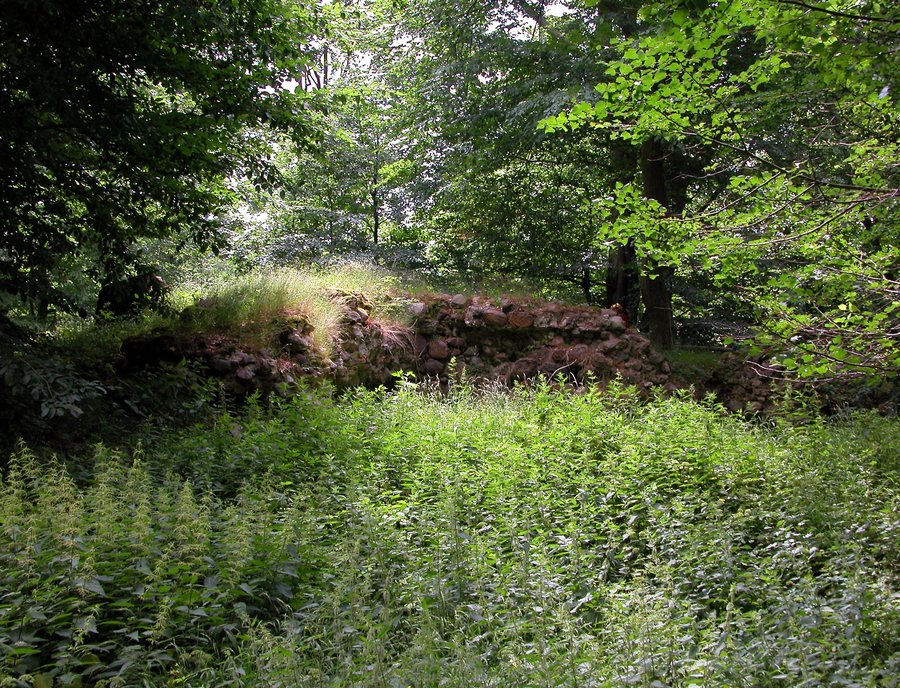
The foundation walls of an old castle can be found on Schloßberg hill near Mittelsee. There is also an erratic boulder on Schloßberg, measuring 4.5 metres in diameter and 2 metres in height. It originally lay in Zechow Forest. The Hilhaus is another noteworthy historic building: a half-timbered summer hunting lodge built in 1938. Together, the castle remains, erratic boulder and Hilhaus offer different insights into the history and architectural features of the area.
The Church of Weisdin in the municipality provides another distinctive feature of its own. It was built between 1747 and 1749 by the ruling von Peckatel family on an octagonal ground plan. Its little tower reflects the fashionable taste for chinoiserie at the time. Inside, a brightly painted baptismal angel hangs from the ceiling. The church can be appreciated not only for its architectural form but also for the details of its design.
Blumenholz is especially worth considering if you appreciate these features alongside the surrounding landscape of lakes, meadows, fields and forests. For other places to compare, see Blankensee, Grünow, Carpin, Möllenbeck, Wokuhl-Dabelow, Godendorf, Hohenzieritz and Userin.
For the broader travel overview: Amt Neustrelitz-Land.

_Burgruine.jpg)