
Uelitz: Village History and Distinctive Church Art
Accommodation in Uelitz
Uelitz Church: Building History and Distinctive Details
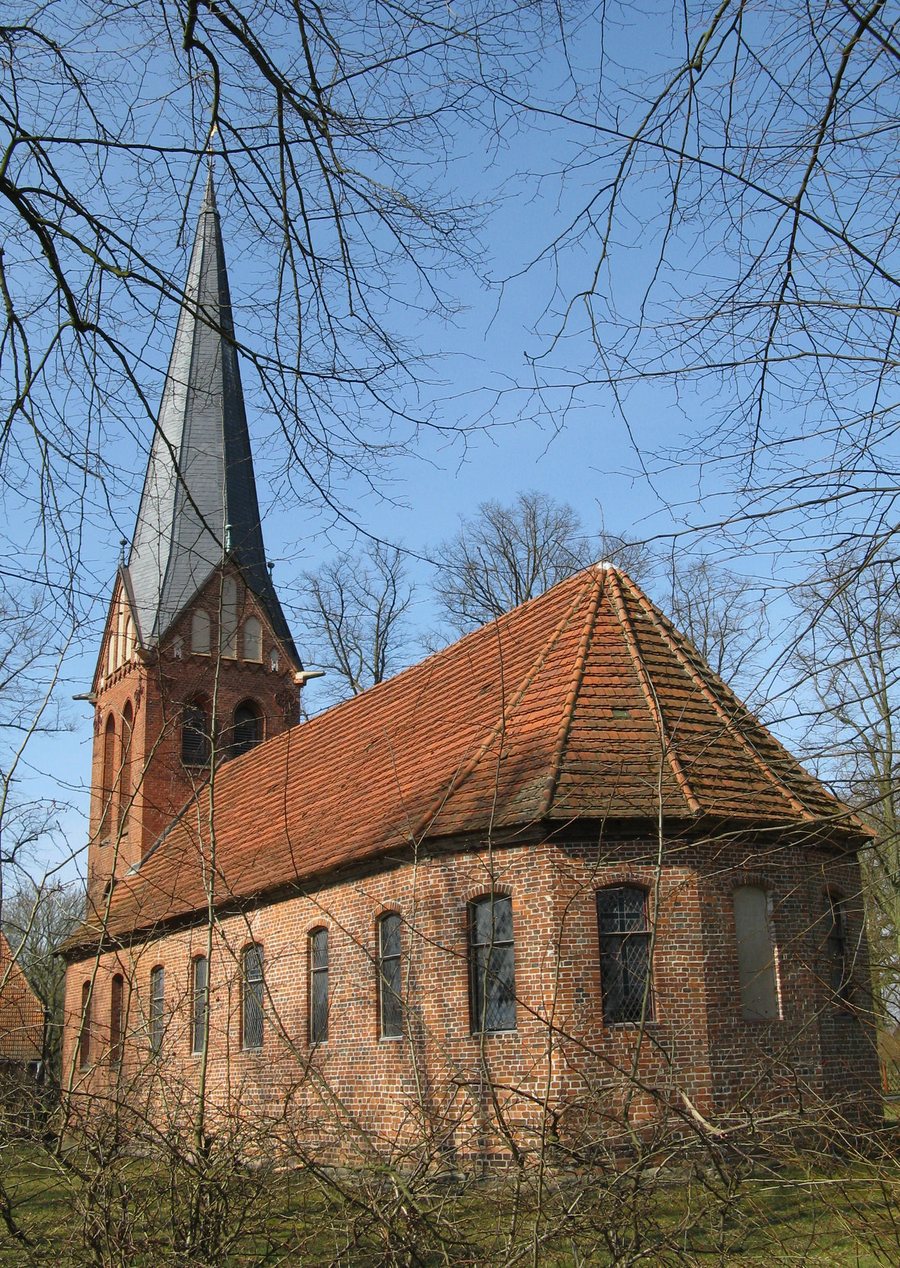
Uelitz combines an early written history with notable traces from several centuries. The village is first recorded in a document from 1218: the Counts of Schwerin sold it to Reinfeld Cistercian Abbey in Holstein. The Baroque brick church tells a story from a different era. Built between 1747 and 1750, it is one of the village’s most historically significant buildings. Those interested in a place’s history will therefore find more than just one historical point of reference here.
The mechanical organ by the Friese company is particularly distinctive. Built in 1894, it has been preserved entirely in its original condition. It is considered the second-to-last instrument from the workshop of Friedrich Friese (Friese III), as well as the last organ he installed himself. The instrument was restored in 2000 and can be played during church services and concerts. The organ thus connects the history of the workshop with the church’s building history and is a notable subject for anyone interested in organ building and church music.
The furnishings also reflect different periods and styles. The pulpit is an original from the time the church was built, probably around 1747. It is decorated with the four Evangelists, their attributes and Bible quotations. The altar, by contrast, is a Neo-Gothic carving from the 19th century; it includes a carved crucifix by Siegfried Güstrow, made in 1889. The ceiling paintings date from the 18th century and were restored in 2007. When exploring Uelitz’s history, the original building period, later furnishings and restoration can thus be considered as distinct aspects.
The large church bell is among the oldest individual items. It dates from the early 14th century, measures 97 centimetres in diameter and bears eleven small images around its rim. The smaller second bell was cast in 1932 and bears no Nazi symbols. Together with the organ, pulpit and altar, the bells provide tangible points of interest for a trip centred on historic craftsmanship and village history.
Village Layout, Rectory and Pilgrimage Route
Uelitz’s history can also be read in its village layout: twelve farmsteads are arranged around the church, and this historic arrangement is still visible today. The rectory complex dates from the years after 1786. The church, farmsteads and rectory complex each represent different aspects of the village’s inherited layout. The church is a prominent landmark within this arrangement, while the farmsteads also make the historic village layout a subject in its own right.
Another stop to consider when planning your trip is the parish barn in Uelitz. It has been developed as a stop on a pilgrimage route that is also suitable for cyclists and other tourists. Both pilgrimage and cycling are therefore among the travel activities associated with the village. If you are looking for a holiday apartment or holiday home, you could plan your stay around Uelitz’s village history and this pilgrimage route. This focus differs from a trip centred on the regional landscape and routes across a wider area.
The wider travel area includes the Lewitz, a water-rich region covering 1,600 hectares and considered Germany’s largest contiguous meadow landscape. It adds a regional landscape dimension to Uelitz’s cultural and historical themes, although it is not itself part of the village’s history. For walks and cycle rides in the wider Ludwigslust region, the “EntdeckerROUTEN” app provides GPS-guided navigation on eight routes. The app is described for travel on foot and by bicycle; the routes cover the Ludwigslust region.
When choosing where to stay, you can decide whether you would like to explore Uelitz for its church, historic village layout and pilgrimage stop, or also include the landscapes and routes of the wider travel area. If you’d like to explore more village pages: Lüblow, Warlow, Alt Krenzlin, Rastow, Groß Laasch, Wöbbelin, Lübesse and Sülstorf.
For the wider travel overview: Ludwigslust-Land District.

