
Discover Warnkenhagen
Accommodation in Warnkenhagen
Warnkenhagen’s local history also includes the difficult beginnings after 1945, which the new farmers’ houses in Tellow bear witness to. Tellow and Gutshaus Gottin also offer different themes for planning your trip: Tellow focuses on Johann Heinrich von Thünen and a historic estate ensemble, while Gottin features a listed manor house, a landscaped garden and offerings centred on food and time away.
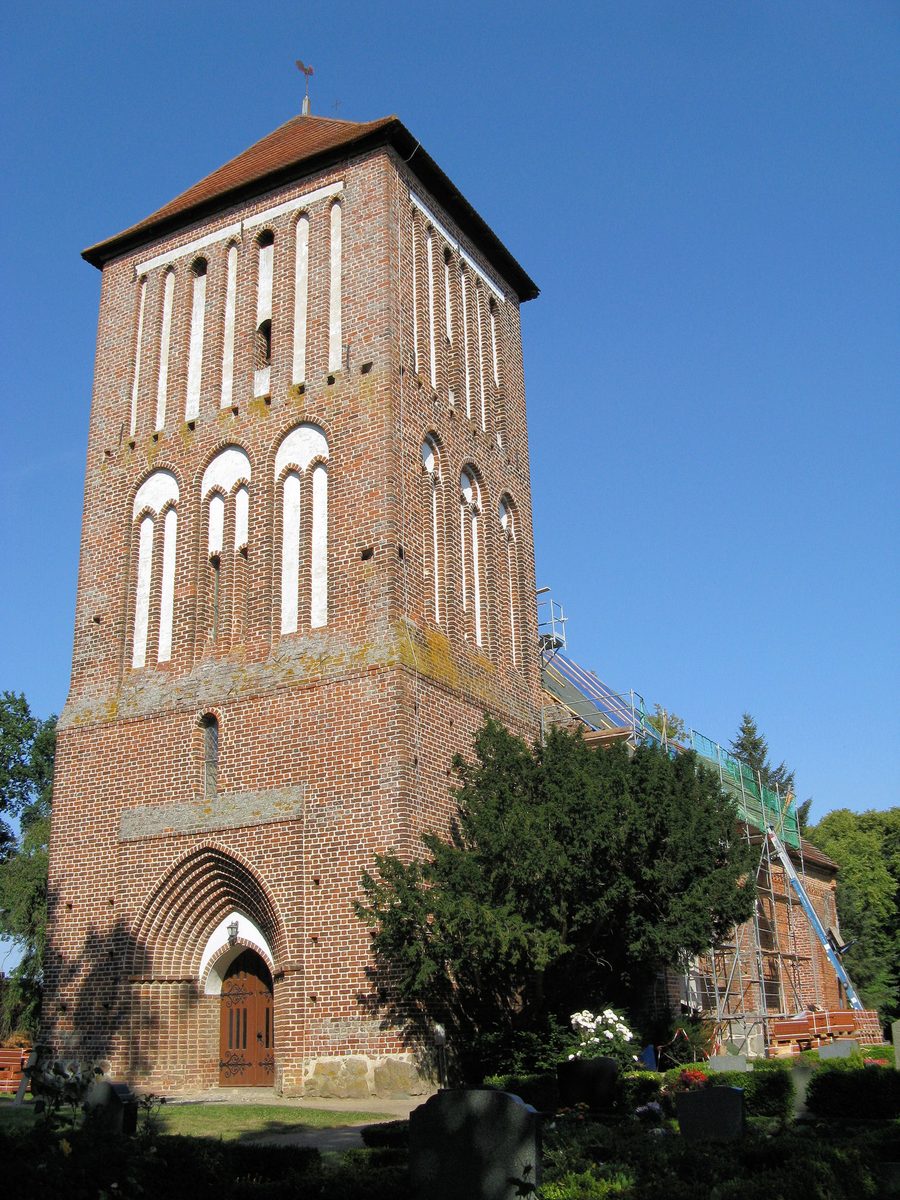 Die spätgotische, einschiffige Backsteinkirche in Warnkenhagen.
Photo: Niteshift ( talk ) via Wikimedia Commons, CC BY-SA 3.0
Die spätgotische, einschiffige Backsteinkirche in Warnkenhagen.
Photo: Niteshift ( talk ) via Wikimedia Commons, CC BY-SA 3.0
Thünen and the history of Tellow
The Thünen Museum Tellow is named after Johann Heinrich von Thünen (1783–1850). He was a world-renowned agricultural and economic scientist, model farmer and social reformer. The museum was founded in the place where he lived and worked. Visitors interested in agriculture, economic ideas and social reform will find several biographical points of connection here, rather than just a name from local history. Thünen’s diverse fields of work give the museum visit a broad historical context.
The estate ensemble in Tellow also tells of different eras. It includes a picturesque landscaped park, laid out in 1826 according to Johann Heinrich von Thünen’s ideas. The park invites visitors to take a stroll; the hornbeam arbour in particular defines its character. The design, based on Thünen’s ideas, directly connects the landscape with the person after whom the museum is named. If you are interested in the history of the place, you can explore biographical and landscape themes without reducing them to the same kind of evidence.
The new farmers’ houses are another historical trace in Tellow. They bear witness to the difficult beginnings after 1945. This means the local history extends beyond the estate ensemble and Thünen’s lifetime. The houses represent a different historical context from the park laid out in 1826: while the park is connected with Thünen’s ideas, the new farmers’ houses point to the period after the Second World War. If you are looking for a historical focus for your trip, you can take these different points of reference into account when choosing your theme.
Manor house and garden in Gottin
Gutshaus Gottin is a listed manor house built in 1835. The manor house has a restored park, designed as an English landscape garden and featuring more than 200 historic rose varieties. Gottin thus brings together the history of the manor house and a diverse garden. The park offers a different focus from the landscaped park in Tellow: there, the design based on Thünen’s ideas and the hornbeam arbour define the scene; in Gottin, it is the English landscape garden design and historic rose varieties. This gives you the option of planning your holiday according to your interest in local history or garden design.
The culinary offering at Gutshaus Gottin is also clearly described: meals are prepared by an in-house chef and follow a fresh, vegetarian approach using seasonal ingredients and herbs. The offering is distinguished by its specified ingredients and culinary focus. The manor house also offers the chance to take part in its own retreats, workshops and breaks. If you are considering these kinds of activities alongside historical and landscape themes for your trip, you can plan them as a separate focus. The manor house, garden, cuisine and activities on offer describe different aspects of the property; they do not have to be combined into a single visit programme.
Discover more places
If you would like to visit more local pages at the same level, you can find Alt Sührkow, Groß Roge, Groß Wüstenfelde, Jördenstorf, Groß Wokern, Thürkow, Lelkendorf and Dahmen here.
For the overarching travel overview: Amt Mecklenburgische Schweiz.

