
Discover Hohen Sprenz
Accommodation in Hohen Sprenz
Hohen Sprenz offers two distinct focal points for a stay: the varied landscape of Lake Hohen Sprenz and historical traces with clearly stated dimensions and dates. The lake lies within the Dolgener and Hohen Sprenzer See Landscape Protection Area. The village is also home to a listed church dating from the first half of the 13th century; a rampart is located on the Die Weding peninsula in the southern part of the lake. If you are considering a holiday rental in Hohen Sprenz, you can weigh up whether the lake as a landscape feature and the local cultural heritage offer the focus you want for your trip.
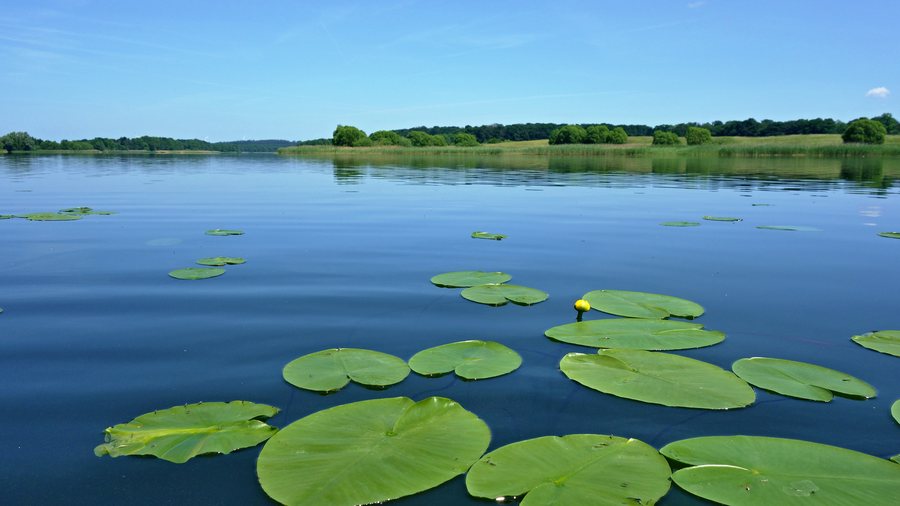
Lake Hohen Sprenz and its landscape
The lake consists of a large central basin with several smaller islands and two distinctive, elongated bays in the northeast and southwest. Its shape thus combines a wide basin with smaller islands and clearly defined inlets. The lake is surrounded by a hilly ground moraine landscape, with a strip of woodland along its eastern and southern shores. The water’s shape, the relief and the woodland create readily distinguishable facets of the landscape. If you are mainly looking for a distinctive lake landscape when planning your trip, you will find specific features here to focus on: the two bays, the islands and the contrast between open shore areas and woodland. The lake’s protected-area designation is also part of its landscape character.
Church and rampart: distinct historical points of interest
The listed church dates from the first half of the 13th century, giving it a clearly defined place in time. The rampart on Die Weding can be understood through its location and dimensions: it extends 62 metres from east to west across the peninsula in the southern part of the lake and is 4 to 5 metres high. The church and the rampart offer different ways to discover Hohen Sprenz. At the church, the date is the main point of interest; at the rampart, its location, orientation and dimensions stand out. Together, they complement the natural landscape with two specific historical sites, without implying that they tell the same story.
More things to do in the wider Rostock destination
The wider Rostock destination offers additional nature and activity options. The Sternberger Seenland Nature Park is characterised by deeply incised breakthrough valleys along the Warnow, numerous lakes, hills and extensive forests; hiking and cycling are its main activities. At Wildpark-MV, visitors can explore the park independently or join guided walks, including wolf, owl and evening walks. This offers different ways to experience nature: exploring independently or taking a guided walk focused on a particular theme. The Schwaan Climbing and Adventure Forest has seven courses for children, beginners and advanced climbers. A 116.5-metre-long flying fox runs directly over the lake. As facilities may change, check the latest information before your visit.
The cultural attractions in the wider Rostock destination also offer different points of focus. The Wolhynian Resettlers Museum in Linstow offers guided tours for groups and individuals. Ethnographic objects, photographs and documents tell the story of the Volhynian Germans from the mid-19th century until their settlement in Mecklenburg after the Second World War. The Molli narrow-gauge railway offers a different historical perspective: it runs between Kühlungsborn and Bad Doberan and is the oldest narrow-gauge railway on the Baltic coast. With its 900-millimetre gauge, it has shaped the coastal towns’ appearance since 1886. When choosing the focus of your holiday, you can therefore weigh up the lakes and landscapes of Hohen Sprenz against the nature, activity and cultural attractions of the wider Rostock destination.
Discover more destinations: Diekhof, Wardow, Liessow, Dolgen Am See.
Go to the wider travel overview: Amt Laage.

