
Rosenow: Village Church, Chapel and Architecture
Accommodation in Rosenow
Rosenow brings together a village church dating from the mid-19th century, a neo-Gothic burial chapel and the sculpture “Hanna”. Those interested in architectural history and art will find several clearly distinct points of interest here. There are also other historic buildings in Schwandt and Luplow, and a family burial site in Tarnow. These three are separate localities within the municipality of Rosenow. This distinction is useful when looking for a holiday apartment: the church, chapel and sculpture are in the locality of Rosenow; the other places described are in different localities within the municipality.
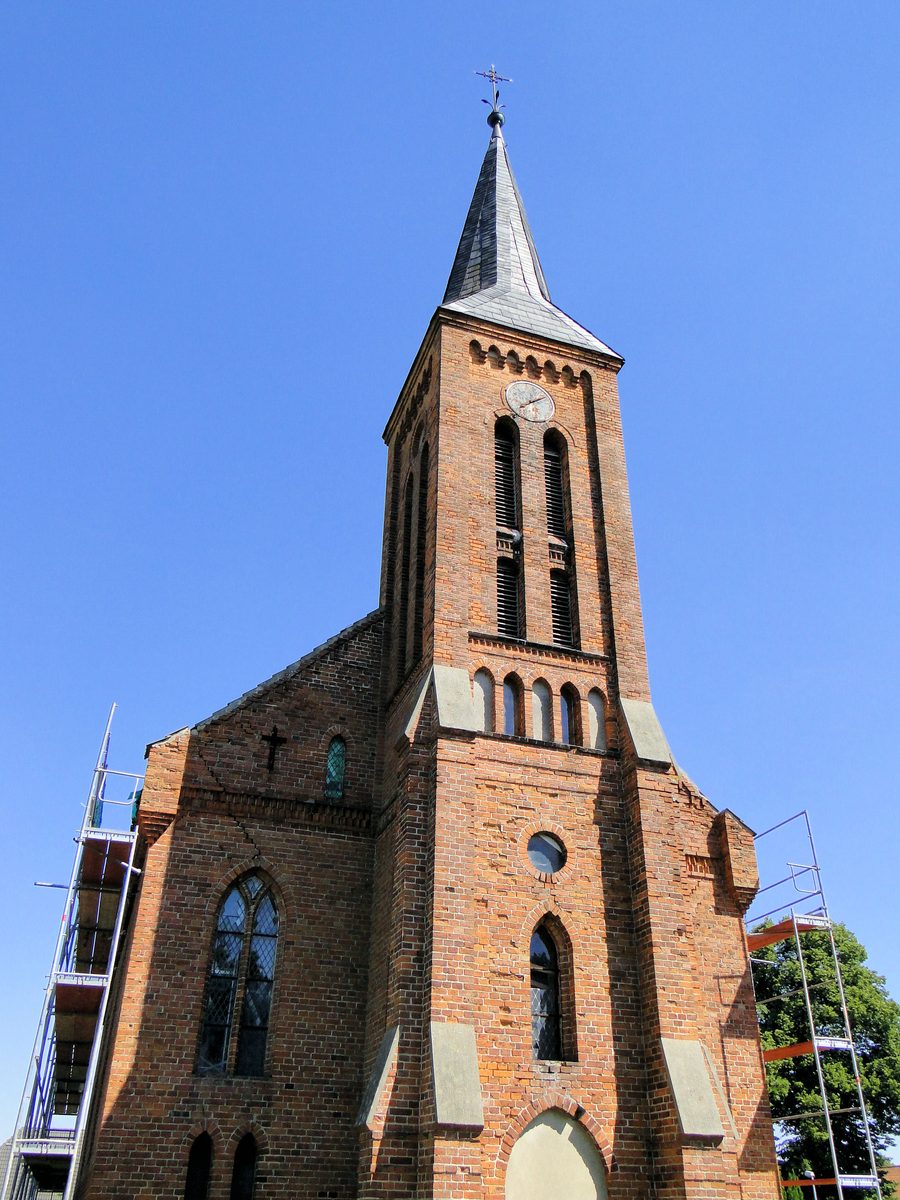 Die historische Kirche in Rosenow wurde 1849 bis 1851 errichtet.
Photo: Niteshift ( talk ) via Wikimedia Commons, CC BY-SA 3.0
Neo-Gothic Architecture and Art in Rosenow
Rosenow village church was built in the neo-Gothic style in the mid-19th century. Its architectural details include a foundation and base walls made from fieldstones taken from the former churchyard wall. The source of the material connects the church building with the former churchyard wall: it is not only the neo-Gothic style, but also the fieldstones that form part of the locality’s architectural history.
The neo-Gothic burial chapel of the von Blücher family is located just west of the churchyard. The old cemetery in Rosenow is also home to “Hanna”, a sculpture by Thomas Jastram. Their distinct associations help set these places apart: the chapel is defined by its architectural style and family connection, while “Hanna” is centred on the artwork and the artist’s name. Each offers a separate perspective on Rosenow’s cultural history alongside the village church.
The church is also a venue for the Mecklenburg-Vorpommern Festival. As the programme may change, check the current event dates before your trip. This lets you consider a possible cultural event as a separate part of your plans, alongside the architecture.
Other Architectural and Memorial Sites in the Municipality
Schwandt is a separate locality within the municipality of Rosenow. There, a large Classical mausoleum belonging to the von Schlieffen family adjoins the village church on its west side. The mausoleum has a western apse and 19th-century lunette windows. Above its entrance, an allegorical fresco depicts the death scene of Juliane von Schlieffen, who died in 1832. Carl Eggers painted the fresco in 1835. For architecture enthusiasts, it brings together a Classical architectural style and a specific pictorial subject, with the artist and year identified.
Tarnow is also a separate locality in the municipality. The family burial site of the Wendenburg family is located in the cemetery of Tarnow Chapel. It adds another place of remembrance to the architectural sites, outside the village of Rosenow.
Luplow Manor House, also in a separate locality within the municipality, was built around 1760. It is single-storey, has nine bays and a two-storey central avant-corps, as well as a fully developed mansard roof. These features make the architectural form more precisely identifiable than a date alone. The Rococo stucco ceilings depict a fox, the heraldic animal of F. J. Christian von Voss, and a bear, the heraldic animal of his wife, Eva Juliane von Behr. This adds a look at heraldic motifs and the names of the couple to the exterior description of the house. The manor house is privately owned; do not assume access is available.
When choosing a holiday apartment, you can be guided by the focus of your trip: the church, chapel and sculpture in the locality of Rosenow, or the architectural and memorial sites in other localities within the municipality.
Discover More Destinations
Ivenack, Zettemin, Mölln, Gülzow, Kittendorf, Briggow, Bredenfelde, Knorrendorf
For the broader travel overview: Amt Stavenhagen.

