
Wilhelmshaven: Harbor, Bridge and Wadden Sea
Accommodation in Wilhelmshaven
Wilhelmshaven brings together its harbor, city history and Wadden Sea themes. This mix is especially vivid at the Kaiser Wilhelm Bridge: it is the city’s landmark and connects Bontekai with South Beach. Historic buildings, museums and green trails add a range of distinctive touches to a stay.
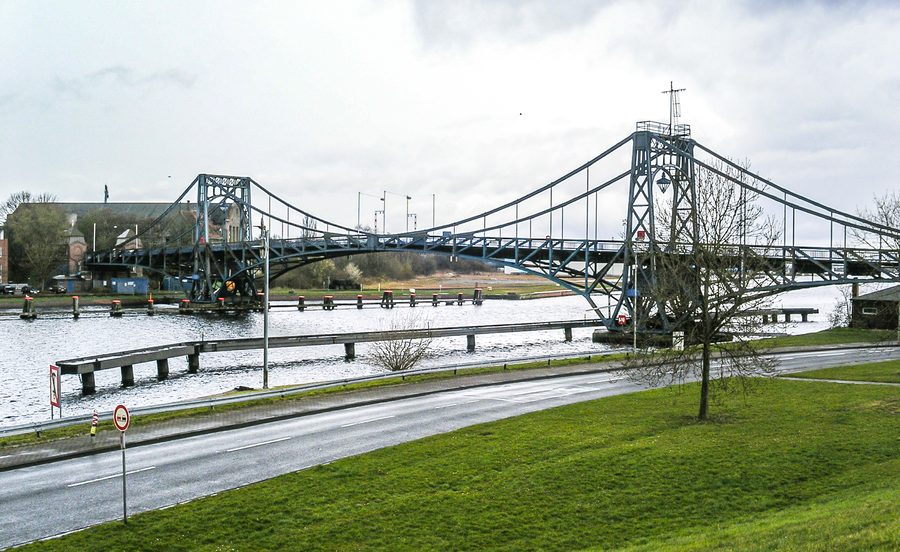 Die Kaiser-Wilhelm-Brücke gehört zu den markanten maritimen Orten Wilhelmshavens.
Photo: Dietmar Rabich via Wikimedia Commons, CC BY-SA 4.0
Die Kaiser-Wilhelm-Brücke gehört zu den markanten maritimen Orten Wilhelmshavens.
Photo: Dietmar Rabich via Wikimedia Commons, CC BY-SA 4.0
A bridge between the harbor and South Beach
Built in 1907 and extensively renovated from 2011 to 2012, the Kaiser Wilhelm Bridge shapes the cityscape. When it was completed, it was Europe’s largest swing bridge. At 159 meters long, it lets pedestrians, cars and bicycles cross the harbor entrance. When ships with tall masts enter the harbor, the bridge swings open to let large vessels pass. It is therefore both a transport route and a striking piece of harbor engineering.
South Beach is considered unique on the German North Sea coast and has been one of Wilhelmshaven’s attractions since 1929. Bontekai runs along the north bank of the Ems-Jade Canal. Those interested in the city’s history will also find Wilhelminian-era buildings, ornamental squares and parks in the historic Prussian city center. The town hall was built by Fritz Höger in 1929; two brick lions adorn its entrance. Other historic sights include the Christus- und Garnisonkirche, as well as medieval terp churches in Heppens, Neuende, Fedderwarden and Sengwarden.
Maritime history and Wadden Sea themes
The German Naval Museum is housed in the former gun-carriage workshop, built in 1888 and one of the oldest surviving workshop buildings of the former Imperial Shipyard. It traces almost 160 years of German naval history, the navy’s roles and the fates of those who served as it changed over time. One highlight is a tour of the four decks of the guided-missile destroyer MÖLDERS, decommissioned in 2003, which offers a glimpse into life and work on board. Guided tours through the imperial era also showcase Wilhelmshaven’s sights.
The Wadden Sea Visitor Center explores the natural and cultural history of the Jade Bight, as well as the dynamics and ecology of the Wadden Sea. The exhibition spans three floors. Through interactive, multisensory displays, the center shares knowledge about tides, migratory birds and marine mammals, as well as current coastal and marine conservation topics, including sea-level rise and marine litter. The center is for all ages, offering a different way to experience the coast than a tour of the historic city.
Green trails and day trips
For some exercise and a break between city sights and museum visits, Rüstringer City Park offers walking and jogging paths. Wilhelmshaven’s largest green space also has a pond for pedal boating and opportunities to watch ducks. The park offers several simple activities, so a stay need not revolve around just one coastal theme.
Tours also offer a range of options: the South City & Beach Tour follows the South City and South Beach, passing sculptures and monuments. Boat trips to Butjadingen depart from Wilhelmshaven. Between these excursions, historic walking tours and time in the city park, you can shape your stay around your own interests.
When looking for a holiday apartment, it helps to consider what you would most like your days to focus on: maritime history and architecture, Wadden Sea themes, or walks and activities amid greenery.
Discover more destinations
Discover more destinations: Breddewarden, Salzgitter, Wolfsburg and Braunschweig.
Back to the main travel overview: Lower Saxony.

