
Uelzen between art, heathland and the Ilmenau
Accommodation in Uelzen
Uelzen combines striking architecture and medieval history with heathland, river scenery and places to visit. The Hundertwasser railway station sparks curiosity from the very start of a visit: it was created as a project for Expo 2000 in Hanover and is one of the last works by Austrian architect Friedensreich Hundertwasser. Those interested in art and design will find other examples in Uelzen, while nature and history offer different focuses for a trip.
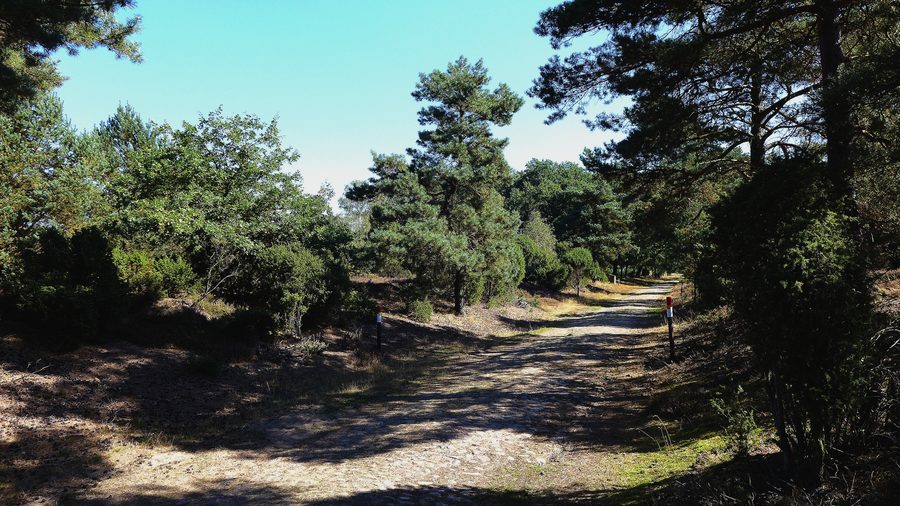 Die Ellerndorfer Heide veranschaulicht den Landschaftscharakter der Lüneburger Heide im Uelzen-Raum.
Photo: Oxfordian Kissuth via Wikimedia Commons, CC BY-SA 3.0
Die Ellerndorfer Heide veranschaulicht den Landschaftscharakter der Lüneburger Heide im Uelzen-Raum.
Photo: Oxfordian Kissuth via Wikimedia Commons, CC BY-SA 3.0
Art, buildings and medieval history
The station brings together art, ecology and modernity. From the station forecourt, the “Path of Stones” leads into Uelzen city centre; 21 artistically painted rock sculptures line the route. In town, it is also worth looking at the Gothic St. Mary’s Church. It was consecrated and elevated to parish church status in 1292, and its church tower is 86 metres high. The “Nige Hus” of the Ratsweinhandlung was built around 1500 as an extension to the Old Town Hall and served the council as a wine and beer cellar. To this day, the Ratsweinhandlung is a place to visit for those who enjoy fine wines.
Another testament to the Middle Ages is preserved at Ebstorf Abbey: the Ebstorf World Map is housed there. It was probably created around 1300, covers about 13 m² and is considered the largest known medieval representation of the world. From 1 April to 31 October, the abbey offers guided tours lasting about 90 minutes, with explanations of the map. The approximate duration and seasonal dates can help you fit this visit into your travel plans.
Bodenteich Castle also combines history with present-day functions. Founded around 1250, it is the only castle in the Uelzen district, although only parts of it have been preserved. It was restored between 1983 and 1988; today it houses the tourist information office, the citizens’ office and the castle museum. The castle offers a view of both its historical development and its present-day use.
Heathland, river and excursions in the district
If you would rather explore a landscape than buildings, consider the Ellerndorf juniper heath. It lies between Eimke and Ebstorf in the Uelzen district, covers almost 60 ha and is the largest contiguous heathland area in the eastern part of the Lüneburg Heath. The Ilmenau provides another point of reference in the landscape: it forms south of Bad Bevensen near Uelzen, where the Gerdau and Stederau rivers meet, and flows into the Elbe at Hoopte near Winsen an der Luhe after 107 kilometres.
The Ilmenau Cycle Route runs for around 120 kilometres along this river, from its headwaters in the Uelzen district to its mouth at Hoopte. Its length is a useful guide if you are considering a longer cycling trip along the Ilmenau. For a different kind of outing, Oldenstadt Lake offers opportunities for walking, jogging and swimming in summer. In Uelzen city forest, the wildlife enclosure combines native animal species, the Uelzen Eagle Owl and an observation platform with walking trails and running routes.
Culture can also be discovered in different ways: since its founding in 1975, a total of 30 historic buildings have been brought together at Hösseringen Museum Village. At the Suhlendorf Crafts Museum, a demonstration of the grinding mechanism in the over-200-year-old “Auguste” post mill can be arranged. Tours around Uelzen introduce botanical, geological and historical points of interest as well as archaeological sites, with expert explanations. Water-based leisure activities are possible on the rivers of the heath and the Elbe Lateral Canal. At the Uelzen lock complex near Esterholz, visitors can watch ships entering and leaving from two viewing platforms; Locks I and II are between Uelzen and Wittingen, near Esterholz on the Elbe Lateral Canal.
Choose the right place for your trip
When choosing a holiday apartment, you could first consider which themes you want to shape your stay: Uelzen’s art and buildings, the history surrounding the abbey and castle, the heathland, or activities by the river and lake. These destinations offer different reasons for individual excursions, without requiring you to limit your trip to just one kind of experience. The Uelzen district is easily accessible by rail, including the main Hamburg–Hanover line, by water via the Elbe Lateral Canal and by federal highways. You can also take travel arrangements into account when choosing your base.
For further orientation, you can find the towns of Gerdau, Lüder, Himbergen, Barum, Rosche, Schwienau, Bad Bodenteich, Uelzen, Suhlendorf, Suderburg, Bad Bevensen, Hanstedt, Altenmedingen, Eimke, Bienenbüttel, Emmendorf, Wriedel and Rätzlingen.
For the broader travel overview: Lower Saxony.

.jpg)