
Discover Leese
Accommodation in Leese
Leese combines a marked hiking trail and a lakeside landscape with remarkable evidence of the village’s history. On the Leeser Runde, you can experience the countryside west of the village; to the east, the trail leads through woodland and meadows. In terms of cultural history, the story stretches from a pre-Roman Iron Age cemetery to the history of Jewish families in Leese. You can tailor your stay to what interests you most: time in nature, historical topics, or both.
Hiking between woodland, meadows and lakes
The Leeser Runde is a marked hiking trail around the municipality of Leese in the Mittelweser collective municipality. East of Leese, it leads through woodland and meadows before returning to the starting point. West of the village, hikers on the trail can experience the lakeside landscape. The route therefore offers a mix of open countryside, woodland and meadows.
There is a viewing platform by the lakes west of Leese, with views over the water and its many waterbirds. If you are interested in the landscape and birdlife, this is a great spot to take in the view across the water. The Leeser Runde is accessible by train on the Nienburg–Minden line, via Leese-Stolzenau station. Taking the train is one way to reach the hiking trail.
Archaeology and local history
In the Kleines Feld area of Leese lies the largest known pre-Roman Iron Age cemetery in northern Germany, with approximately 1,100 individual graves. The approximate number of graves and the site’s classification as a cemetery from this period give it particular archaeological significance. Those interested in early history will find a subject here that reaches far beyond the more recent history of the village.
From April to October, the Heimathaus Leese opens once a month, from 2:00 p.m. to 5:00 p.m., to all visitors. There, you can explore the museum and learn more about local history. The visit offers a way to discover the village’s history alongside the archaeological traces at Kleines Feld. If the Heimathaus appeals to you, you can take its monthly opening hours into account when planning your trip.
The church and Jewish history
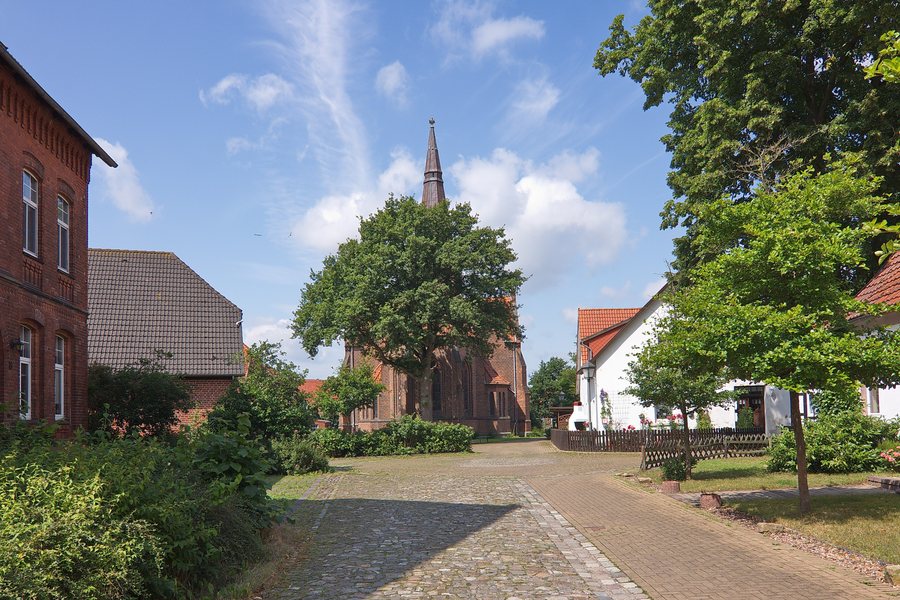
Leese Church is home to two striking historic objects: an old crucifix known as the “Leeser Cross,” and an 800-year-old Romanesque sandstone baptismal font with leaf ornamentation. The font combines a distinctive material with a specific design, while the crucifix’s traditional name is a striking part of local identity. Both objects make the church a point of interest for travelers interested in religious art and history.
Jewish history is also part of Leese’s local history. Jewish families lived here from the beginning of the 18th century until the Nazi era. By the late 18th century at the latest, they had their own cemetery on Zappenberg. The Jewish Cemetery on Zappenberg has existed since at least that time and is located outside Leese, near the railway embankment on Zappenberg road. Its location and the long history of Jewish families in Leese point to an important part of the village’s past.
These different points of interest can help you choose a holiday apartment in Leese: the Leeser Runde and the lakeside landscape are a good fit for a stay focused on nature and hiking, while the Heimathaus, church and cemetery offer historical topics to explore. This way, you can decide which sides of Leese you want to shape your vacation.
More places: Estorf, Landesbergen, Stolzenau, Husum.
Back to the regional travel overview: Mittelweser.

