
Rullstorf
Accommodation in Rullstorf
Rullstorf appeals to travelers interested in local history and archaeological traces. The circular village, the Lüneburg Landwehr and Kronsberg bring together different historical themes: an early settlement form, a later defensive barrier and an archaeological site.
Circular Village, Landwehr and Kronsberg
Rullstorf was founded around 1150 as an original circular village with six farmsteads. The term “circular village” makes the settlement form itself part of the town’s history; the six farmsteads define the specific circumstances of its founding. This means its early history offers more than a single point of reference in time.
A later historical trace is the Lüneburg Landwehr. It originally ran south from Rullstorf via Neu Wendhausen to Deutsch Evern. The Landwehr in Rullstorf was a barrier of earth ramparts and water-filled ditches, built around 1480. Its route and construction provide two different points of reference: the first describes its original extent, while the second describes its form.
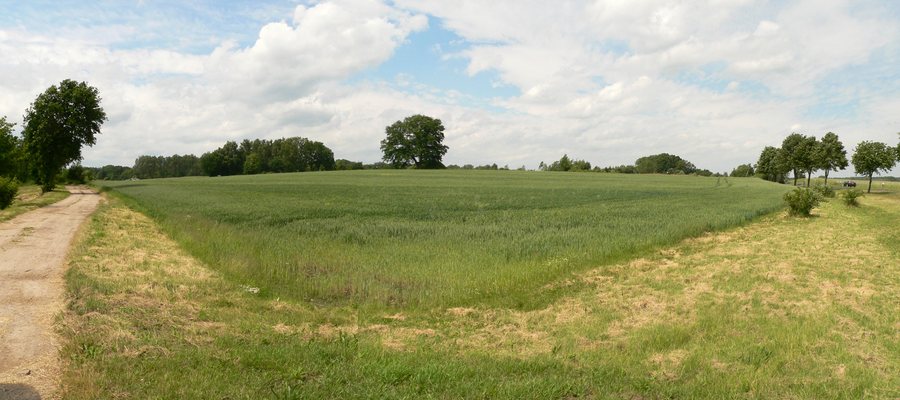
Rullstorf’s Kronsberg lies on the edge of the geest above the Elbe valley. Covering around 24 hectares, this archaeological site broadens the focus from village history and the Landwehr to archaeological traces. With its size and location, Kronsberg is a destination in its own right for anyone interested in the landscape’s early history.
Finds from Rullstorf can also be seen in museums. The “Swan Brooch” is on display at the Museum Lüneburg. The grave with stallions and a deer, among the finds from Rullstorf, is on display at the Lower Saxony State Museum in Hanover. Check the latest exhibition information before visiting.
More discoveries in the Lüneburg travel destination
The wider Lüneburg travel destination also offers a variety of highlights. The megalithic tombs in Schieringer Forst lie between Barskamp and Walmsburg. They were built during the Neolithic period, between 3000 and 2300 BC. A circular hiking trail leads from Walmsburg village square to the tombs. This connects an archaeological destination with a clearly described route—a different way to explore the region’s history.
City and town hall tours in Lüneburg showcase its historic atmosphere, with gabled and brick houses, old lanes and the picturesque water quarter. Dates and booking conditions may change, so check them before making plans. If you prefer to focus on outdoor exercise, the Lopau Lake and Lopau Park in Amelinghausen offer a 2.2 km circular trail for jogging, walking and Nordic walking.
Technology and nature offer further highlights: The Lüneburg Ship Lift in Scharnebeck is the largest ship lift of its kind in Germany. The Elbtalaue Biosphaerium in Bleckede combines an aquarium landscape, live beavers and more than 1,000 m² of modern exhibition space. At Scharnebeck Rope Park, climbing between platforms ranges from heights of three to four meters up to 15 meters; there is also a 435-meter-long zipline course.
Choose a holiday apartment to suit your travel plans
When choosing a holiday apartment, it helps to weigh up your priorities for the trip in advance: will the focus be on Rullstorf’s local history and archaeological site, or would you also like to include other places in the wider Lüneburg travel destination? Choose the location of your accommodation based on the destinations you would like to visit. That way, you can choose a base that suits your own interests.
Discover more destinations
Handorf, Reppenstedt, Amelinghausen, Soderstorf, Embsen, Amt Neuhaus, Lüneburg, Heiligenthal
See the main travel overview: Lüneburg.

