
Discover Firrel: Church, Building History and Village Square
Accommodation in Firrel
Firrel offers two distinct points of interest for a stay: a church with brick architecture and an interesting history, and a playground for young children by the community centre next to the village square. Here, a historic architectural ensemble sits alongside a specific place for younger children.
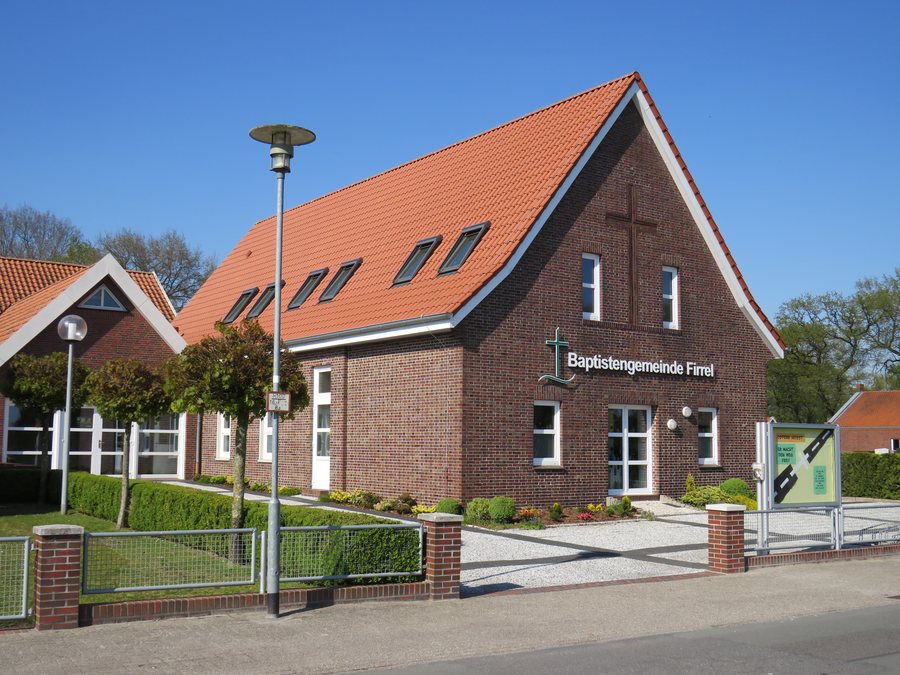
Church and Parsonage as a Single Building
The church is a single-nave building made of red facing brick. Its chancel is set back and has a flat end. The church and parsonage form a single building. Both were built in 1906/07, during the tenure of P. Johann Heinrich Meints, to a design by the Ministry; the architect Hedemann from Emden was in charge of construction. They were consecrated on 26 May 1907. Those interested in architectural history will find several closely connected details here: the building’s form, its materials, their construction as a single project, and an exact consecration date.
A Playground for Young Children
Firrel has a playground for young children by the community centre next to the village square. For families planning a trip with younger children, this offers a different point of interest from the church’s architectural history. The playground equipment may change.
Culture and Nature in the Wider Destination of Leer
The wider destination of Leer also offers a range of cultural attractions. Evenburg Castle is a cultural monument of regional importance and combines the castle, park and outer bailey into one ensemble. Since May 2014, it has been open to visitors with a permanent exhibition on the life and livelihood of an aristocratic family in the 19th century; it also serves as a centre for garden culture. Here, the history of a family and garden culture are presented as two distinct themes.
Leer’s museums offer other areas of focus. The Bünting Tea Museum covers the cultivation, production and preparation of tea across two floors, as well as the history of East Frisia’s favourite drink. The Leer Local History Museum focuses on East Frisian domestic culture and local shipping. At the Telecommunications Museum, visitors can experience 150 years of communications history through rare exhibits and working technology. This selection ranges from regional domestic and maritime history to tea and communications.
The Amsterdam-style gabled Haus Samson has been part of the old town’s streetscape since 1643. Public guided tours include the old town hall, the historic weigh house and Haus Samson; the tour lasts 1.5 hours. A harbour cruise aboard the Koralle canal boat offers a different perspective on the city. Leer’s museum harbour is open to the public free of charge all year round and is run and maintained by the Schipperklottje.
The Westerhammrich recreational area in the northwest of Leer covers around 1 km² and has a lake of approximately 15 hectares at its centre. Walking and cycling paths, places to relax and observation points characterise the area. In the wider region around the Hesel Joint Community, there is also the Hesel Forest, the largest contiguous woodland in southern East Frisia. Visitors can hike, jog, go Nordic walking or take a stroll there; a tree trail provides information about the forest’s trees.
Choose the Focus of Your Trip
When choosing a holiday apartment, the focus you want for your trip may therefore be decisive: Firrel offers the local features described here, centred on the church, parsonage and playground; the wider destination of Leer adds museums, city history and natural areas. Consider which of these interests matter most to you, and use them to guide your search for accommodation.
Discover More Destinations
Discover more destinations: Hesel, Bunde, Weener, Detern, Rhauderfehn, Holtland, Nortmoor, Uplengen.
Back to the main travel overview: Leer.

