
Bad Pyrmont: Spa Park, Healing Springs and Thermal Baths
Accommodation in Bad Pyrmont
Healing springs, historic avenues and a spa park with palm trees are hallmarks of Bad Pyrmont. The town is also home to the HUFELAND Therme and places where you can explore the history of the spa resort. Anyone wishing to combine nature, spa history and relaxation during their stay will find a wide range of experiences here: from a barefoot trail to the fountain temple and the gardens of the spa park.
 File:Bombergallee Friedrichsquelle (Bad Pyrmont).jpg
Photo: Gliwi via Wikimedia Commons, CC BY-SA 4.0
File:Bombergallee Friedrichsquelle (Bad Pyrmont).jpg
Photo: Gliwi via Wikimedia Commons, CC BY-SA 4.0
Healing Springs and Spa History
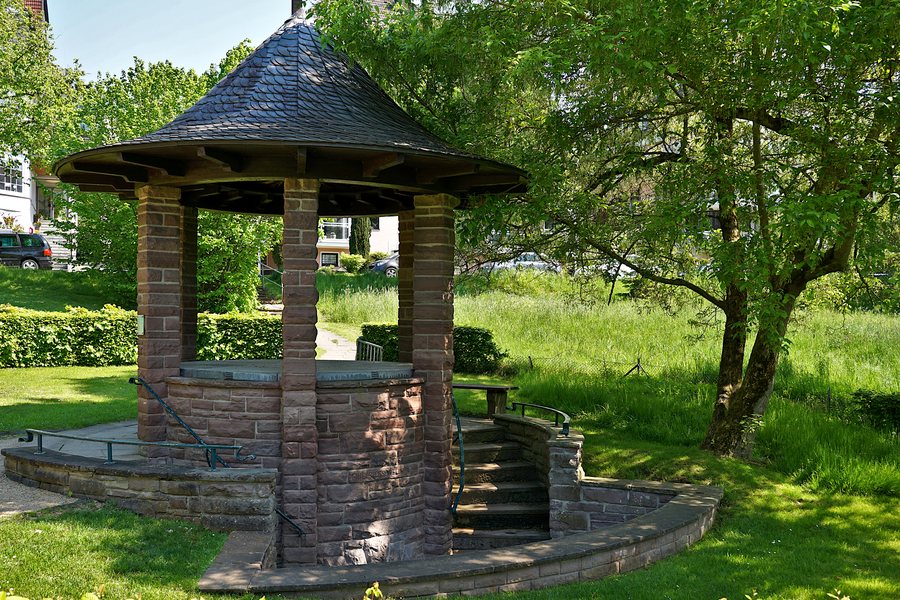
The Hyllige Born is Pyrmont’s oldest healing spring. It bubbles up in a twelve-column fountain temple in front of the Wandelhalle, which is located in the heart of Bad Pyrmont right beside the spring. The healing springs are served in the Wandelhalle, which also houses several shops, a café and an event room. This is where the springs and a range of facilities come together under one roof.
The museum in Bad Pyrmont Castle also explores local history: since 1987, its Baroque rooms on the castle island have housed collections on the town and spa’s history. Among other things, they recall the nearly 2,000-year history of the Pyrmont springs. If you are interested in the development of the spa resort, you can include a visit to the museum as a cultural part of your stay.
Avenues and Gardens in the Spa Park
The main avenue forms the central axis of the spa town and is considered one of Germany’s oldest spa park complexes. Majestic lime trees line the path, and the avenue also offers a wide range of dining options. You can stroll here and combine your walk with a stop for refreshments. The Klosterallee, meanwhile, is part of a historic avenue system around 3,000 metres long.
Special plants define several parts of the spa park. The palm garden is Europe’s northernmost open-air palm grove. More than 500 potted plants of various species grow there, including palm trees up to 11 metres tall. Another seasonal highlight is the 300-metre-long Azalea Path: laid out in 1926, its deciduous azaleas bloom in May in vivid colours ranging from yellow to pink and give off an intense fragrance.
In the western part of the spa park, the Asian Retreat includes a Japanese garden with loungers as well as a hydrangea garden, a maple garden and a snowball garden. In the Telemann Garden, you can enjoy the tranquillity of the park over a cup of tea near the teahouse built around 1810. Relaxation loungers are available on the neighbouring lawn.
Exercise, Brine and Special Discoveries
The barefoot trail in the spa park can be walked at any time of year, including in winter; it is intended for barefoot use only. It is more than 180 metres long and around 1.50 metres wide. These details can help you plan the trail as a separate experience during your visit to the spa park. If you prefer walking on paths, the wider travel region offers hiking opportunities in the hilly forests of the Weser Uplands Nature Park; Bad Pyrmont lies on its southwestern edge.
For a stay focused on brine and wellness, the HUFELAND Therme offers 2-percent brine water as well as indoor and outdoor pools. Facilities also include several saunas, a beauty and spa area, a whirlpool and an event pool. This part of the Bad Pyrmont experience is quite distinct from the historic gardens and springs in the town centre.
Another special attraction is Ewilpa® Bad Pyrmont in the Bergkurpark. The grounds are open to everyone, and gathering edible wild plants for free is expressly encouraged, except at station 14. If you would like to explore the history of the spa resort as you go, you can follow a historical tour in Bad Pyrmont using the Weserbergland app and discover the most significant places along the way. During feeding time at the animal park, visitors learn about the animals’ eating habits, their distinctive characteristics and their natural behaviour.
Traces of the Past
The Dunsthöhle also tells the story of how the site was used in the past. It is located on the site of a former quarry where red sandstone was extracted in the 17th century. At a certain depth, quarry workers noticed a “vapour”. In 1720, with permission, Prince Friedrich Anton Ulrich of Waldeck and Pyrmont had a stone vault built over the fuming pit on the site of the former quarry, with a small building above it, so that spa guests could take a dry sweat bath.
The large and small courtyards of the castle on the castle island provide the setting for events held as part of the annual “Pyrmonter Sommer”. So, alongside gardens and spa facilities, the town also offers cultural experiences. You can also explore Löwensen, a nearby locality. Further town pages are available for Lauenstein, Hessisch Oldendorf, Hameln, Bad Münder Am Deister, Emmerthal, Aerzen and Coppenbrügge.
For the wider travel overview: Hameln-Pyrmont.

.jpg)