
Discover Friedland: Memorial, Church and Museum
Accommodation in Friedland
Friedland can be explored through places that bring different chapters of its history into focus: the memorial on Hagenberg, St. Norbert’s Church and the museum in the historic railway station. The museum traces the history of the Friedland Border Transit Camp from 1945 to the present day; the church and memorial offer further historical perspectives. If you’re looking for a holiday apartment in Friedland, it helps to decide on the focus of your trip first: would you like to concentrate on the permanent exhibition, or also include other places in the municipality?
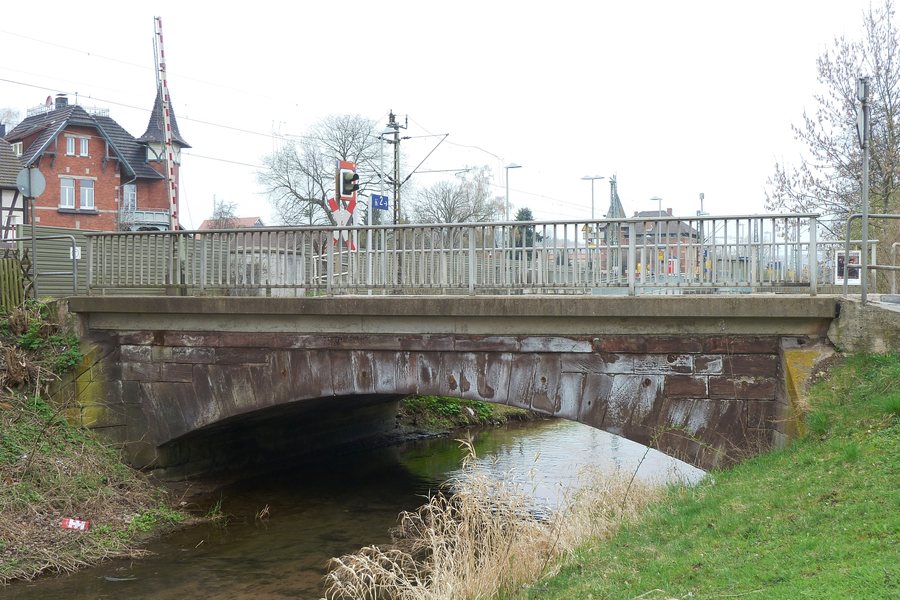 File:Friedland Muehlengrabenbruecke.jpg
Photo: Jan Stubenitzky ( Dehio ) via Wikimedia Commons, CC BY-SA 3.0
File:Friedland Muehlengrabenbruecke.jpg
Photo: Jan Stubenitzky ( Dehio ) via Wikimedia Commons, CC BY-SA 3.0
Places of Remembrance and Post-war History
The Friedland Memorial stands on Hagenberg. There is also a statue of a returning prisoner of war at St. Norbert’s Church. The Catholic church was built in 1954/55 on Heimkehrerstraße in the Friedland Border Transit Camp in the district of Göttingen. From the outset, it served as a point of contact for returning prisoners of war, refugees, displaced persons and people without a home. Its furnishings and history make it one of the most significant post-war churches in the Diocese of Hildesheim; it is also a church monument of particular importance.
The Friedland Museum
The Friedland Museum is located in Friedland’s historic railway station. Its permanent exhibition, “Fluchtpunkt Friedland” (“Friedland: A Point of Refuge”), covers 350 square metres and explores the history of the Friedland Border Transit Camp from 1945 to the present day. The exhibition is presented in both German and English throughout. Guided tours of the exhibition and the camp grounds are available in German, English and Arabic. Stops on a tour of the grounds include the Nissen hut and the Friedland Bell. Tours are available by arrangement; check current booking options before your visit.
Meridian Marker and Other Places in the Municipality
Another historical landmark is the meridian marker erected in Friedländer Holz in 1820/21. A route also passes through the municipality of Friedland: it goes past Besenhausen Manor, through Friedland and its Border Transit Camp, and on to Klein Schneen and its gravel lakes. In summer, Besenhausen Manor hosts changing exhibitions and concerts as part of the Besenhausen Summer. Specific events may vary; check the current programme to help plan your visit.
More to Explore in the Wider Göttingen Destination
The wider Göttingen destination offers its own cultural and garden attractions. The permanent exhibition “Räume des Wissens” (“Spaces of Knowledge”) at Forum Wissen covers 1,400 square metres and makes the processes behind the creation of knowledge accessible to visitors. Its twelve rooms contain more than 1,400 objects from the collections of the University of Göttingen. Göttingen’s Old Botanical Garden was founded in 1736 as a “hortus medicus”, or medicinal garden. Visitors can explore its historic greenhouses, tropical vegetation in the rainforest greenhouse and the alpine garden.
The Göttingen City Forest on Hainberg offers opportunities for walks, hikes and bike rides. Göttingen also offers weekly changing walking tours and city tours covering more than 40 topics, on foot or by bicycle. As dates and availability may change, check these offerings in advance. This makes it possible to consider Friedland’s places of remembrance and the distinct attractions of the wider Göttingen destination as separate focuses when planning your trip.
Discover more destinations: Bad Grund (Harz), Gleichen, Obernfeld, Fuhrbach, Scheden, Hattorf Am Harz, Duderstadt, Bovenden
Back to the wider travel overview: Göttingen.

