
Celle: Castle History, Half-Timbered Houses and Parks
Accommodation in Celle
The castle island, half-timbered houses and two very different parks shape Celle. The city brings together the history of a ducal residence with impressions of the old town and opportunities for walks. When choosing your holiday apartment, it may therefore matter whether you mainly want to explore architecture and museums or also set aside time for the parks. Celle offers several clearly distinct highlights for this.
Gardens with distinct characters
The French Garden lies south of the historic old town. A listed public park dating from the 17th century, it has a clearly defined layout: Flower beds, lawns and groups of trees lie on either side of a lime-tree avenue that runs along an east–west axis. A pond with a fountain completes the scene. The grounds thus bring together different garden features, from the straight avenue to planted and open areas.
The Celle Castle Park is quite different. It covers just under six and a half hectares; the Welf Castle stands on a small island there, surrounded by large, old trees and a castle moat. If you are interested in Celle, you can include these two parks in your travel plans as distinct experiences: The French Garden is defined by its lime-tree avenue and flower beds, while the castle park is characterized by the island with the castle and the trees all around it. The parks thus complement the city’s architecture with a distinctive garden theme.
Residence history and art in the castle
Over the centuries, Celle Castle developed from a simple fortress into the residence of the Dukes of Brunswick-Lüneburg. Its four-wing layout displays Gothic, Renaissance and Baroque features both inside and out. Visitors interested in architectural history will therefore encounter not just one style at the castle, but several periods within a single building.
The Residence Museum in the castle explores the history of the residence and the lives and work of the Welf dukes. Other topics include the life of the Danish Queen Caroline Matilda and the history of the Kingdom of Hanover. The castle chapel is a particular highlight: With its early Protestant interior, it is considered an important example of Renaissance art in northern Germany. It can only be visited as part of a guided tour of Welf Castle—a key distinction to bear in mind if you are considering including the chapel in your plans.
Old town, synagogue and walk
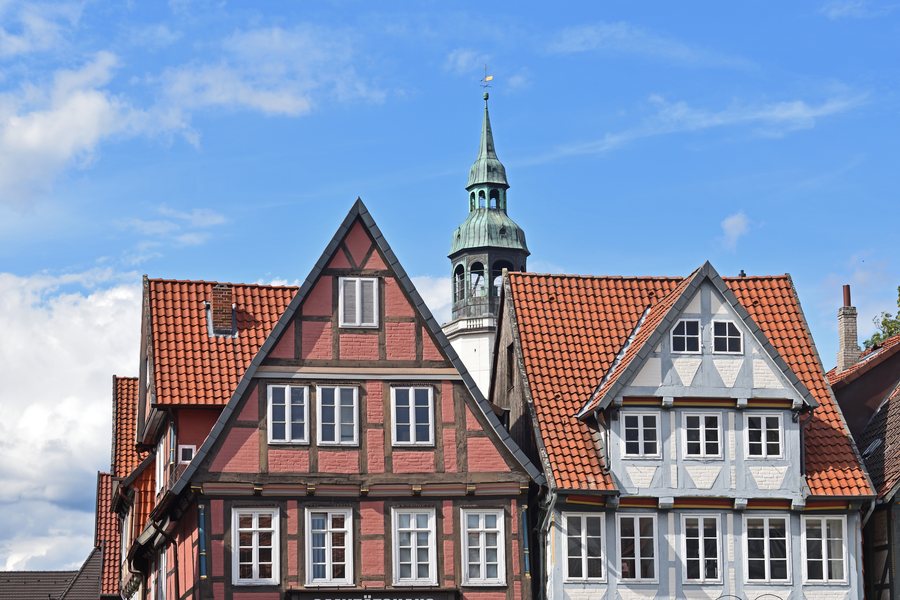
Celle’s old town is a living history book of stone and half-timbering. The synagogue is also one of the city’s notable historic sites: It is considered the oldest largely preserved half-timbered synagogue in Lower Saxony. One of its two front buildings houses a museum with changing exhibitions on Jewish life in Celle and Jewish cultural history.
A walk through Celle’s old town is an easy 3.22-kilometre stroll. It starts at Celle Ducal Palace and ends at the synagogue in Celle. The stated distance gives you a point of reference for planning this walk as a separate activity.
Theatre and light art
The Celle Palace Theatre is Europe’s oldest Baroque theatre with regular performances and has its own acting ensemble. For culture enthusiasts, it adds theatre history and drama to the themes of the castle and residence. The Celle Art Museum offers a different artistic experience: It is closed at night, but light art on and behind its glass façade makes the building glow from the outside. The castle’s history, the theatre and the light art thus offer different highlights for a trip focused on architecture and culture.
Discover more places
You can also discover Meissendorf, Müden, Eversen, Langlingen, Nienhagen, Bergen, Habighorst and Nordburg as additional travel destinations.
For the overarching travel overview: Celle.

