
Discover Sonnenberg
Accommodation in Sonnenberg
Sonnenberg’s early history begins with a striking contrast: around 1524, the settlement was a deserted village site and held as a fief by the Bredows of Rheinsberg. Sonnenberg was rebuilt from 1581 onwards. The gap of more than five decades makes the transition from deserted village site to reconstruction a distinctive opening chapter in the town’s history.
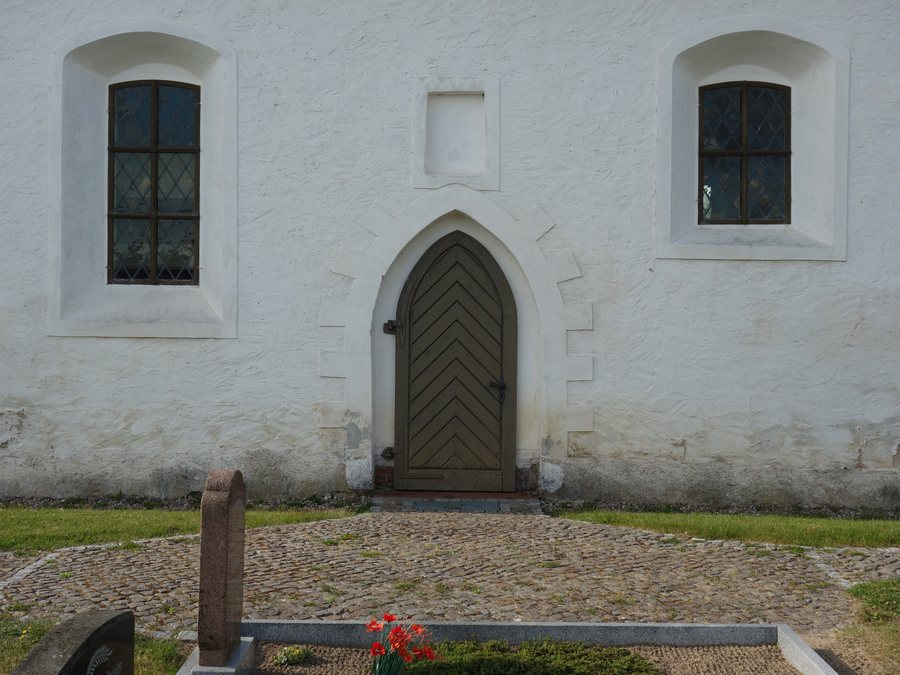 File:Kirche Sonnenberg 2020 Portal S.jpg
Photo: Hans G. Oberlack via Wikimedia Commons, CC BY-SA 4.0
File:Kirche Sonnenberg 2020 Portal S.jpg
Photo: Hans G. Oberlack via Wikimedia Commons, CC BY-SA 4.0
History and Buildings in the Municipality
Other historic buildings can be found in the other districts of the municipality of Sonnenberg. The castle that still stands today is in Rauschendorf. Following a major fire in 1922, it was rebuilt on the foundations of the old castle, drawing on the local style of Baroque manor houses. In Baumgarten, the half-timbered church is open to visitors; it was rebuilt in 1704 and has a weather vane dating from 1743. In Rönnebeck, a fieldstone church dating from the 13th century was remodelled and partly extended in the 17th century.
The timelines are clearly distinct: the fieldstone church dates back to the 13th century, the half-timbered church was rebuilt in 1704, and the castle’s story centres on its reconstruction after the 1922 fire. When looking for a holiday rental in Sonnenberg, this variety can help you decide what to focus on: would you like the town’s own history to take centre stage, or would you also like to include the historic buildings in other parts of the municipality?
Oberhavel as a Broader Travel Destination
Beyond Sonnenberg, the wider travel destination of Oberhavel offers more cultural attractions; Oberhavel is part of the Ruppiner Seenland tourism region. In Oranienburg, Oranienburg Palace is the oldest Baroque palace in the Margraviate of Brandenburg. The palace museum displays famous 17th-century artworks as well as a unique silver chamber and a remarkable porcelain chamber. An exhibition room of the Oberhavel Regional Museum in the palace explores its history, from the Ascanian castle built around 1200 to its present-day use. For a different perspective on contemporary history, visit the Sachsenhausen Memorial and Museum in Oranienburg: 13 smaller permanent exhibitions provide information about various aspects of the site’s history; the museum is also a modern museum of contemporary history.
Another attraction in the wider travel destination of Oberhavel is the Mildenberg Brickworks Park. This industrial heritage site lies in a natural setting, in the heart of the Zehdenick clay-pit landscape, right on the Havel. Seasonal activities include taking the controls of a real diesel locomotive for half an hour and learning how to set it in motion, brake and operate the points; visitors can also earn a brick railway driving licence. Check dates and booking conditions in advance.
Nature experiences also add to the appeal of Oberhavel: the Stechlin Nature Park Centre features an interactive exhibition about the distinctive features of Stechlin-Ruppiner Land Nature Park. Next door, the sensory garden invites visitors to taste, smell, touch and listen to herbs, shrubs and other plants. The approximately six-kilometre forest and water trail around Roofensee can complement a visit to the Nature Park Centre. Stechlin Nature Reserve is shaped by features formed during the Weichselian glaciation and is considered the area with the most bodies of water in the state of Brandenburg.
Discover more destinations: Oberkrämer, Amalienfelde, Wesendorf, Liebenwalde, Mühlenbecker Land, Glienicke/Nordbahn, Löwenberger Land, Hohen Neuendorf
Go to the wider travel overview: Oberhavel.

