
Rhön: Expansive Landscapes and Special Discoveries
Accommodation in Rhön
The Rhön combines open landscapes with nature trails, long-distance hiking routes and places where history comes to life. The UNESCO Biosphere Reserve extends across Bavaria, Hesse and Thuringia. When planning your holiday, it is therefore worth first considering which experiences you want to shape your stay: long hikes, a glimpse of the moorland landscape, or cultural and historical sites.
Hiking on long-distance trails and circular routes
The premium trail “DER HOCHRHÖNER” is 173 kilometres long and runs between Bad Kissingen and Bad Salzungen. It is certified by the German Hiking Institute. If you prefer to plan a day hike, there are more than 30 additional extra tours: these circular routes vary in length and difficulty. This lets you tailor your hiking plans to the type of route you want, rather than having to commit to a multi-day itinerary.
Every year, the Rhön Club offers an extensive programme of guided hikes throughout the Rhön’s network of trails. The Biosphere Reserve also has educational and nature trails. These options have different focuses: on a hike, the route takes centre stage; on an educational or nature trail, the focus is on engaging with nature and the landscape. When choosing a holiday apartment, you can consider which kind of excursion matters most to you during your holiday.
Moorlands, heights and starry skies
The Red Moor lies in the Hessian part of the Biosphere Reserve and is a 314.7-hectare nature reserve. A boardwalk there leads from the NABU House to a viewing tower in the moor. The Black Moor is the largest of the few largely natural raised bogs in the High Rhön and a strictly protected core zone of the Biosphere Reserve. Those interested in moorland landscapes will encounter two different protected areas here.
The sky offers another way to explore: at the sky-viewing sites in the Rhön Star Park, visitors can observe the day and night sky and learn about light pollution. The astronomical observation site on the Hohe Geba is at an altitude of around 740 metres above sea level. Four platforms are located there, in a place affected only slightly by light pollution from urban areas. This is a distinct option to consider when planning your holiday, alongside hiking and exploring the landscape.
History and culture in the Rhön
The Point Alpha memorial and site of remembrance includes preserved or partially reconstructed GDR border installations, as well as an information centre commemorating the border regime in the restricted zone. Near Geisa, numerous hiking routes follow the former border, known as the Green Belt. The “Path of Hope” offers another perspective: fourteen monumental sculptures stand along a 1.5-kilometre section of the former inner-German border.
A Celtic oppidum was built on the Milseburg around 2,500 years ago, and a ring wall is still preserved there today. Since 2011, 27 hectares of the Milseburg have also been part of the Biosphere Reserve’s core zone. The summit is home to a Baroque Calvary group and a pilgrimage chapel. The Milseburg can only be reached on foot—a useful point to bear in mind if you plan to visit.
Further insights are offered by the Rhön Open-Air Museum, where three farmsteads show how the Rhön’s ancestors lived 200 to 250 years ago, and the Natural History Museum, with 26 dioramas depicting the Biosphere Reserve’s landscapes and characteristic wildlife and plant life. SteinReich is dedicated to mineral and fossil finds, mostly from the Rhön. At Kreuzberg Monastery, the pilgrimage church forms part of a spiritual centre in Lower Franconia; the Franciscan monastery attracts visitors all year round with its monastery beer.
A holiday shaped around your interests
Families also have a specific excursion option: the “Rhönwald” adventure world, including “Arche-Rhön,” offers a wide range of play and hands-on activities. If you are more interested in heights and flying, consider a visit to the Wasserkuppe. It is the highest elevation in Hesse and the Rhön, is accessible by car and attracts glider pilots, model aircraft pilots, paragliders, hikers and winter sports enthusiasts from across the region.
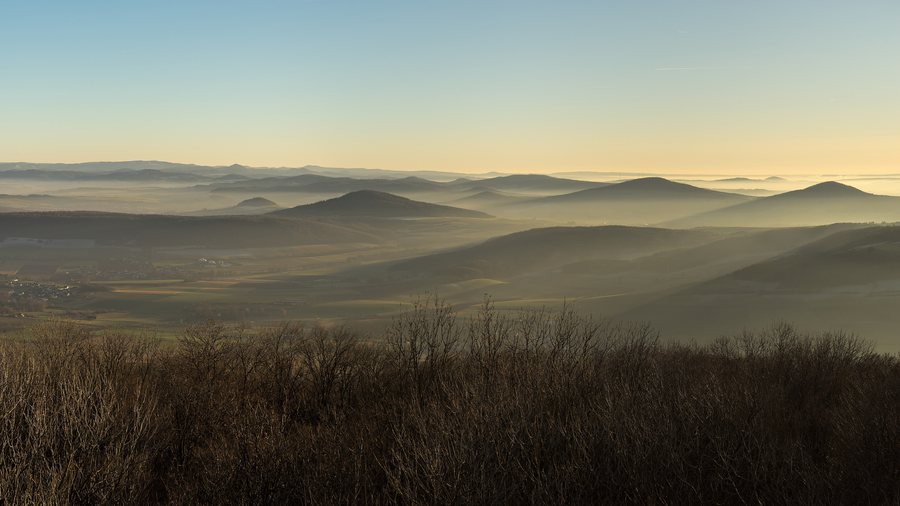
The Rhön is also known as the “Land of Open Horizons.” When looking for a holiday apartment, it helps to identify your priorities: hiking routes, moorland areas, historic places, religious destinations or family activities.
Discover more regions: Frankenwald, Berchtesgadener Land, Rhön-Grabfeld, Regen, Bayreuth, Upper Palatinate Forest, Haßberge.
Back to the main travel overview: Bavaria.
More about the destination
Useful information for planning your trip:

_II.jpg)