
Willmars: Ge(h)schichtsweg, Building History and Rhön Views
Accommodation in Willmars
Willmars combines visible architectural history with traces reaching far into the past. Lappberg adds views of the town and the Rhön mountains. The town is home to a former synagogue dating from 1901 and a former rectory; the Ge(h)schichtsweg leads to other historic sites. You can choose whether architectural history, layers of history or the landscape will shape your stay.
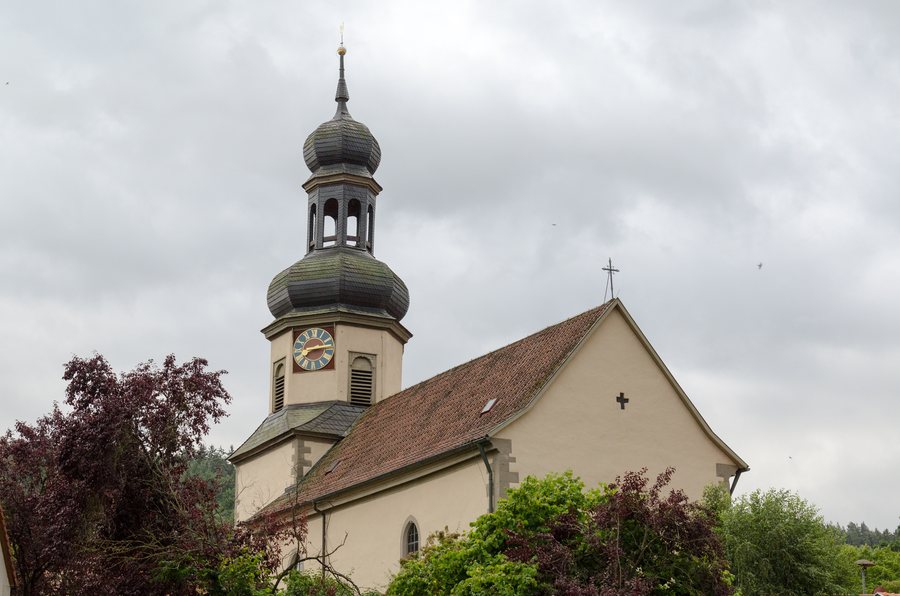
Building History and Remembrance in Willmars
The former synagogue stands at Lappichstraße 31. Built in 1901, it is a two-storey exposed-brick building. Its defining features include a high natural-stone base, a gabled roof and pilaster strips. The former rectory at Oberdorfstraße 10 is now used as a lending library. The 18th-century building has a half-hipped roof, an upper storey with timber framing and a high cellar base. The different architectural styles bring two distinct chapters of local history to life.
The Jewish cemetery is also on the outskirts of Willmars. It is located within the boundaries of the neighbouring municipality of Neustädtles and was established in 1727 by Carl Ludwig von Schenck von Schweinsberg. Visitors interested in Jewish history will find another historical point of reference in the area around the town.
Historic Sites Along the Ge(h)schichtsweg
The Ge(h)schichtsweg features various traces of the past. One of its stops is a prehistoric burial mound dating from around 750 BC. Artefacts from an old landwehr and a former customs post can be found at the Hohe Schule. The abandoned settlement of Ellenbach, with its church ruins, is also part of the route. Its themes range from an ancient burial mound and evidence of a landwehr and customs post to the remains of an abandoned settlement.
GPX tracks for navigation systems, QR codes linking to detailed online information, and signs with up-to-date text and images have been introduced for the Ge(h)schichtsweg. The hiking portal for the “Willmarser” is located at the fire station at Allestr. 13, 97647 Willmars. The portal’s address gives you a specific point of reference for finding your way.
Lappberg: Views in the Surrounding Area
The 484-metre-high Lappberg lies east of Willmars, in the surrounding area. Alongside the Peace Cross, it offers places to rest and open views of Willmars and the Rhön mountains. This gives you the option of making the landscape and its views a separate reason for your trip, alongside architecture and history. As you decide what interests you most, you can weigh Lappberg as a nature and viewpoint destination against the historic sites.
More Nature and Culture in Rhön-Grabfeld
The wider Rhön-Grabfeld area offers other distinct regional highlights. Rhön-Grabfeld is part of the Rhön UNESCO Biosphere Reserve. The Lange Rhön is Bavaria’s largest nature reserve outside the Alps; the Schwarzes Moor is strictly protected as a core zone of the biosphere reserve. A wooden boardwalk runs through parts of the moor, information boards explain the route, and an observation tower offers views of the Schwarzes Moor.
Gangolfsberg offers another distinct natural highlight. Its basalt column wall formed between 30 and 10 million years ago during volcanic activity in the Rhön and can be explored along the Gangolfsberg nature trail. The trail is about 2.5 km long; sturdy footwear is required. Guided tours for groups are available on request. You can make geology and landscape your focus while also taking the specific trail length and footwear requirement into account when planning.
If you are more interested in the history of everyday rural life, the wider Rhön-Grabfeld area is home to the Franconian Open-Air Museum Fladungen. Its 12-hectare site features around 30 historic buildings, including farmhouses, craft workshops and a village school. Through faithfully reconstructed houses and farmsteads, the museum presents 350 years of rural everyday life in Lower Franconia and the Rhön. Hands-on activities about crafts and traditions include demonstrations, practical courses and events. Another perspective is offered by the Rhön-Zügle museum railway, which travels through the Streutal valley with steam and diesel locomotives. You can weigh nature, museums and rail travel as different interests when planning the rest of your trip.
Choose the Right Search Location for Your Travel Mix
When looking for a holiday apartment in Willmars, you can first distinguish between the historic sites and Lappberg in the local area, on the one hand, and the nature and culture attractions in the wider Rhön-Grabfeld area, on the other. Consider how much you want these experiences to shape your stay.
Discover more destinations: Wollbach, Mellrichstadt, Stockheim, Bischofsheim an der Rhön, Oberelsbach, Niederlauer, Fladungen, Bastheim
View the wider travel overview: Rhön-Grabfeld.

