
Flossenbürg: Castle, Granite and Gaisweiher
Accommodation in Flossenbürg
Flossenbürg combines visible traces of its granite history, castle ruins and a natural swimming lake with a variety of ways to spend your vacation. On the 732-metre-high Schlossberg, the onion-skin layering of the granite is clearly visible in some places. If you are looking for a holiday apartment, consider whether geology and the castle, time by the water, hiking or winter activities will shape your stay.
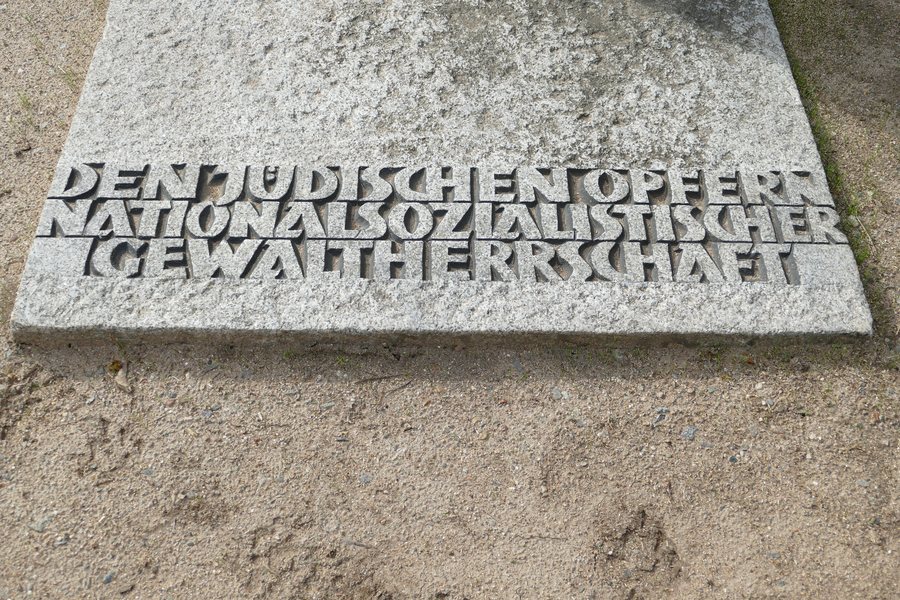 File:Flossenbürg concentration camp memorial 01.jpg
Photo: Kritzolina via Wikimedia Commons, CC BY-SA 4.0
File:Flossenbürg concentration camp memorial 01.jpg
Photo: Kritzolina via Wikimedia Commons, CC BY-SA 4.0
Schlossberg: Granite and Castle Ruins
Flossenbürg Castle Ruins stand atop the Schlossberg above the town and are freely accessible at all times. The “Weg des Granits” (Granite Trail) circles the Schlossberg and provides information about the mountain’s formation and history. This brings together a direct view of the granite summit and its geological and historical context.
The Castle and Stonemasons’ Museum on Silberhüttenstraße explores the history of Flossenbürg Castle and the formation of the local granite. Guided tours are organized by the municipal tourism office. The circular trail and the museum offer different ways to explore related topics: outdoors, the trail circles the mountain; in the museum, the focus is on the castle and the history of granite.
Gaisweiher and Trails by the Water
Gaisweiher is a nine-hectare natural swimming lake in Flossenbürg. The Schattenweg (Shadow Trail) starts at the Gaisweiher leisure and camping facility and goes all the way around the lake. It is designated as a summer and winter hiking trail. In winter, it is used at your own risk; snow is not cleared and the trail is not gritted.
Another hiking trail starts at the sports ground in Flossenbürg and leads past rest benches through the district of Gaismühle to Gaisweiher. The same applies to winter hiking on this trail: use is at your own risk. If you are choosing between the two circular routes, they offer different highlights: the Granite Trail circles the Schlossberg, while the Schattenweg circles Gaisweiher. Your choice therefore also depends on whether you want the mountain or the lake to be the focus of your circular walk.
Cycling and Winter Sports
At Gaisweiher, the Wurmstein ski lift offers options for families and experienced skiers. Whether the lift is actually operating depends on the conditions. For cyclists, Route 9 of the Simultankirchen-Radweg (Simultaneous Churches Cycle Route) starts at the Protestant St. Pankratius Church, at Hohenstaufenstraße 30. This gives you another two starting points for planning your vacation: a specific starting point for cycling and a winter activity by the lake.
History of the Flossenbürg Concentration Camp
The exhibition “Konzentrationslager Flossenbürg 1938–1945” uses documents, objects, quotations and testimonies from former prisoners. It offers insights into daily life in the camp, the struggle to survive and the mass deaths. This serious historical subject stands alongside Flossenbürg’s nature and leisure activities.
A one-hour guided tour of the former quarry at Flossenbürg concentration camp complements the tour of the camp. Visits to the quarry are weather-dependent. If you plan to include this activity, take the weather-dependent nature of the quarry visit into account.
Discover more destinations: Kirchendemenreuth, Grafenwöhr, Floß, Pressath, Georgenberg, Schirmitz, Leuchtenberg, Trabitz.
For the main travel overview: Neustadt An Der Waldnaab.

