
Störnstein
Accommodation in Störnstein
In Störnstein, local history and geological history come together on routes through the town and its surroundings. St. Salvator Church, the former castle and traces of granite quarrying tell different chapters of the story; the Bockl Cycle Path adds a cycling route to the picture. This lets you plan your holiday around your interests – with a historical walk, a hike featuring geological stops or a cycling tour.
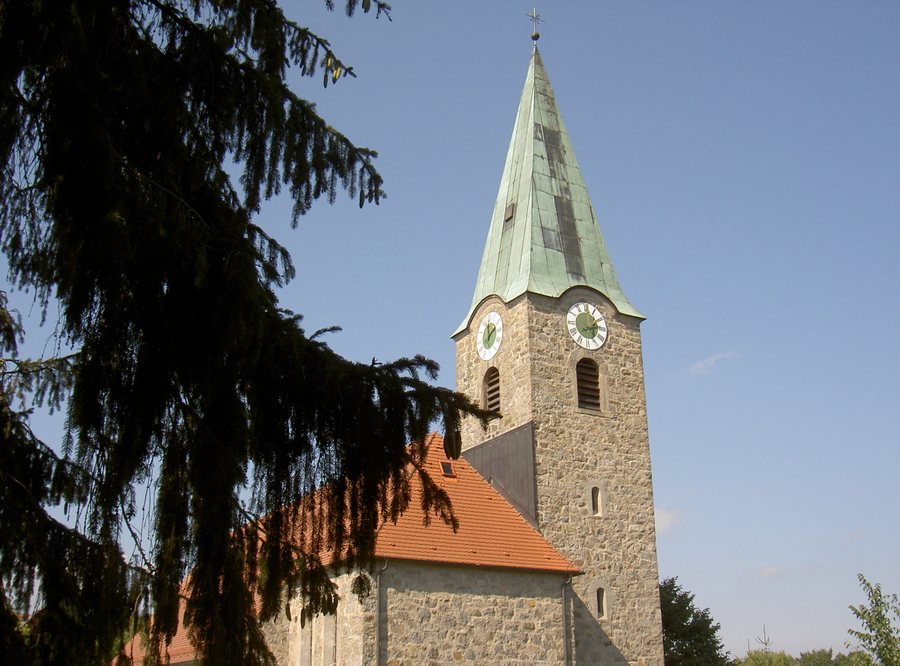
Church, castle and local history
The Catholic Church of St. Salvator was built in 1934, dedicated on 20 October that same year and consecrated in 1935. Until 1934, the Chapel of St. Catherine stood on the site. It was the last remaining part of Störnstein Castle, which was destroyed during the Thirty Years’ War. A walk through Störnstein can thus connect traces of different periods: the church, the plateau of the former castle and the striking granite outcrop.
The former communal bakehouse is also worth a stop. Together with the sites around the church and castle, it invites you to look beyond the landscape and take in the town’s history as well. A geological and historical hike also leads to the road cutting at the western edge of town, to the former quarries at Gügel and then to Bühl.
Granite and trails around Störnstein
At Gügel, on the southern side of the valley opposite Störnstein, several small former granite quarries lie at an elevation of 498 metres. Bühl is home to a substantial quartz vein that once supplied raw material to the glass and porcelain industries. These sites give the hike a distinctive geological and historical focus. The “Störnsteiner Steine” circular trail is approximately 4.8 kilometres long, with 125 metres of ascent and a 73-metre difference in elevation. The distance is approximate; check the route conditions before setting off.
Gügl can be climbed, but the view from there is very limited. If you include the ascent in your tour, bear in mind that the climb offers exercise rather than a rewarding view, and check conditions before your visit. You can choose the trails and stops to suit different interests, focusing on the castle’s history, the local rock or a hike that takes in several sites around town.
Cycling and excursions in the wider destination of Neustadt An Der Waldnaab
Störnstein lies on the Bockl Cycle Path. In the wider destination of Neustadt An Der Waldnaab, the Bockl is a 52-kilometre route from Neustadt an der Waldnaab to Eslarn, following a historic railway line. It can be used for walking, cycling or inline skating. The route is mostly paved and traffic-free; gradients rarely exceed three percent. You can travel directly by train to the Bockl’s starting point in Neustadt an der Waldnaab. Trains run every hour to the terminus of the Nuremberg–Neustadt an der Waldnaab line, where you can switch directly to your bike. Check the timetable before travelling.
The wider destination of Neustadt An Der Waldnaab also offers hiking, cycling, museum visits and swimming in bathing waters. In Parkstein, the historical walk starts at Landrichterschloss, which houses the Parkstein Volcano Experience Museum. A volcanic eruption is staged there every hour and can be experienced on three levels; check the current show times before your visit. Public guided tours of Speinshart Monastery Church take place at 3 p.m. on Sundays and public holidays. Here too, check the monastery’s latest information, as times may change. This makes it easy to include Störnstein’s local and geological history in a travel plan that explores other cultural and natural themes across the wider destination.
Discover more destinations
Discover more destinations: Grafenwöhr, Tännesberg, Vorbach, Pleystein, Eschenbach In Der Oberpfalz, Schwarzenbach, Luhe-Wildenau, Theisseil.
Go to the wider travel guide: Neustadt An Der Waldnaab.

