
Neumarkt-Sankt Veit: Town History and Routes along the Rott
Accommodation in Neumarkt-Sankt Veit
Neumarkt-Sankt Veit combines a townscape shaped by history with routes that offer views of the Rott and its natural surroundings. The town square and former monastery tell different chapters of local history; walking and cycling routes, along with a cross-border trail, add opportunities for active pursuits. This mix offers several ways to tailor a stay to your own interests.
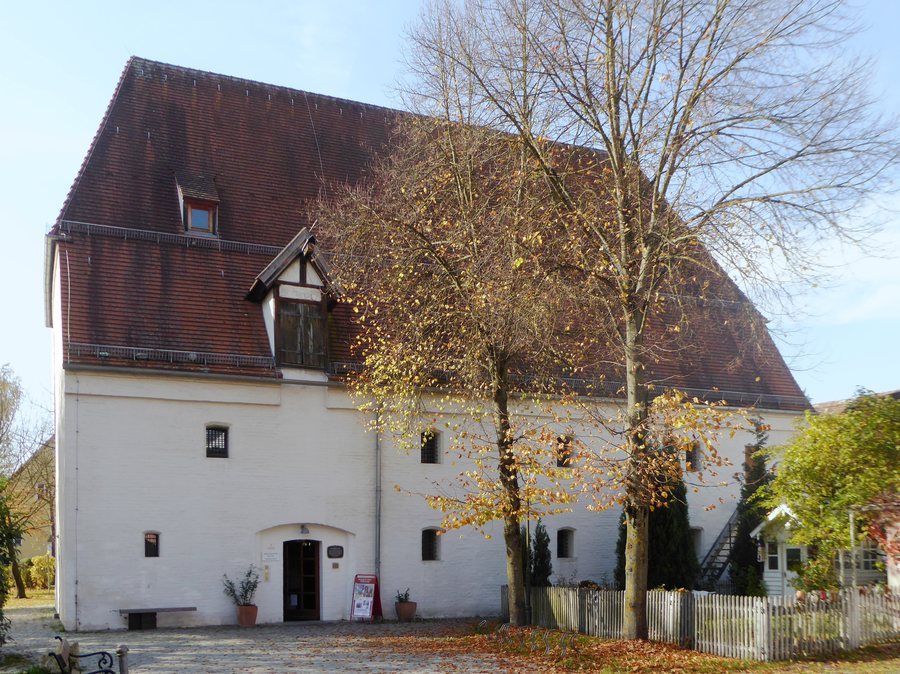 File:Neumarkt-St Veit, Herzoglicher Kasten, 2.jpeg
Photo: Renardo la vulpo via Wikimedia Commons, CC0
File:Neumarkt-St Veit, Herzoglicher Kasten, 2.jpeg
Photo: Renardo la vulpo via Wikimedia Commons, CC0
The Town Square and Monastic History
The size and layout of the town square date back to the founding of Neumarkt-Sankt Veit by Duke Heinrich XIII of Landshut. The square’s design thus points to the origins of the town. If you are interested in historical connections, it offers a direct link between the town’s layout and its founding.
The former Benedictine monastery of St. Veit, visible from far away, adds to this picture. It was dissolved in 1802, changed hands several times afterward, and is now used primarily as a retirement home. Its history therefore connects its former monastic use with a changeful history of ownership and its predominant use today. As a prominent landmark, it also shapes the townscape.
Walking and Cycling Routes
The Rott flows through the town from west to east. A route along the river invites you to walk and cycle through natural surroundings. Both activities take you through the same riverside landscape, but offer different ways to experience it: you can explore the route on foot or by bike.
Neumarkt-Sankt Veit is also on the cross-border Wolfgangweg, which runs from Regensburg to St. Wolfgang in Austria. Another option for cyclists is the “Schweppermann” tour, which passes through the town. For a shorter hike, consider the route to Steinernes Bründl. This gives you a choice of different ways to get around: a long-distance route, a path along the Rott, a cycling tour through the town, and a shorter hiking option.
If you are planning a trip with your family, you can weigh up these route options according to the kind of day you have in mind: would you like to focus on a cross-border route, walk or cycle along the Rott, or would a shorter hike be a better fit?
A Separate Look at the Broader Travel Destination of Mühldorf Am Inn
The broader travel destination of Mühldorf Am Inn also has its own attractions for culture enthusiasts. Its 500-metre-long town square is lined with colourful facades in the Inn-Salzach architectural style. The Salzburg Hochbrunnen fountain on the square was a gift from Salzburg Prince-Archbishop Johannes Ernst von Thun in 1692. Haberkasten and Kornkasten, the two “Traidkästen,” were built as granaries in the 15th century; Haberkasten was later converted into a cultural centre. A courtyard lies between the two buildings. Since 1999, the summer festival has been held there every year during the first two weeks of July.
The Mühldorf a. Inn History Centre and Museum uses its permanent exhibition “Everyday Life, Armaments, Extermination” to focus on the history of the Mühldorf district during the Nazi era. The exhibition “Lifeline Inn” explores people’s lives with the river and how it is used today. These themes add further perspectives on the town’s history and riverside landscape to the picture of Mühldorf Am Inn.
Discover More Destinations
Discover more destinations: Schwindegg, Zangberg, Reichertsheim, Unterreit, Erharting, Heldenstein, Mühldorf Am Inn, Gars Am Inn.
Back to the broader travel guide: Mühldorf Am Inn.

