
Bach on the Danube: Wine-Growing History and the BaierWeinMuseum
Accommodation in Bach on the Danube
Bach on the Danube is a destination for travellers who want to learn about wine-growing history through tangible objects and also consider architecture or a cycling tour as part of their plans. At the BaierWeinMuseum, the exhibits range from the central exhibition to winemaking equipment and the wine trail. As you plan your trip, you can decide whether the history of wine growing should be the main focus or whether you would also like to include the parish church and the journey by bike.
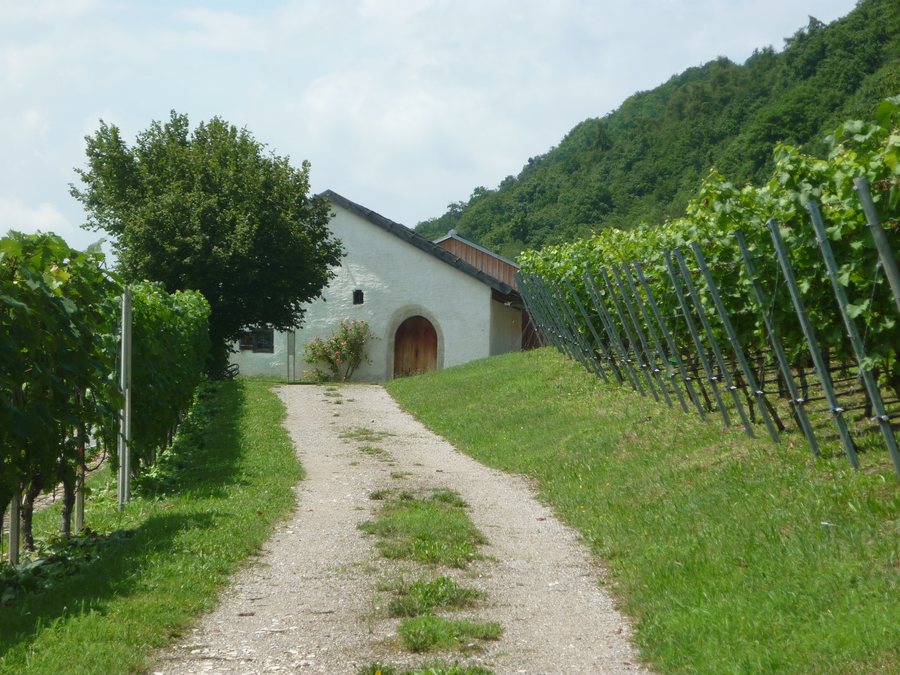
Wine-Growing History at the Museum
The centrepiece of the BaierWeinMuseum exhibition is a tree press dating from 1615. It is one of the oldest wine presses in Germany. The specific date and the press’s special status give wine growing a tangible historical context, without limiting your visit to a single building: the former wine-press house, which later became home to the BaierWeinMuseum, is itself a Late Gothic building. It is a single-storey building with a shallow-pitched gabled roof, probably dating from the 15th or 16th century.
The other exhibits also illustrate different aspects of wine growing. They include tools used for working in the vineyards and protecting the vines, as well as winemaking equipment: a grape crusher, a screw press and a wine filter. These examples make it possible to break down the work involved in wine production into distinct stages—from working in the vineyards to the equipment used in winemaking. If you are looking to combine different interests on a family trip, the museum offers more than just a look at the historic press.
The wine trail complements this approach by introducing the region’s main white and red grape varieties. Information boards and the museum grounds showcase the varieties. The museum therefore offers two different ways to explore wine growing: the exhibition with its historic and practical equipment, and the presentation of grape varieties along the trail and in the outdoor area. When planning your trip, you can decide which of these aspects interests you most.
Church and Wine-Growing Region
Another architectural feature is the Catholic parish church of the Nativity of Mary in Bach on the Danube. It has a nave and a choir with a recessed chancel and a choir tower. The church is dated to 1712; the nave dates from 1979. These two dates refer to different parts or aspects of the church, making it a subject in its own right alongside the history of wine growing. If you enjoy including culture and local history in your holiday, you can add the church as another point of interest to your plans.
Bach on the Danube lies in Bavaria’s smallest wine-growing region, along the Danube. It covers around 4 hectares and currently has around 20 winegrowers. These approximate figures for the area and the current number of winegrowers provide a concrete picture of wine growing in the region. Together with the tree press, the equipment and the wine trail, they form a point of interest that encompasses historic objects, grape varieties and vineyard work.
Cycle to the Museum
You can reach the BaierWeinMuseum by bike via the Danube Cycle Path or the Danube Panorama Cycle Path by following the signs for “Weinroute” (Wine Route). Bach on the Danube may be a particularly good option when choosing accommodation if wine growing and the museum are important themes for your trip. If you would also like to visit the church, it adds another cultural dimension to your plans. You can look for a holiday apartment or holiday home in Bach on the Danube as a place to stay at your chosen destination, without limiting your holiday to a single experience.
If you would like to explore more places: Wenzenbach, Brunn, Pentling, Zeitlarn, Wolfsegg, Tegernheim, Neutraubling, Duggendorf.
For the overview of the wider region: Regensburg.

