
Discover Fuchstal
Accommodation in Fuchstal
Fuchstal combines a protected pond landscape with market days and historic sites in Asch, Leeder and Seestall. The different themes can help you plan your trip: would you like to focus on the landscape, are you interested in architectural history, or would you like to experience a market day? These personal preferences can also help guide you when searching for a holiday apartment.
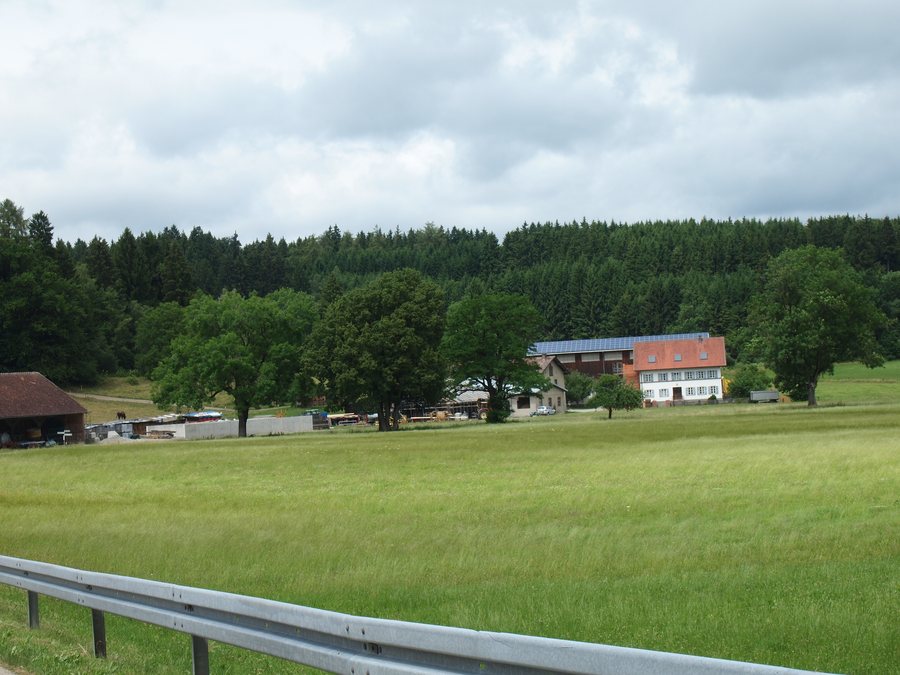
Ponds, Forest and Trails
The Weldener Weiher pond chain is a protected landscape and was created for fish farming around 300 years ago. Its valley, with mixed forests and green spaces, offers opportunities for a relaxing break. If you enjoy combining scenery and activity during your stay, the Wälder- und Weihertour trail offers a specific starting point: it begins at the sports grounds between Asch and Leeder, follows the Via Claudia cycle path northwards and leads into the district of Asch.
The trail is mostly flat, passing ponds and following shaded paths through the largest contiguous forest area in the district of Landsberg am Lech. Check the signs and local trail conditions before setting out.
The Asch snack garden also has its own distinctive character. In March 2023, more than 130 edible wild plants, trees, shrubs and berries were planted on two adjoining triangular plots. This planting, with its specific date, adds a variety of edible plants to the landscape themes.
Chapels and Architectural History in Leeder and Asch
The pilgrimage chapel of Maria im Stock in Asch was built by Freyberg in 1703. In Leeder, St. Ulrich’s wayside chapel stands at the southern edge of the village. Inside is an oversized painting of Saint Ulrich by Johann Baptist Baader. The two chapels illustrate different forms of religious architecture: Maria im Stock is a pilgrimage chapel, while St. Ulrich is a wayside chapel with an oversized painting of Ulrich.
Another chapter in Leeder’s architectural history is told by the Catholic parish church of the Annunciation of Mary: the nave and choir were rebuilt from 1739 onwards, and the church received its first furnishings between 1742 and 1752. The stone Marian column also stands in the centre of Leeder, at the junction with Kirchberg. It depicts the Immaculate Conception and dates from 1889. It is probably the fifth successor to earlier wooden statues—this is explicitly a supposition.
Market Traditions and Places of Remembrance
The markets in Leeder continue a tradition whose origins date back to the 17th century. The spring market takes place on the first Sunday in May, and the autumn market on the second Sunday in October; both are held on Leeder’s main street. If you would like to plan your trip around one of the markets, check the current dates in advance.
Monuments in Seestall also recall different periods in history. At the western entrance to the village, Canon Johannes Schrott had a monument erected in 1900 in honour of King Ludwig I of Bavaria. East of Seestall, on the banks of the Lech, a memorial stone erected in 1950 commemorates the Seestall subcamp of the Kaufering concentration camp. The prisoners from the Seestall camp who died up to 1945 are buried at this site. The memorial thus serves as a place of remembrance for the subcamp and the prisoners who died there.
When searching for a holiday apartment, the local features can offer a first point of reference: Leeder combines market traditions and several religious buildings, Asch the pilgrimage chapel and the link to the Wälder- und Weihertour, and Seestall its monuments and history of remembrance. Consider which of these themes you would like to shape your stay, and choose accommodation whose location suits your plans.
Discover More Destinations
Discover more destinations: Hofstetten, Geltendorf, Vilgertshofen, Greifenberg, Schondorf Am Ammersee, Reichling, Weil, Apfeldorf.
Return to the main travel overview: Landsberg Am Lech.

.jpg)