
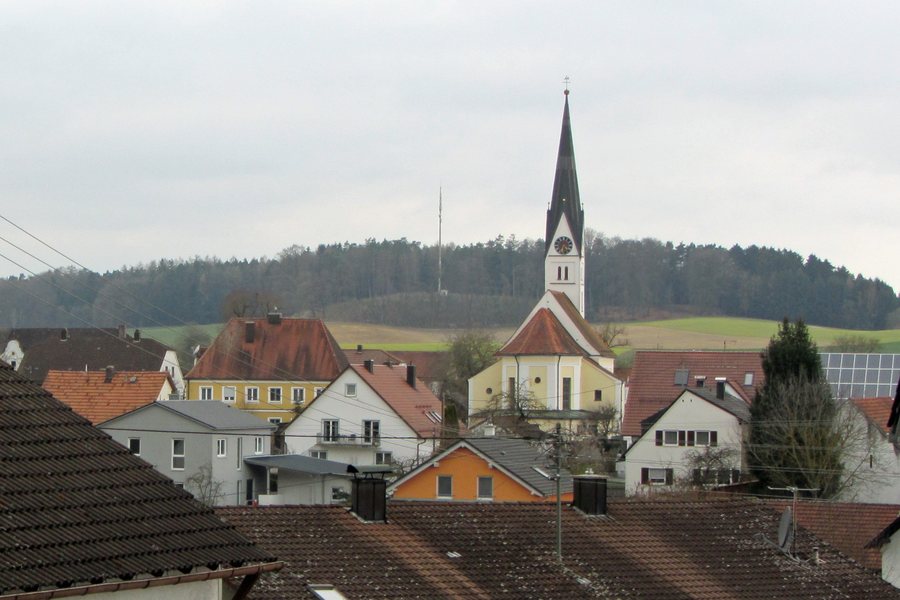
Schiltberg between the Holzland forest and Hofberg Castle
Accommodation in Schiltberg
Schiltberg combines a distinctive forest landscape with a history that comes to life at the Hofberg castle ruins. The Holzland area is made up mainly of the Schiltberg Forest in the eastern part of the municipality. It also includes a network of hiking trails in the wider Holzland area around Schiltberg and a cycling route that passes through the town. You can tailor your travel plans to suit different interests: trails through wooded areas, a bike ride or the history of Schiltberg Castle.
Forest landscape and trails
The Holzland area around Schiltberg has extensive, connected woodland and a well-developed network of hiking trails. The “Altbayerische Herzogstädte” (“Old Bavarian Ducal Towns”) cycling route also passes through Schiltberg. When choosing your holiday apartment, it may therefore be helpful to first consider which type of outing interests you most: hikes in the Holzland area or a bike ride along a named route. These are two distinct factors to consider when planning; check the specific routes and their conditions before setting out.
The wider Aichach-Friedberg travel region offers further options for cycling and hiking. The Aichach-Friedberg district cycling map features 14 well-signposted themed cycling routes. The Aichach hiking brochure “aichach erwandern – Die schönsten Spaziergänge rund um Aichach” (“Explore Aichach on foot – The most beautiful walks around Aichach”) presents 15 walks and hiking trails in and around Aichach. The 36.8-kilometre Paartal hiking trail also follows the middle reaches of the Paar River from Aichach to Gut Schenkenau in the district of Neuburg-Schrobenhausen. The details differ in scope: one selection of 15 routes around Aichach and one individual trail with a stated total length and named endpoints.
Hofberg Castle and Schiltberg’s history
Built around 1200 by the Lords of Schiltberg, Hofberg Castle is also known as Schiltberg Castle. It later passed into the possession of Duke Ludwig II of Bavaria and was destroyed in 1422. These milestones provide a timeline for the history of the castle ruins: from their construction by the Lords of Schiltberg, through their later ownership by the duke, to their destruction. The open-air stage of the Hofberg Open-Air Theatre Association Schiltberg is located at the Hofberg castle ruins. History and theatre are two distinct subjects that meet at the same named location.
Culture in the Aichach-Friedberg travel region
Cultural sites in the wider Aichach-Friedberg travel region offer further points of interest. Aichach’s historic old town has changed little over the centuries. The Wittelsbach Museum is housed in the Lower Gate, while the town museum brings Aichach’s history to life. The Wittelsbachs’ ancestral castle stood in Oberwittelsbach; Sisi Castle in Unterwittelsbach served Duke Max in Bavaria as a hunting lodge.
In Friedberg, the history reaches further back: Wittelsbach Castle originated as a high-medieval castle built around 1257 under Duke Ludwig II the Strict. The Herrgottsruh pilgrimage church was built between 1731 and 1753 and is considered one of the finest examples of Bavarian Rococo. The Inchenhofen Pilgrimage Museum, in turn, focuses on votive offerings and other objects: the museum displays iron and wax votive offerings, ploughshares, horseshoes, and neck and hand shackles. It documents the importance of Saint Leonhard and St. Leonhard Church as a popular pilgrimage destination.
When looking for a holiday apartment in Schiltberg, these different interests can help guide your choice: woodland and hiking trails, the cycling route through the town, or the history at the Hofberg castle ruins. If you also include destinations in the wider Aichach-Friedberg travel region, you’ll find further trails, museums and historic sites there.
Discover more destinations: Affing, Schmiechen, Merching, Pöttmes, Dasing, Petersdorf, Kissing, Steindorf.
Back to the wider travel overview: Aichach-Friedberg.

