
Aichach: Paar Valley Trails and Wittelsbach History
Accommodation in Aichach
In Aichach, riverside trails meet archaeological interpretation and traces of the Wittelsbach dynasty. This makes the town an interesting destination if you want to discover its history not only in a museum, but also on walking and hiking trails. When planning your holiday apartment stay, consider whether local history, hiking or cycling will be the main focus of your trip.
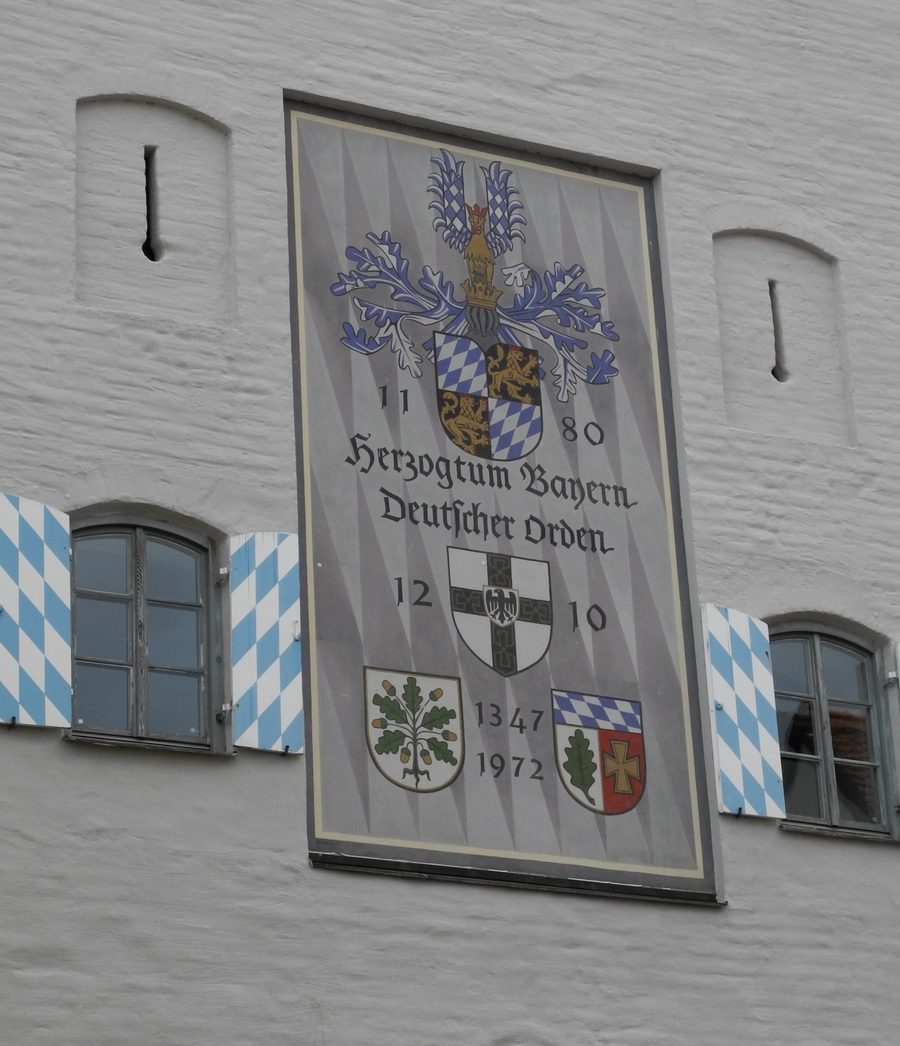 Das Untere Tor am historischen Stadtplatz von Aichach.
Photo: Franzfoto via Wikimedia Commons, CC BY-SA 3.0
Das Untere Tor am historischen Stadtplatz von Aichach.
Photo: Franzfoto via Wikimedia Commons, CC BY-SA 3.0
Riverside Trails and Discoveries in the Grubet
The green corridor along the Paar provides a riverside route through central Aichach for hikers and cyclists. It runs away from heavily trafficked roads and is an important section of the continuous Paartal cycle trail. Alongside the cultural attractions, it offers a route for getting active in town.
In Aichach’s Grubet forest, the approximately 2 km-long forest discovery trail invites visitors to experience nature with all their senses. The landscape was shaped by prehistoric iron ore mining. In the wider region west of Aichach, around 3,500 pingen—funnel-shaped depressions up to 3 metres deep—can be found across several former mining areas. These are distinctive traces in the historic landscape, while the forest discovery trail focuses on experiencing nature.
A hiking trail between Unterwittelsbach and Oberwittelsbach is signposted as the “History Trail.” Its six stations explore the Wittelsbach dynasty’s connections with Ober- and Unterwittelsbach. A hiking trail leads from the moated castle in Unterwittelsbach across fields and through woodland to the site of the former ancestral castle in Oberwittelsbach. The two places are also connected by history: the ancestral castle of the Wittelsbach dynasty was located in Oberwittelsbach, a district of Aichach.
Local History, Museums and Wittelsbach Heritage
Guided town tours take visitors through Aichach’s medieval centre, exploring its squares and narrow lanes. They also cover the history of the town square, with its stately townhouses and two imposing town gates. The historic old town has changed little over the centuries. If you enjoy exploring history in specific locations, its squares, lanes and the stories associated with them offer plenty of ways to connect with the past.
The Wittelsbach Museum is housed in the Lower Gate in Aichach. Numerous interactive stations introduce visitors to archaeological methods and the history of the Aichach area. The Aichach Town Museum is dedicated to the history and culture of the town and its surrounding area across around 1,000 m². Check the official website for current visiting information before your visit.
Digital offerings also explore places and history in Aichach. For “Aichach am Ohr” (“Aichach by Ear”), local residents created audio features about special places in and around Aichach. The project is a collaborative effort by the Town Museum and vhs Aichach-Friedberg e. V. The zeigmal.App for Aichach offers free audio guides for 21 stops, historic images and augmented reality features; no registration is required. App features may change, so check availability before relying on them in your plans.
Sisi Castle is located in the Unterwittelsbach district. It served as a hunting lodge for Duke Max in Bavaria and is a stop on the “Sisi Road,” a European cultural route tracing the places where Empress Elisabeth lived. Today, Burgplatz in Oberwittelsbach is still home to the castle church, a few remnants of the walls and the National Monument dating from 1834. You can encounter Wittelsbach history both through museum interpretation and at historic sites.
Aichach-Friedberg: More Trails and Cultural Sites
In the wider destination of Aichach-Friedberg, the Paartal hiking trail follows the middle reaches of the Paar from Aichach to Gut Schenkenau in the district of Neuburg-Schrobenhausen; it is 36.8 km long in total. The brochure “aichach erwandern – Die schönsten Spaziergänge rund um Aichach” (“Explore Aichach on Foot – The Best Walks Around Aichach”) features 15 walks and hiking trails around Aichach. Cyclists can find 14 well-signposted themed cycle routes in the Aichach-Friedberg district cycling map. Check trail conditions before setting out on a bike ride.
The cultural attractions of the wider region extend beyond Aichach. In Friedberg, the Herrgottsruh Pilgrimage Church was built from 1731 to 1753 and is considered one of the finest examples of Bavarian Rococo. Friedberg Wittelsbach Castle originated as a high medieval castle, built around 1257 under Duke Louis II the Strict. In Inchenhofen, the Pilgrimage Museum in Haus St. Leonhard, a former Cistercian brewery, displays, among other things, iron and wax votive offerings, ploughshares, horseshoes, and neck and hand shackles. It documents the importance of Saint Leonhard and St. Leonhard Church as a much-visited pilgrimage destination.
When choosing your holiday apartment in Aichach, it helps to decide what you want to focus on during your stay: local history, hiking trails or cycling routes each offer different possibilities. You can then tailor your search to how you want to spend your time in Aichach and the wider destination of Aichach-Friedberg.
Discover more destinations: Petersdorf, Friedberg, Schiltberg, Kühbach, Schmiechen, Ried, Affing, Dasing
View the wider travel overview: Aichach-Friedberg.

