
Weisenbach: Hiking, Outdoor Pool and Living Traditions
Accommodation in Weisenbach
Weisenbach combines hiking opportunities, an outdoor pool with several pools, and traditions that shape the course of the year. The Weisenbacher Steig, Latschigbad, historic sites and events appeal to a range of interests. When planning your stay, it is worth distinguishing between an active hike, a day at the pool and a stay that includes a local cultural programme.
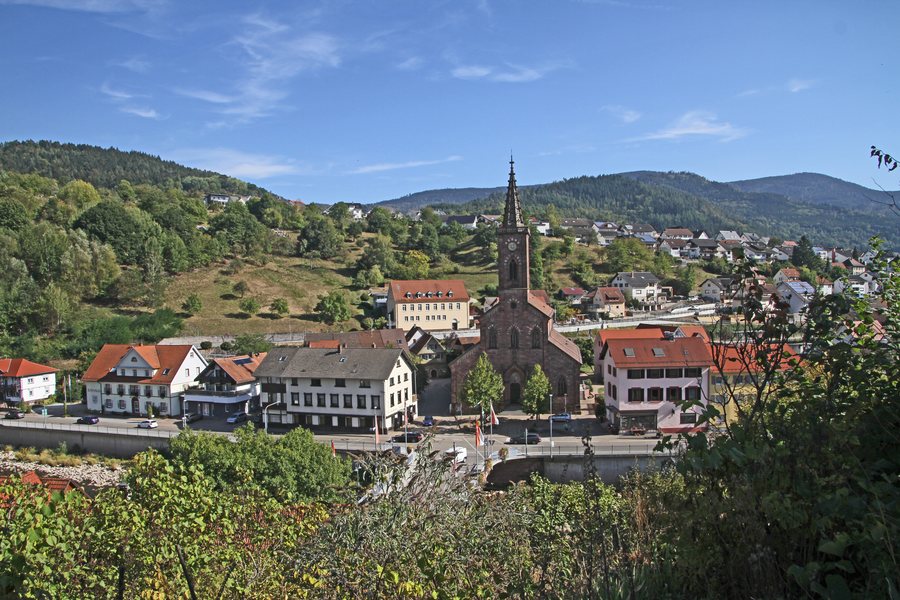
Hiking the Weisenbacher Steig
The Weisenbacher Steig stage on the left bank of the Murg begins and ends at the light rail stop in Weisenbach. The Weisenbacher Steig on the right bank of the Murg, which opened in 2024, also starts there, but is designated as a challenging circular route for hikers with good fitness. The information distinguishes the routes by their format and fitness requirements: the starting point of the left-bank stage is also its endpoint, while the right-bank route is a circular hike. If you specifically choose the right-bank route, bear its challenging nature in mind when planning. Shortly before the end of the Weisenbacher Steig on the right bank of the Murg, you can cool off at Latschigbad Weisenbach.
Swimming and playing at Latschigbad
Latschigbad has a 50-metre swimming pool with a diving tower, as well as a non-swimmer pool with a water slide. There is a paddling pool for small children. A shaded sandpit and well-maintained play equipment round out the facilities. The pool therefore offers a choice of different pools and play options, with activities ranging from swimming and diving to paddling and playing. The pool also makes for a day out in its own right, whether or not a hike on the trail is part of your stay.
Chapel, local history room and town history
The Wendelinus Chapel in Weisenbach was first mentioned in Eberstein documents in 1404 and was extensively renovated in 2014. These dates provide two different points of reference in the chapel’s history: its early documentary mention and a later comprehensive renovation. The local history room also connects the town’s history with a particular building. It opened in 1999 in a former tithe barn and hosts changing exhibitions at irregular intervals. Those interested in history will find both a historic building and a local history room with changing exhibition themes in Weisenbach.
Traditions throughout the year
A carnival procession takes place in Weisenbach every year during Carnival. During Holy Week, groups of boys and girls walk through the town, keeping alive the custom of Rätschen, rattling or Kleppern. These two traditions take place at different times of the year and each bring a distinct seasonal touch to local life. The Stubenabende are another annual event, held in alternating years in Weisenbach and Au as part of the yearly programme. The programme features a Bauernvesper, Moschd and regional dialect poets. For those interested in culture, the experiences range from a procession and a traditional custom to an evening featuring regional food and dialect.
Which holiday apartment suits your travel plans?
When looking for a holiday apartment in Weisenbach, your planned focus can help you decide: would you like to centre your stay on the challenging circular route, spend time at Latschigbad, or discover local history and traditions?
Culture in the wider destination of Rastatt
The wider destination of Rastatt also offers its own cultural attractions. The Rastatt Town Museum is housed in a Baroque town palace opposite the Residence Palace. Its permanent exhibitions explore Rastatt’s history over the past 300 years, as well as prehistory and early history. Rastatt Palace was the first Baroque residence built on German soil and was designed on the model of Versailles. Housed in the Baroque town palace opposite the Residence Palace, the Rastatt Town Museum presents permanent exhibitions on the town’s history over the past 300 years, as well as on prehistory and early history.
Discover more destinations
Discover more destinations: Lautenbach, Lichtenau, Moos, Ottersweier, Iffezheim, Bühlertal, Rheinmünster, Rastatt.
Back to the overview of the wider destination: Rastatt.

