
Mutlangen: Discover Nature, Understand History
Accommodation in Mutlangen
Mutlangen combines nature experiences in Mutlanger Heide with a history trail exploring how the heathland has been used over the past 2,000 years. A course with eight exercises is another local discovery option. These different highlights can help you tailor your search for a holiday apartment to your travel group’s interests: observing nature, exploring history or breaking up physical activity into short sessions.
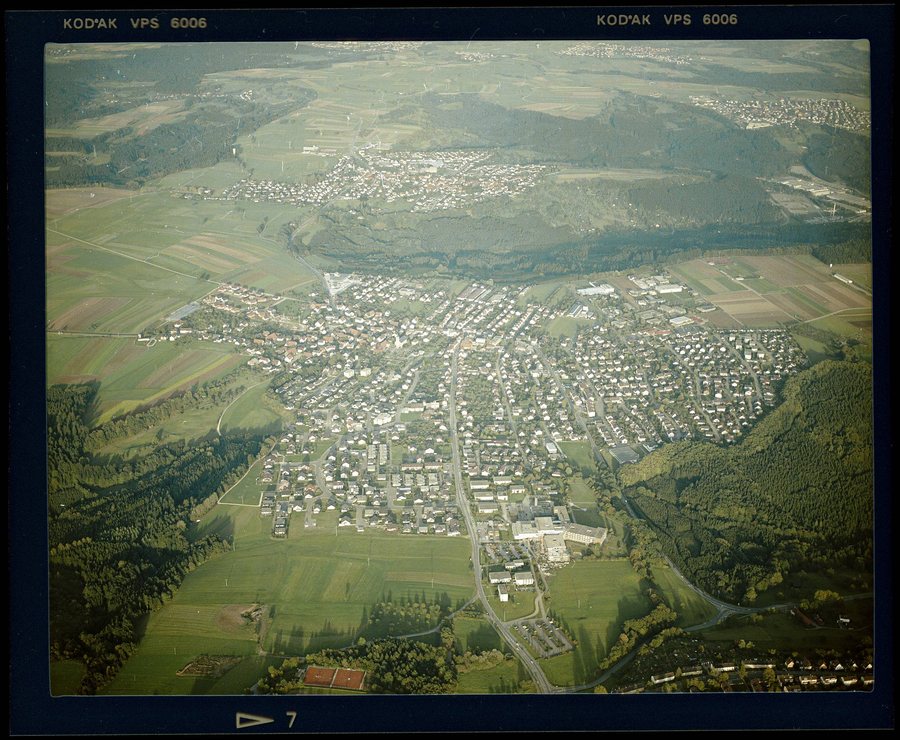 File:Mutlangen, Luftbild - LABW - Staatsarchiv Sigmaringen N 1-96 T 1 Nr. 579.jpg
Photo: Merkler, Erich, Grosselfingen via Wikimedia Commons, CC BY 4.0
File:Mutlangen, Luftbild - LABW - Staatsarchiv Sigmaringen N 1-96 T 1 Nr. 579.jpg
Photo: Merkler, Erich, Grosselfingen via Wikimedia Commons, CC BY 4.0
Nature and Exercise in Mutlanger Heide
At Wildpflanzenpark Mutlanger Heide, the nature trail and nature discovery rally each have nine stops where visitors can experience, observe and understand nature. The nature trail is aimed at children, young people and families; a participation sheet invites visitors to take part.
The energy course offers a different focus: its eight neuroenergetic exercises can be done during a walk or used at home as a short break routine.
A History Trail Through the Heathland
The Mutlanger Heide history trail provides information on seven panels about how the heathland has been used over the past 2,000 years. It starts on Rainhaldenweg between Heideschule and Franziskusgymnasium and ends at former ammunition bunkers. This way, one stretch of the trail leads to a subject that extends well beyond individual stops: the history of how this landscape has been used.
More to Explore in the Wider Ostalbkreis Destination
The wider Ostalbkreis destination adds further historical perspectives and a variety of landscapes to these local highlights. In Rainau, the focus is on Roman frontier history and a signposted walking trail. The Upper Germanic-Raetian Limes, a UNESCO World Heritage Site since 2005, runs through the municipality of Rainau in the districts of Buch, Schwabsberg and Dalkingen for approximately six kilometres. The Limes Park Rainau preserves its finest sections and most significant individual monuments in an exceptional concentration; a reconstructed watchtower offers panoramic views across the Ostalb. The signposted Limes circular trail is approximately 11 km long and takes about 2.5 hours on foot. It runs from the Limes Wall and Limes Tower between Buch and Schwabsberg, through Mahdholz forest along the Limes, to the southern edge of Schwabsberg.
Lorch Monastery was founded in 1102 by Frederick I and his wife Agnes of Waiblingen as their burial place. The complex includes a medieval church, the cloister, outbuildings and Marsilius Tower. From there, views extend across the monastery complex, the herb garden, the sensory garden and the surrounding area. A permanent exhibition presents 900 years of monastic history, including the richly decorated Lorch choir books.
At the Tiefer Stollen visitor mine, the mine train passes through mineral deposits and small stalactites into sandstone halls covering 2,500 m², 100 m underground. There, a multimedia presentation introduces the history of iron ore mining in the Aalen area. A circular route through the tunnel maze leads to former underground mining areas with shafts, loading points and ore extraction chambers.
More Destinations
Discover more destinations: Westhausen, Jagstzell, Böbingen An Der Rems, Leinzell, Ruppertshofen, Durlangen, Stödtlen, Heubach.
Return to the wider travel overview: Ostalbkreis.

