
Wiesenbach between Roman history and forest
Accommodation in Wiesenbach
Wiesenbach combines Roman traces with forest themes and designated trails. When choosing a holiday apartment, these provide practical points of reference: you can focus on local history, the nature trail or cycling tours in different directions. The museum, historic sites and trails each reveal different sides of the destination.
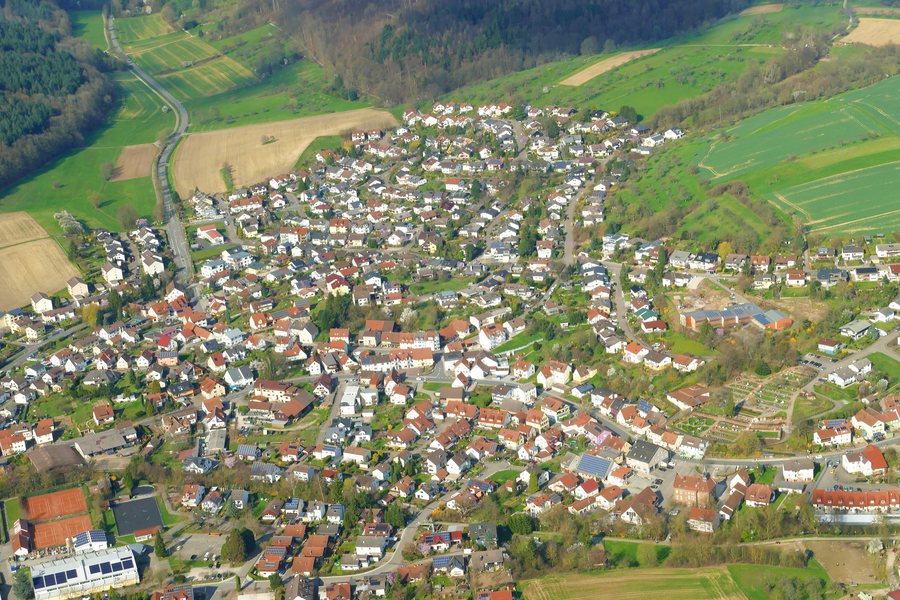 File:WiesenbachRathaus2020-03-18-15-56-43.jpg
Photo: Rolf Kickuth via Wikimedia Commons, CC BY-SA 4.0
File:WiesenbachRathaus2020-03-18-15-56-43.jpg
Photo: Rolf Kickuth via Wikimedia Commons, CC BY-SA 4.0
Roman traces in Wiesenbach
A Roman military road ran from Heidelberg-Neuenheim via Wiesenbach to Aglasterhausen and reached the Roman Empire’s border east of the Neckar. This route gives the town’s history a broad geographical context. The local history museum brings the story into sharper focus: its six rooms display a variety of exhibits, including prehistoric and early historic finds, mostly Roman, in one room.
Roman themes also take centre stage in Herrenwald. The Roman settlement and the Roman fountain are together considered a popular destination for school classes and hikers. The Wiesenbach nature trail passes both. Those interested in the Roman past can thus complement a museum visit with other historic sites in the municipality.
Forest trails and cycling routes
The approximately 3.8-kilometre Wiesenbach nature trail circular route starts at the “Totenkopf” hiking car park in Wiesenbach. It provides information about the fundamentals and interrelationships of the forest community. The circular route therefore has a clear focus on the forest: the trail explores not only a destination, but also its ecological relationships.
Separate from this is the interconnected network of hiking trails in the forests around Wiesenbach, which spans several municipalities. It links important hiking destinations and starting points. The nature trail is therefore a specific circular route with its own length and theme; the trail network offers a broader framework for hiking destinations and starting points in the surrounding forests. It is advisable to check current trail conditions before setting out.
Designated cycling routes also lead in different directions. The Elsenztal Tour runs from Wiesenbach via Bammental to Sinsheim. Other designated cycle paths lead from Wiesenbach to Neckargemünd and on to Heidelberg. These place names can help you choose the right route when planning your day; check current trail conditions and signage before setting off.
Planning for groups at the Am Kühberg recreational facility
The “Am Kühberg” recreational facility is rented out throughout the week to youth camping and scouting groups for camping trips. At weekends, it is rented to local residents for private events and to clubs for public events. If you are considering using the facility as part of your plans, check availability and conditions with the municipality.
More places to explore in the Rhein-Neckar district
The wider destination of the Rhein-Neckar district offers additional local and landscape themes. Schwetzingen’s Electoral Palatinate Palace features a Rococo theatre and a world-famous park; asparagus has also been grown in Schwetzingen for around 350 years. In Ladenburg, much of the historic town centre still reflects the Middle Ages and, in part, the Roman period. These are distinct examples of the cultural diversity of the Rhein-Neckar district.
The regional landscape, too, cannot be reduced to a single place: the Bergstraße and the eastern part of the Rhein-Neckar district lie within the Neckartal-Odenwald Nature Park. When planning your trip, you can therefore decide whether you are mainly interested in Wiesenbach’s Roman and forest-related themes or would also like to explore other cultural and landscape aspects of the wider destination.
Discover more destinations: Leimen, Dossenheim, Hilsbach, Gaiberg, Rauenberg, Hemsbach, Neckarbischofsheim, Spechbach.
For the wider travel overview: Rhein-Neckar district.

