
Discover Nattheim: Fossils and Local History
Accommodation in Nattheim
Nattheim combines insights into local history with a fossil collection whose finds come from the surrounding area. The Coral and Local History Museum in the Old School covers iron ore mining, charcoal burning in the forest, quarries in Steinweiler and cigar making. There is also a hiking stage of the Albschäferweg from Heidenheim to Nattheim. This lets you choose different focuses for your trip: cultural and historical topics and fossils, or a specific route on the Swabian Alb.
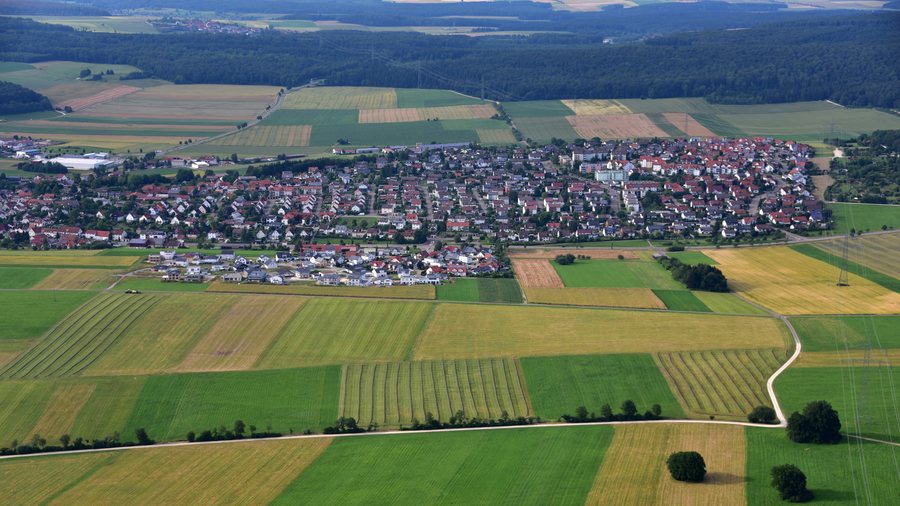
Fossils and Local History in the Old School
The Coral and Local History Museum explores several themes from local history. Its exhibits range from iron ore mining and charcoal burning in the forest to the quarries in Steinweiler and cigar making. The extraction of raw materials, work in the forest, quarrying and manufacturing are all represented. If you are interested in Nattheim’s history, you can gain insight into a range of activities rather than focusing on just one subject.
The museum also displays fossils, including the specimens known as “Nattheim corals.” A selection includes fossil corals, sea lilies, sea urchins, oysters, mussels and snails from the White Jurassic. These fossils were found exclusively in the area around Nattheim. The different groups make the collection broader than the name “Nattheim corals” might initially suggest: in addition to corals, other types of fossils are among the finds on display. Local history and fossils thus offer two different ways to discover Nattheim—through the local topics covered and through fossils from the surrounding area.
The Seventh Stage of the Albschäferweg
If you would like to include a hike in your stay, you can follow the seventh stage of the Albschäferweg. It runs from Heidenheim to Nattheim, is rated moderate and covers 9.14 kilometres. The stage is listed as taking 2 hours and 34 minutes. Its elevation profile includes 120 metres of ascent and 135 metres of descent. The distance, stated duration and elevation figures together give a concrete impression of this stage; nevertheless, check the latest route details and conditions before setting out.
The stage description then leads to Schafhof Nattheim. It also gives the distance from the end of the stage at Schäferei Wiedenmann to Nattheim as a further 1.5 kilometres. For the return journey from the “Nattheim Einkaufszentrum” bus stop to Heidenheim central bus station, the connection lists bus routes 50 and 51. Check the current timetable before travelling, as transit information can change.
Choose the Right Focus for Your Stay
Two clearly distinct themes can guide your travel plans: a visit to the Coral and Local History Museum with its fossils and local history exhibits, or the hiking stage with its listed distance and elevation figures. If you are looking for a holiday apartment in Nattheim, you can first consider which focus you would like to shape your time here. This helps you choose a destination that suits your plans without making assumptions about particular accommodation features.
The wider Heidenheim destination area includes karst phenomena, lively rivers, forests and heathland in the Heidenheim Brenz region. The 52-kilometre-long Brenz flows through this region. The certified long-distance Albschäferweg hiking trail also runs for 158 kilometres through the Heidenheim Brenz region, a cultural landscape in the Swabian Alb shaped by shepherding. The trail is dedicated to shepherds and their flocks. This regional perspective complements Nattheim’s specific attractions: the 9.14 kilometres of the seventh stage can be distinguished from the length of the long-distance trail as a whole.
Discover more destinations: Königsbronn, Herbrechtingen, Steinheim am Albuch, Gerstetten, Niederstotzingen, Dischingen, Heidenheim an der Brenz, Giengen an der Brenz.
Go to the main travel overview: Heidenheim.

