
Holiday apartment in Tartu
Accommodation in Tartu
Tartu is more than just a stopover in Estonia: the university city combines scientific tradition, vibrant culture, and the river landscape of the Emajõgi with green spaces and distinctive neighborhoods. For families, this creates a varied stay in which city discovery, culture, and quieter moments outdoors can be combined.
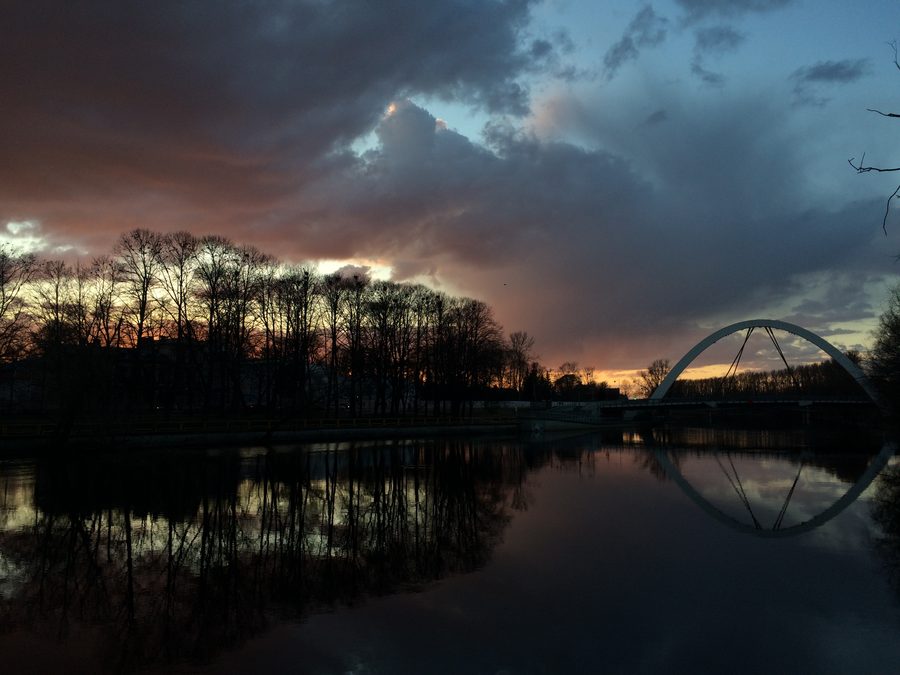 Der Emajõgi prägt die Stadtlandschaft von Tartu.
Photo: Sergei Gussev via Wikimedia Commons, CC BY 2.0
Der Emajõgi prägt die Stadtlandschaft von Tartu.
Photo: Sergei Gussev via Wikimedia Commons, CC BY 2.0
Quick facts about Tartu
- The university, founded in 1632, shapes Tartu’s scientific and cultural character.
- The large student population contributes to the city’s young, lively atmosphere.
- The Emajõgi and inner-city green spaces are part of the special urban experience.
- Museums, culture, theme parks, and nature open up different options for families.
A university city with its own atmosphere
The University of Tartu was founded in 1632 and remains an important part of the city’s identity today. Its academic tradition combines with a large student body, giving Tartu a young and lively atmosphere. Anyone who wants to do more on vacation than simply tick off sights, and instead get to know a city’s character, will find a distinctive cultural setting here.
Tartu is therefore especially well suited to a trip in which city experiences and cultural activities play a major role. Museums, events, and city walks can be combined in your mind with café breaks and different daily rhythms. For families with children of different ages, this variety is appealing because not every vacation day has to follow the same pattern.
The Emajõgi and green spaces between cultural moments
The Emajõgi brings a clearly noticeable river landscape into the city experience. Riverbanks and inner-city natural features create a contrast to museums, the university, and busier urban life. This means a day can in principle be divided between cultural impressions and time outdoors, without presenting Tartu as a purely nature-based destination.
The sources mention culture, museums, theme parks, and nature as different areas of experience. This allows families to weigh wetter-weather cultural options against outdoor activities when planning. You should check individual attractions, opening hours, and suitability separately before visiting.
Neighborhoods that make Tartu easy to picture
Even beyond individual institutions, Tartu’s character is visible in its neighborhoods. Soup Town stands out for its historic wooden houses and unusual street names inspired by root vegetables. Karlova is described with colorful wooden houses, street art, and a special neighborhood atmosphere. Such contrasts make a city walk vivid and encourage both children and adults to look for details rather than only familiar buildings.
Which accommodation location fits the travel plan?
If the focus is to be on the university, neighborhoods, museums, culture, and the Emajõgi, accommodation in Tartu is the best-documented base for this city stay. However, that does not automatically say anything about short distances, a particular transport connection, or the facilities of a specific holiday apartment. When choosing, therefore, check which experiences you want to reach and which arrival or mobility solution fits your travel plan.
For a broader overview, you can first visit Tartu. For further location choices, the pages for Aovere and Kõrveküla are also available. For these places, there is no reliable information here on local character, quiet, access to nature, or transport; the respective location decision should therefore be made on the basis of specific local and connection data.
That makes Tartu a good choice for families who want to combine culture and city discovery with river scenery and inner-city greenery. At the same time, the open choice of location leaves room to plan your own focus appropriately between a city program, excursions, and relaxed days.
Frequently asked questions about Tartu
What makes Tartu especially interesting as a travel destination?
Tartu combines a university and cultural city, the Emajõgi, a student-influenced atmosphere, and cultural activities. The city is therefore especially suitable for travelers who want to combine culture and city discovery with moments in nature.
What experiences can families combine in Tartu?
The verified tourist descriptions mention museums, theme parks, culture and nature, as well as the Emajõgi and inner-city green spaces. This makes it possible to plan a stay that alternates between cultural offerings and time outdoors.
Is accommodation directly in Tartu or in the surrounding area more sensible?
For a focus on the city, university, cultural districts, and the Emajõgi, Tartu itself is the best-documented base. For places in the surrounding area, you should check specific location and connection data, since no conclusion about quiet, access to nature, or transport can be drawn without additional details.

.jpg)
.jpg)