
Holiday apartment in Ærø Municipality – Voderup Klint and island culture
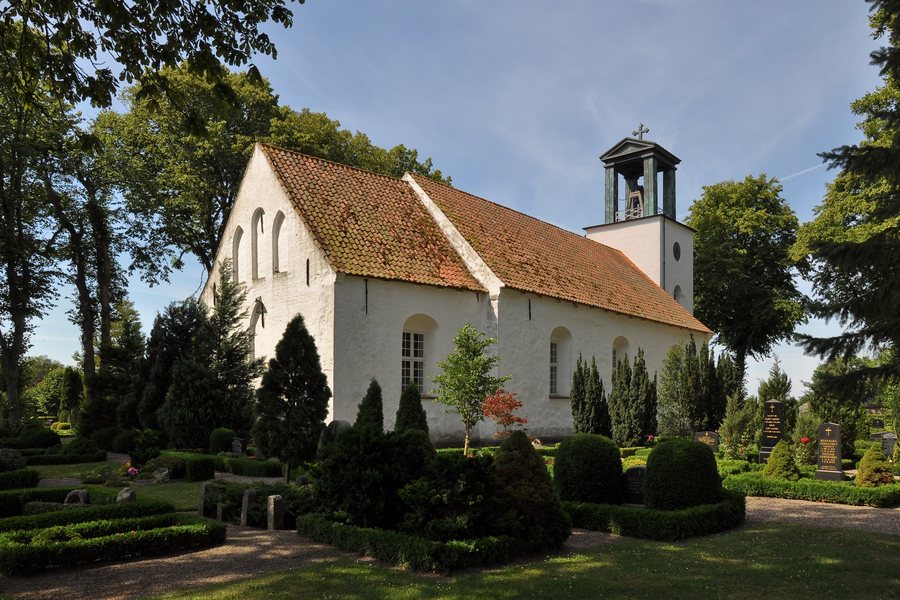 File:Tranderup Kirke, Ærø Kommune, Danmark.jpg
Photo: Bob Collowan via Wikimedia Commons, CC BY-SA 4.0
File:Tranderup Kirke, Ærø Kommune, Danmark.jpg
Photo: Bob Collowan via Wikimedia Commons, CC BY-SA 4.0
Nature
Voderup Klint is a natural attraction on Ærø, approximately 3 km long and 25 to 33 m high. The landslide cliffs at Voderup Klint form three large, terrace-like levels; an area approximately 2 km long has slipped towards the coast. This makes Voderup Klint suitable for visits focused on geology, viewpoints, sunsets and nature experiences.
Together with Svendborg, Faaborg and Langeland, Ærø forms the Geopark Det Sydfynske Øhav. It was designated a UNESCO Global Geopark in April 2024. The Søbygaard Geopark visitor centre provides information about Ærø’s unique nature and culture and is free to enter.
Culture
In Ærøskøbing, Hammerichs Hus combines architecture, a collection and local history: the house was built in 1803 and became one of Ærøskøbing’s first holiday homes. It still contains more than 2,500 objects in the places designated by Gunnar Hammerich. Hammerichs Hus has been part of the Ærø Museum since 1990.
The Ærø Museum is located in a former bailiff’s farm in Ærøskøbing dating from 1775. It presents the island’s history from its time in the Duchy of Schleswig before the defeat at Dybbøl in 1864 to today’s wedding tourism. For children aged 4 to 8 and their adult companions, the museum offers a free treasure hunt featuring the house cat Storm.
The Flaskeskibsmuseet is also located in Ærøskøbing’s former poorhouse. It displays a collection of ships in bottles and ship models; this collection has been exhibited there since 1943. The Marstal Maritime Museum displays ship models, ships in bottles, maritime paintings and objects that sailors brought home from distant regions. The museum tells the story of Marstal’s maritime development from the golden age of sailing ships to the era of steamships and motor ships. Children can take on tasks and challenges and play with the model ship Martha.
Søbygaard is a historic ducal estate associated with Ærø’s former affiliation with the Duchy of Schleswig until 1867. A medieval castle mound site and a bird area are located next to Søbygaard. As a seasonally open visitor centre, Søbygaard offers exhibitions, children’s activities at the moat, classical concerts and guided tours; it is open from May until the autumn holidays.
Skjoldnæs Fyr was built in 1881 from Bornholm granite. The lighthouse is 22 metres high and situated 32 metres above sea level. It is accessible around the clock for a small entrance fee. The first private beach houses on Ærø were built in the early 1920s at Vesterstrand near Ærøskøbing and at Eriks Hale near Marstal.
Hiking and getting there
The section of the 220 km-long Øhavsstien hiking trail that runs across Ærø is 36 km long. The Ærø section is a footpath reserved exclusively for hikers, marked with posts and blue pictograms. On Ærø, the Kyststien runs from Marstal to Vitsø near Søby and follows the coast for most of the route. In addition, the Ø-CAMINO Ærø forms a 64 km circular hiking trail around Ærø.
The bus on Ærø is free around the clock and 365 days a year. Ærø can be reached by ferry from Svendborg, Faaborg, Rudkøbing or Fynshav.
For further local navigation, you can find the direct pages for Bro, Marstal, Dunkær, Skovby, Ærøskøbing, Søby Ærø and Kragnæs.
To the higher-level travel overview: Funen.
Check prices, availability and amenities for your travel dates directly on Booking.com.
View accommodation and offersAdvertisement · Affiliate link to Booking.comMore destinations
More places within the same destination:

