
Stara Zagora: Antiquity, Museums and Wooded Heights
Accommodation in Stara Zagora
Stara Zagora brings together traces from several millennia: from a Neolithic dwelling to the Roman city of Augusta Traiana, as well as museums and a zoo. Starozagorski Mineral Baths offers a different setting: a spa resort in the wooded southern foothills of the Sarnena Mountains. For your trip, you might consider whether to focus mainly on the city’s collections and ancient sites, or also include the spa resort when choosing where to stay.
Between the Plain and the Mountain Foothills
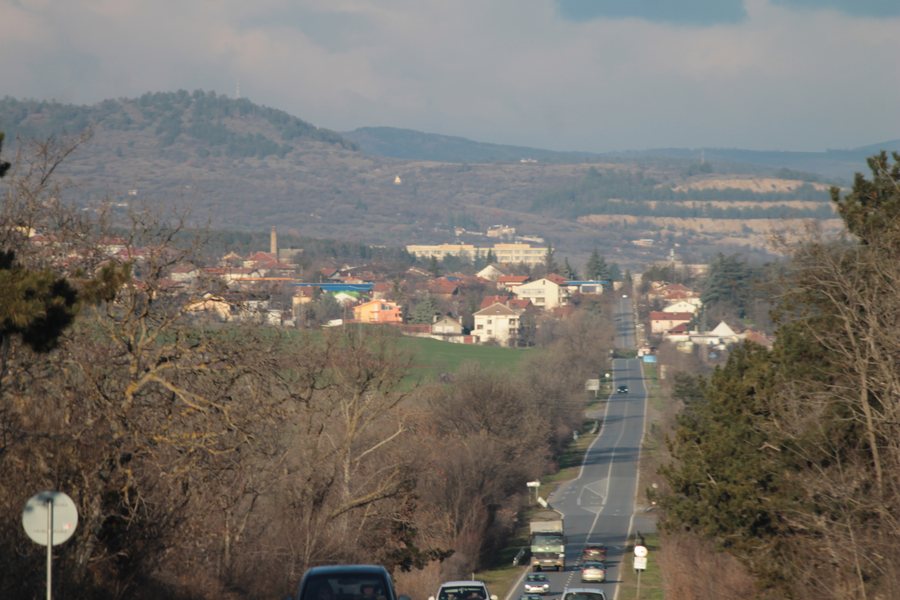
The Municipality of Stara Zagora lies in the Srednogorie region. This includes the eastern part of the Upper Thracian Plain and mainly the basin of the Sazliyka River. The terrain slopes gently to the southeast; the river valleys are flat and gently undulating. Elevations range from 100 to 300 metres. This landscape gives the municipality a different character from a rugged high mountain range and provides a useful setting for combining city visits with a stay at the spa resort.
Starozagorski Mineral Baths lies 12 km northwest of Stara Zagora. The balneological spa resort is located in the southern, wooded foothills of the Sarnena Mountains, which are part of the Sredna Mountains. If you want to consider the resort’s landscape as well as museums when planning your trip, this difference in location can help you choose where to stay.
Archaeology and City History
The permanent exhibition at the Regional Historical Museum of Stara Zagora spans the period from the 6th millennium BC to the recent past. It opened on 3 March 2009, extends across three levels and presents more than 1,700 artefacts. The museum also holds around 100,000 movable cultural objects dating from prehistory to the present day. These figures give an idea of the collection’s breadth; during your visit, you can use the exhibition to focus on different periods in the city’s history.
The Roman past is also present in the ancient forum complex of Augusta Traiana. The site covers about 7 decares and includes a stone-paved square with a statue pedestal, an amphitheatre for more than 1,300 spectators, baths, fortification walls, the west gate and part of the ancient main shopping street, the decumanus maximus. The complex is used as a venue for performances, concerts and other events; visitors can walk along the authentic ancient street. Here, archaeological structures and contemporary cultural events share the same space.
The “Neolithic Dwellings” Museum preserves the remains of a dwelling from the early 6th millennium BC, which are among the best-preserved in Europe. The permanent exhibition includes ceramic vessels and figurines, jewellery, tools and human figures made of marble. The Museum of Religions offers another way to explore past beliefs: it presents a multi-layered place of worship where temples to different deities were built on top of one another over millennia.
Roman Baths and Folklore at Starozagorski Mineral Baths
At Starozagorski Mineral Baths, a Roman bath complex dating from the imperial period has been excavated over an area of 2,500 square metres. It was built in the 2nd century during the reigns of Emperors Marcus Aurelius and Lucius Verus by Ulpius Hieronymus, high priest of Augusta Traiana and guardian of the imperial cult, and remained in use until the 12th century. The complex consists of twelve rooms, including three pools for warm, hot and cold water, two changing rooms, a vestibule, a large hall and a nymphaeum.
Every August, the National Thracian Folklore Festival “Bogorodichna Stapka” takes place at the spa resort. More than 2,000 participants from all of Bulgaria’s folklore regions gather for the event, including singing groups, dance ensembles, traditional customs groups, orchestras and solo performers. If you would like to include traditional music and dance in your trip, the festival offers a special reason to visit in August.
More Places to Explore and Practical Information
Nature attractions include the namesake natural landmark “Bogorodichna Stapka”: a rock formation shaped like a human footprint, containing water that never dries up. A centuries-old plane tree stands in Bedechka Park; it is said to have been planted from a seed more than five centuries ago. Local traditions and legends about the city’s history are associated with the tree. Stara Zagora Zoo was founded on 26 April 1957 and is home to 80 species of mammals, birds and amphibians. These places complement the archaeological attractions with nature and wildlife.
For your journey, you can take the municipality’s transport routes into account: the Trakia Motorway, National Road I-5 between Ruse and Svilengrad, and National Road II-66 between Sofia and Burgas all pass through the Municipality of Stara Zagora. The Trakia runs 10 km south of Stara Zagora and is designated European route E-80; the I-5 is classified as E-85. Stara Zagora railway station is an important rail hub where three main lines of the Bulgarian railway network intersect.
Places in the municipality that may help you get your bearings include Starozagorski bani and Bogomilovo. You can include these places alongside Stara Zagora when considering which holiday-rental area is right for you.
For an overview of the wider destination: Stara Zagora Province.
More Destinations
More places in the same destination:

_2025_-_01.jpg)